
Steel mills are among the most demanding industrial environments for hydraulic equipment. Cylinders installed near rolling stands, continuous casting machines, billet shears, reheating furnaces, and cooling beds must operate under intense radiant heat, heavy shock loads, abrasive scale, and continuous duty cycles.
A high temperature custom hydraulic cylinder is specifically engineered to withstand these extreme conditions while maintaining reliable force, positioning accuracy, and long service life.
Why Standard Hydraulic Cylinders Often Fail in Steel Mills
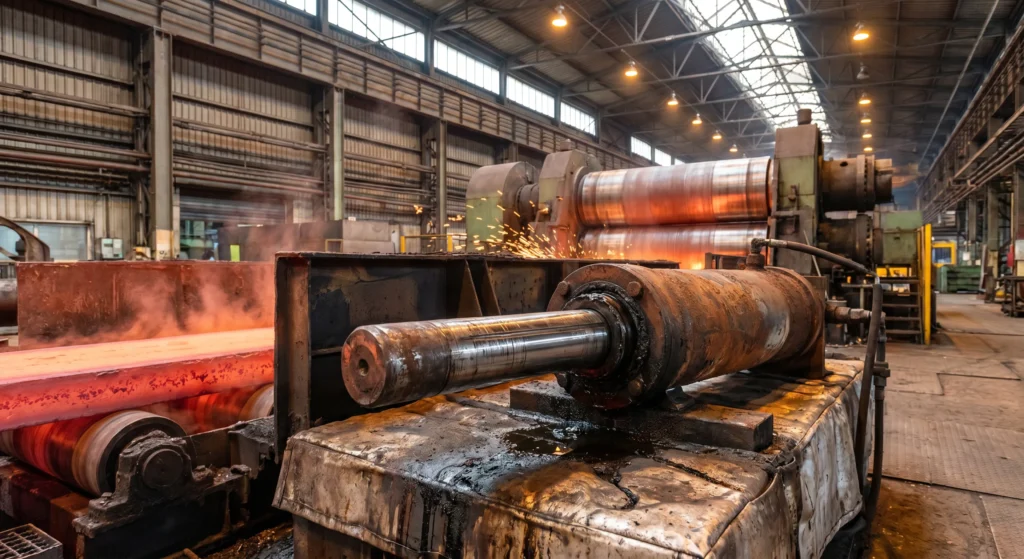
Conventional cylinders are typically designed for moderate industrial conditions. In steel production, they face challenges such as:
- Ambient temperatures exceeding 200°C (392°F)
- Radiant heat from red-hot steel
- Heavy shock and vibration
- Abrasive scale and dust
- Continuous 24/7 operation
- High-pressure and high-load cycles
Steel mill cylinders commonly require specialized seals, coatings, and structural reinforcements to survive these conditions. Mill-duty cylinders are widely used in steel works because of their robust construction and serviceability.
Key Features of High Temperature Custom Hydraulic Cylinders
Heat-Resistant Sealing Systems
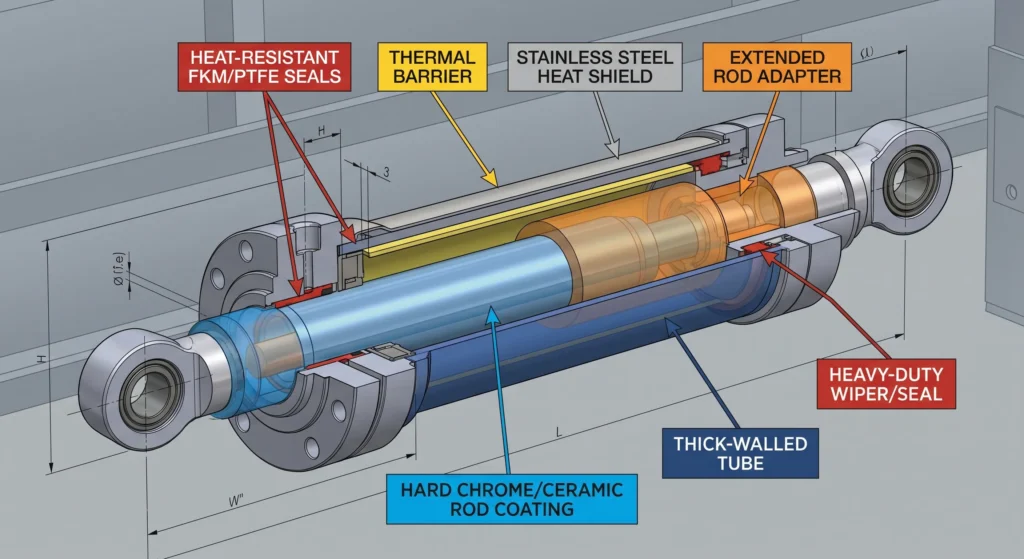
Special seal materials are essential to maintain performance at elevated temperatures:
- Viton (FKM) seals
- PTFE composite seals
- Graphite-filled wear rings
- High-temperature rod wipers
These materials can withstand significantly higher temperatures than standard nitrile seals.
Thermal Protection Design
To reduce heat transfer and protect internal components:
- Stainless steel heat shields
- Thermal barriers
- Water-cooled jackets (optional)
- Extended rod adapters to move seals away from heat sources
Heavy-Duty Construction
Custom cylinders for steel mills often include:
- Thick-wall honed tubes
- High-strength alloy steel pistons and rods
- Large rod diameters to resist buckling
- Reinforced gland bearings
Advanced Rod Surface Treatments
Special coatings improve wear and corrosion resistance:
- Hard chrome plating
- Nickel-chrome duplex plating
- Ceramic coatings
- HVOF tungsten carbide coatings
Integrated Position Feedback
Optional sensors provide precise control for automated systems:
- Linear transducers
- Magnetostrictive sensors
- Proximity switches
Typical Specifications
| Parameter | Typical Range |
|---|---|
| Bore Diameter | 50 mm to 1000+ mm |
| Stroke Length | Up to 10,000 mm or more |
| Working Pressure | 160–700 bar |
| Operating Temperature | Up to 200°C+ ambient |
| Rod Coating | Chrome, ceramic, nickel-chrome |
| Seal Material | FKM, PTFE, graphite-filled |
| Mounting | Flange, trunnion, clevis, custom |
Common Steel Mill Applications
Rolling Mills
Used for roll gap adjustment and automatic gauge control (AGC), requiring high force and precise positioning.
Continuous Casting Machines
Operate mold oscillation systems, segment adjustment, and tundish controls.
Billet and Slab Shears
Provide rapid, high-force cutting under shock loads.
Cooling Beds
Move and position hot steel products.
Furnace Doors and Manipulators
Operate in areas with severe radiant heat exposure.
Critical Design Considerations
1. Operating Temperature
Define:
- Ambient temperature
- Surface temperature of nearby steel
- Exposure duration
- Radiant heat intensity
2. Load and Pressure Requirements
The force relationship is:
F=PAF = P A
Where:
- FF = force
- PP = hydraulic pressure
- AA = piston area
3. Duty Cycle
Steel mills typically run continuously, making fatigue resistance and thermal stability essential.
4. Contamination Protection
Scale and dust can rapidly damage rod surfaces and seals. Metal scrapers and heavy-duty wipers are often specified.
5. Maintenance Accessibility
Custom designs may include split glands, replaceable bearings, and standardized seal kits to reduce downtime.
Custom Options Available
A custom hydraulic cylinder for steel mills can be configured with:
- Single-acting or double-acting design
- Cushioned end-of-stroke
- Servo-grade precision
- Internal or external cooling
- Special mounting dimensions
- Fire-resistant fluid compatibility
- Redundant sealing systems
Benefits of Choosing a Custom Hydraulic Cylinder
Compared with adapting a standard cylinder, a custom design offers:
- Longer service life
- Reduced unplanned downtime
- Improved heat resistance
- Exact fit to existing equipment
- Lower lifetime maintenance costs
- Better positioning accuracy
Why Work with an Experienced Hydraulic Cylinder Manufacturer
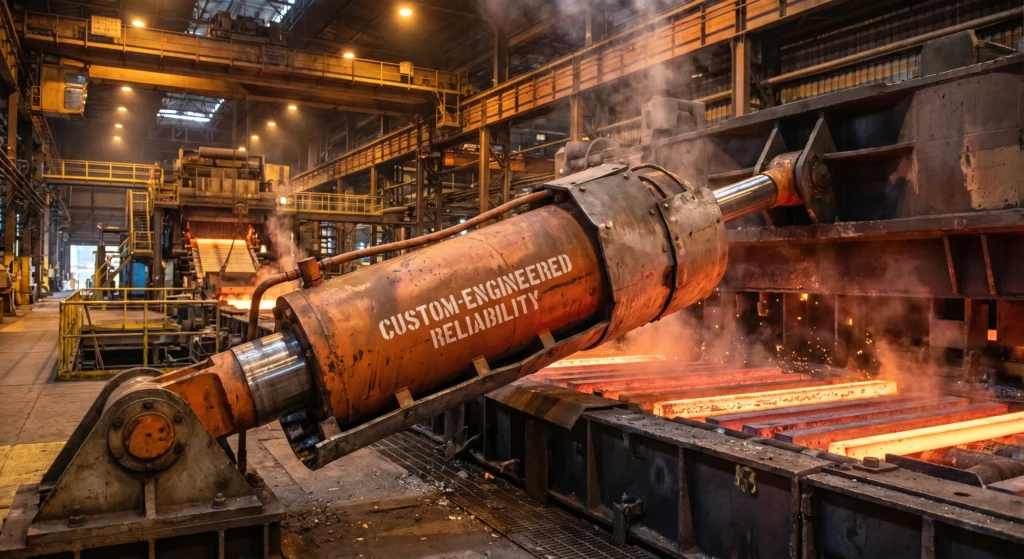
A qualified Toleng Hydraulic can engineer cylinders specifically for steel mill applications, offering:
- Application-based design support
- Material and seal selection
- Finite element stress analysis
- Pressure and performance testing
- OEM and retrofit manufacturing
Toleng Hydraulic manufactures custom mill-duty hydraulic cylinders designed to withstand extreme temperatures, shock loads, and harsh operating environments found in steel plants.
How to Specify a High Temperature Hydraulic Cylinder
When requesting a quotation, provide:
- Bore size
- Stroke length
- Mounting style
- Working pressure
- Operating temperature
- Load details
- Duty cycle
- Hydraulic fluid type
- Sensor requirements
- Environmental conditions
Conclusion
Steel mills demand hydraulic cylinders that can endure intense heat, heavy loads, and nonstop production schedules. A high temperature custom hydraulic cylinder combines specialized seals, protective coatings, and reinforced construction to deliver reliable performance where standard cylinders often fail.
Whether used in rolling mills, continuous casting lines, or furnace equipment, a custom-designed solution can significantly improve equipment reliability and reduce maintenance costs.
If your steel mill application involves extreme temperatures and severe-duty conditions, partnering with an experienced manufacturer like Toleng Hydraulic ensures a cylinder engineered precisely for your operating environment.

