
Modern agricultural equipment operates in demanding conditions—long working hours, shock loads, dust, moisture, and exposure to fertilizers and chemicals. Whether used on tractors, seeders, sprayers, harvesters, or loaders, hydraulic cylinders play a critical role in lifting, steering, folding, and controlling implements.
While off-the-shelf cylinders may work for basic applications, many agricultural machines require unique dimensions, mounting styles, and sealing systems. In these cases, a custom size hydraulic cylinder provides the best combination of performance, reliability, and service life.
Agricultural machinery is highly specialized. Different equipment types have unique space constraints, load requirements, and motion ranges.
Examples include:
- Tractor front-end loaders
- Disc harrows and cultivators
- Seed drills and planters
- Balers and hay equipment
- Sprayers with folding booms
- Combine harvesters
- Dump trailers and grain carts
- Livestock handling systems
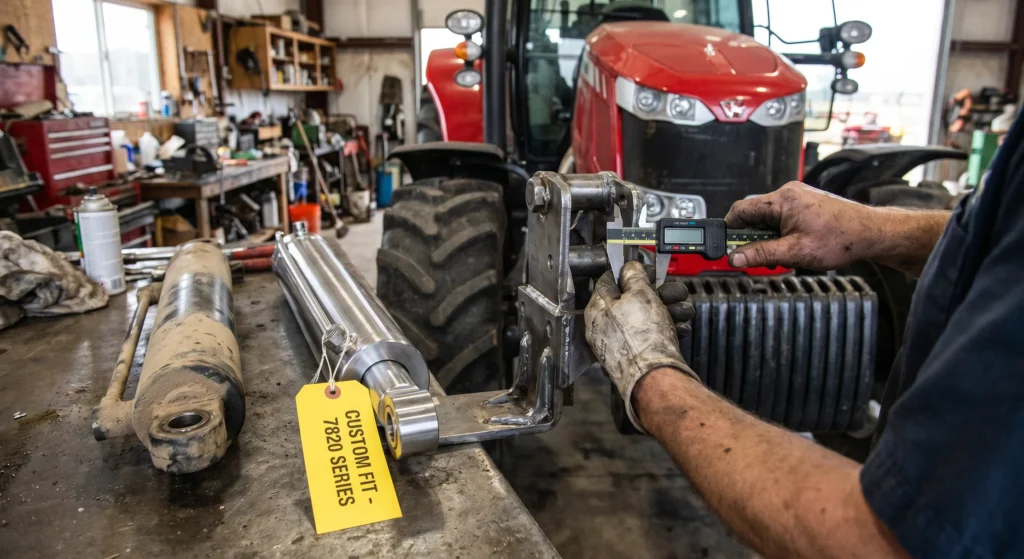
Standard cylinders may not match the exact:
- Bore size
- Stroke length
- Closed and extended dimensions
- Mounting configuration
- Port orientation
- Rod diameter
- Seal materials
- Corrosion protection
A custom hydraulic cylinder is engineered to fit the equipment precisely, eliminating the need for modifications.
Common Applications in Agricultural Machinery
Loader Lift Cylinders
Used on tractors and telehandlers to raise and lower buckets, forks, and attachments.
Steering Cylinders
Provide accurate steering control on tractors, harvesters, and self-propelled sprayers.
Boom Fold Cylinders
Operate folding mechanisms on sprayers and planters.
Tailgate and Door Cylinders
Used on balers, feed mixers, and grain handling equipment.
Hitch and Implement Cylinders
Control working depth, wing folding, and transport positioning.
Dump and Tipping Cylinders
Installed on grain carts, trailers, and manure spreaders.
Key Design Considerations for Agricultural Hydraulic Cylinders
1. Bore Size
The bore determines the pushing force generated by the cylinder.
Larger bores provide greater force for heavy implements such as loaders and tillage tools.
2. Stroke Length
The stroke determines the range of movement.
Custom strokes ensure proper lifting height, folding angle, or steering travel.
3. Rod Diameter
Rod size must withstand bending and buckling caused by uneven field loads.
4. Mounting Style
Common agricultural mounts include:
- Cross tube
- Clevis
- Trunnion
- Flange
- Spherical bearings
5. Operating Pressure
Most agricultural hydraulic systems operate between 2,000 and 3,500 psi, though some machines use higher pressures.
6. Seal Materials
Agricultural equipment faces:
- Dust
- Mud
- Water
- UV exposure
- Fertilizer chemicals
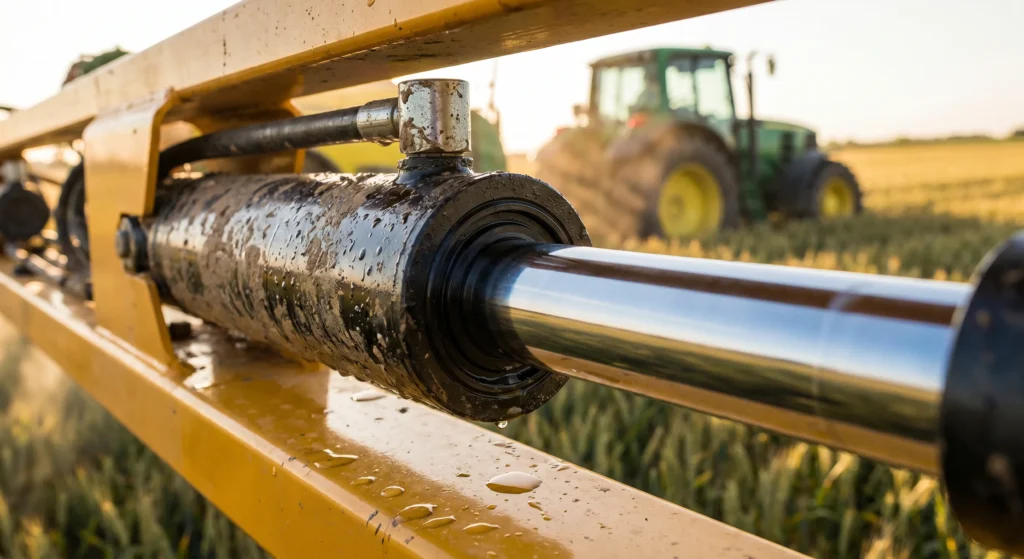
Seal materials such as polyurethane, NBR, and Viton are selected based on operating conditions.
7. Corrosion Protection
Protective coatings include:
- Hard chrome plated rods
- Nickel-chrome plating
- Powder-coated barrels
- Stainless steel components for corrosive environments
Benefits of Custom Size Hydraulic Cylinders for Agriculture
Perfect Fit
Designed to match original equipment dimensions and mounting points.
Increased Durability
Reinforced rods, upgraded seals, and heavy-duty welds improve service life.
Improved Performance
Optimized sizing ensures smoother motion and proper force.
Reduced Downtime
Reliable cylinders minimize unexpected failures during planting and harvest seasons.
Easier Replacement of Obsolete Parts
Custom cylinders can duplicate discontinued OEM designs.
Lower Long-Term Cost
Although custom cylinders may cost more initially, they often reduce maintenance and replacement expenses.
Single-Acting vs. Double-Acting Cylinders
Single-Acting Cylinders
Hydraulic pressure moves the piston in one direction; gravity or springs return it.
Typical uses:
- Trailer lifts
- Basic implement adjustments
Double-Acting Cylinders
Hydraulic pressure powers both extension and retraction.
Typical uses:
- Loader arms
- Steering systems
- Boom folding
Double-acting cylinders are the most common choice for agricultural machinery.
Heavy-Duty Features for Harsh Farm Conditions
Custom agricultural cylinders may include:
- Induction-hardened chrome rods
- High-strength honed tubing
- Self-lubricating bearings
- Double-lip rod seals
- Wipers for mud and debris
- Cushioning for shock absorption
- Grease fittings
- Replaceable gland and seal kits
Replacing Obsolete OEM Agricultural Cylinders
Many older tractors and implements use hydraulic cylinders that are no longer available from the original manufacturer.
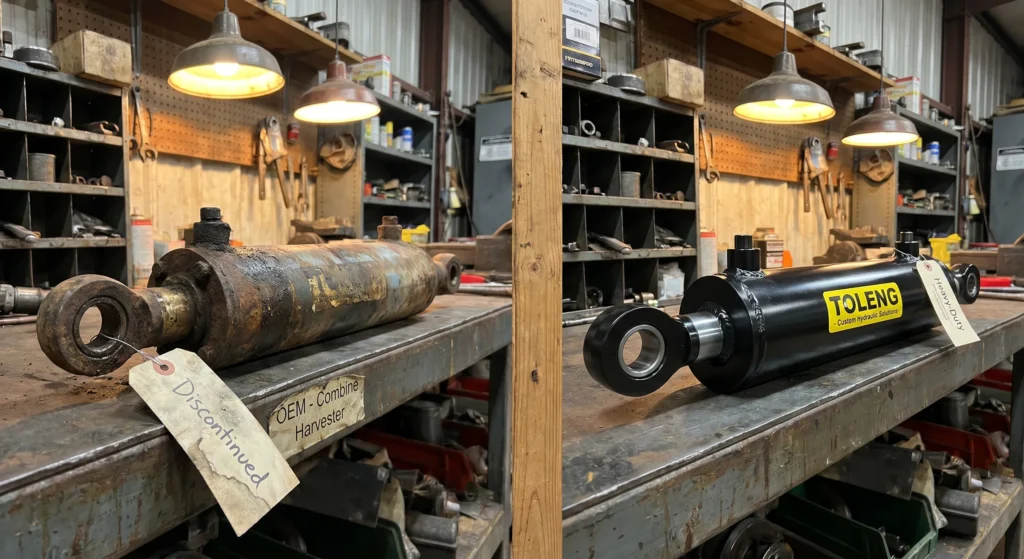
A custom hydraulic cylinder can be built by matching:
- Bore and rod dimensions
- Stroke length
- Mounting centers
- Port sizes
- Working pressure
This approach restores equipment without redesigning the machine.
Materials and Surface Treatments
Cylinder Tube
- Seamless honed steel
- DOM tubing
Piston Rod
- Medium-carbon steel
- Induction hardened steel
- Stainless steel
Surface Protection
- Hard chrome plating
- QPQ nitriding
- Zinc coatings
- Powder coating
Typical Agricultural Equipment Manufacturers Using Custom Cylinders
Custom cylinders are widely used on equipment from major manufacturers such as John Deere, Case IH, New Holland Agriculture, AGCO, and Kubota, as well as countless regional OEMs and aftermarket suppliers.
Information Needed to Specify a Custom Agricultural Cylinder
When requesting a quote, provide:
- Bore diameter
- Rod diameter
- Stroke length
- Closed and extended lengths
- Mounting type and dimensions
- Port thread type and location
- Operating pressure
- Load requirements
- Environmental conditions
- Photos or drawings of the existing cylinder
The more detailed the information, the faster the design and production process.
Quality Control in Hydraulic Cylinder Manufacturing
Reliable manufacturers typically perform:
- Raw material inspection
- CNC machining
- Robotic or qualified manual welding
- Pressure testing
- Leak testing
- Dimensional verification
- Surface finish inspection
Working with an experienced hydraulic cylinder manufacturer helps ensure consistent quality and dependable field performance.
Why Choose Toleng as Your Custom Hydraulic Cylinder Manufacturer
As a professional hydraulic cylinder manufacturer, Toleng Hydraulic designs and manufactures custom size hydraulic cylinders for agricultural equipment and OEM applications.
Toleng offers:
- Custom bore and stroke dimensions
- OEM and aftermarket production
- Heavy-duty welded construction
- Corrosion-resistant options
- Prototype and volume manufacturing
- Strict pressure and leak testing
- Global export support
Whether you need a replacement for an obsolete tractor cylinder or a new design for agricultural machinery, Toleng can provide a solution tailored to your application.
Frequently Asked Questions
Can you reproduce an old tractor hydraulic cylinder?
Yes. A custom manufacturer can build a replacement based on measurements, photos, or technical drawings.
What pressure ratings are common in agricultural cylinders?
Most operate between 2,000 and 3,500 psi, though heavy-duty systems may exceed this range.
Are corrosion-resistant cylinders available?
Yes. Options include stainless rods, special coatings, and chemical-resistant seals.
How long does a custom cylinder take to produce?
Lead times vary depending on complexity and quantity, but custom production is often faster than sourcing obsolete OEM parts.
Conclusion
Agricultural equipment depends on hydraulic cylinders that can withstand harsh environments and heavy workloads. When standard cylinders do not fit or OEM parts are unavailable, a custom size hydraulic cylinder for agricultural equipment offers the ideal solution.
By tailoring bore size, stroke, mounting style, materials, and sealing systems to your specific machine, custom cylinders improve reliability, reduce downtime, and extend equipment life. Partnering with an experienced manufacturer such as Toleng Hydraulic ensures you receive a durable cylinder designed specifically for the demands of modern farming.

