
The Anatomy of a Hydraulic Cylinder: A Detailed Diagram Guide
When you’re working with heavy machinery, whether it’s construction equipment, agricultural machinery, or industrial automation, a hydraulic cylinder is one of the most crucial components for ensuring optimal performance. However, not all hydraulic cylinders are built the same. As someone who has worked in equipment maintenance and procurement, I’ve seen firsthand how choosing the wrong hydraulic cylinder can lead to premature failures, costly repairs, and downtime that could have been avoided with proper inspection.
In this guide, we’ll dive into the anatomy of a hydraulic cylinder and give you the tools to evaluate its quality. By understanding the different components and how to inspect them, you’ll be able to select hydraulic cylinders that are durable, reliable, and built to last. We’ll cover everything from materials and seals to bore sizes and stroke lengths, so you can make informed purchasing decisions and avoid common pitfalls that many engineers and maintenance teams face.
Why Hydraulic Cylinder Quality Matters
Hydraulic cylinders are the heart of many industrial and mobile applications. They are responsible for converting hydraulic fluid pressure into mechanical force, which drives various movements in machines. Whether it’s lifting, pushing, or pulling, the hydraulic cylinder’s reliability directly impacts the machine’s performance.
Common Problems with Hydraulic Cylinders
- Seal Failures: Premature seal damage can lead to leaks, reducing cylinder efficiency and causing fluid loss.
- Rod Damage: A worn or damaged rod can lead to friction, affecting performance and leading to expensive repairs.
- Bore Finish Issues: Inconsistent bore finishes can cause premature wear on seals and pistons, reducing the lifespan of the cylinder.
Key Components of a Hydraulic Cylinder
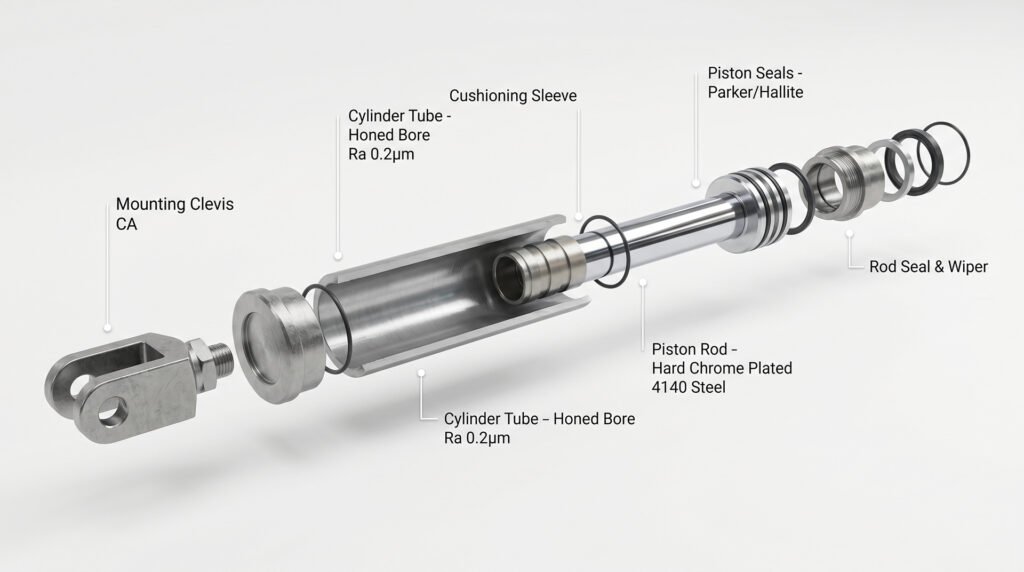
1. Cylinder Tube
This is the main body of the hydraulic cylinder and contains the hydraulic fluid that powers the movement. The material used for the cylinder tube must be resistant to wear, corrosion, and pressure. A high-quality cylinder tube will ensure that the fluid flows smoothly, with minimal wear over time.
2. Piston and Piston Rod
The piston sits inside the cylinder tube and moves back and forth to generate force. Attached to the piston is the piston rod, which connects the piston to the machine. Both the piston and rod need to be made of durable materials that can withstand pressure and prevent wear from friction.
3. Cylinder Seals
The seals are responsible for maintaining pressure and preventing fluid leakage. High-quality seals prevent dirt and contaminants from entering the cylinder, which can cause damage. They also ensure that the hydraulic fluid doesn’t leak, which can reduce efficiency and cause performance issues.
4. Cylinder Mounting
Mounting styles are critical for ensuring that the cylinder remains securely attached to the machine. The mounting style can affect the cylinder’s stability and the amount of force it can exert.
How to Inspect Hydraulic Cylinders for Quality
1. Inspecting the Cylinder Tube
When evaluating the quality of the cylinder tube, check for the following:
- Material Quality: The tube should be made from high-grade steel or alloy material to ensure resistance to wear and tear.
- Internal Bore Finish: A smooth bore is essential for reducing wear on the seals and piston. Look for uniformity and avoid cylinders with visible rough spots or inconsistent finishes. A rough bore finish increases the chances of premature seal failure.
2. Checking the Piston Rod
The piston rod is exposed to the most wear, so it’s crucial to inspect its surface thoroughly.
- Hardness: A high-quality piston rod will have a hardened surface that resists wear. Use a hardness tester if possible to ensure the rod has been properly treated.
- Chrome Plating Thickness: The chrome plating on the piston rod plays a significant role in its durability. A thick, consistent layer of chrome ensures the rod won’t corrode, rust, or wear out too quickly.
- Surface Finish: The surface finish should be smooth with no pits or scratches. Any defects on the rod surface can lead to seal damage and affect the cylinder’s performance.
3. Seal Quality and Materials
The seals are the key to preventing fluid leakage. When inspecting hydraulic cylinder seals:
- Seal Type: Different seal types are suited for different applications. For example, urethane seals are good for general applications, while fluorocarbon seals are better for high-temperature environments.
- Seal Materials: The material should be resistant to the hydraulic fluid used in the system and any environmental factors it may encounter (like heat or chemicals).
- Installation: Make sure that the seals are installed correctly, and there are no signs of deformation or misalignment. A poorly installed seal will fail quickly, leading to leaks and inefficiencies.
4. Mounting Styles and Weld Quality
Check the mounting styles and the quality of the welds on cylinder ends and mounts.
- Weld Integrity: Poor welds can cause cylinder failure due to weakening at the stress points. Look for clean, uniform welds with no cracks or gaps.
- Mounting Style: Depending on your application, you may need a welded mounting style or a tie-rod configuration. Welded cylinders are often more durable, while tie-rod cylinders offer easier maintenance and replacement. Make sure the mounting style matches your machine’s requirements.
Practical Tips for Ensuring Long-Term Cylinder Reliability
- Measure Bore Size and Rod Diameter Accurately: Use a precise caliper or micrometer to measure the bore size and rod diameter. These measurements are critical for ensuring proper fit and performance.
- Check for Rod Straightness: A bent rod can lead to uneven wear and cause seal damage. Roll the rod on a flat surface to ensure it’s straight.
- Inspect for Surface Defects: Look for any scratches, gouges, or other defects on the rod surface. Even small imperfections can lead to seal failure.
- Verify Port Threads and Fittings: Inspect the port threads and fittings for damage or wear. Damaged threads can lead to leaks or improper installation.
The Benefits of Proper Hydraulic Cylinder Inspection
By thoroughly inspecting hydraulic cylinders before purchasing or installation, you can avoid:
- Unexpected Failures: Identifying quality issues early can help prevent costly downtime caused by equipment failure.
- Reduced Maintenance Costs: Choosing high-quality cylinders that are properly inspected ensures longer lifespans and fewer repairs.
- Increased Uptime: Properly functioning cylinders contribute to overall machine performance and uptime, making sure your operations run smoothly.
Conclusion: Make Informed Decisions
Hydraulic cylinders are critical to the performance of many heavy-duty machines, but not all cylinders are created equal. By following these inspection methods and evaluating the materials, seals, rod finishes, and bore finishes, you’ll be able to make more informed purchasing decisions and avoid costly mistakes.
I highly recommend following these inspection guidelines to ensure any hydraulic cylinder purchase delivers long-term reliability and performance. Make sure to inspect each component carefully, and don’t hesitate to ask for certifications or testing reports if needed.
Ready to make sure you’re selecting the best hydraulic cylinders for your equipment?
🔗 Browse our selection of high-quality hydraulic cylinders today!
Or download our complete hydraulic cylinder inspection checklist to make the process even easier.
FAQ
1. How can I tell if a hydraulic cylinder has quality seals?
Check for uniformity in the seals, making sure there are no cracks or misalignments. High-quality seals will be made from materials resistant to wear and hydraulic fluid types.
2. What rod surface finish is best for long seal life?
A smooth, polished surface with chrome plating is ideal for long seal life. It reduces friction and prevents seal wear.
3. How do I measure bore size and stroke length correctly?
Use a micrometer to measure the bore size. For stroke length, extend the piston fully and measure from the base to the end of the rod.
4. What are the signs of a poorly manufactured cylinder?
Look for inconsistent bore finishes, weak welds, damaged threads, or surface defects on the rod. These indicate poor manufacturing.
5. Which cylinder mounting styles are strongest?
Welded cylinders tend to be stronger because they are more rigid and less prone to loosening. Tie-rod cylinders, however, offer easier maintenance and replacement.
6. How do I choose between welded and tie-rod cylinders?
If durability and strength are your top priorities, choose welded cylinders. If ease of maintenance is more important, tie-rod cylinders are a better choice.
7. What chrome plating thickness should I look for on rods?
The chrome plating should be at least 0.003 inches thick. Thicker plating offers better protection against wear and corrosion.
Tags
- hydraulic cylinder quality
- cylinder seals
- rod finish
- bore size
- hydraulic cylinder maintenance
- cylinder inspection
- welded hydraulic cylinder
- tie-rod cylinder
- hydraulic cylinder buying guide
- cylinder failure prevention
-
hydraulic cylinder materials

