
Introduction
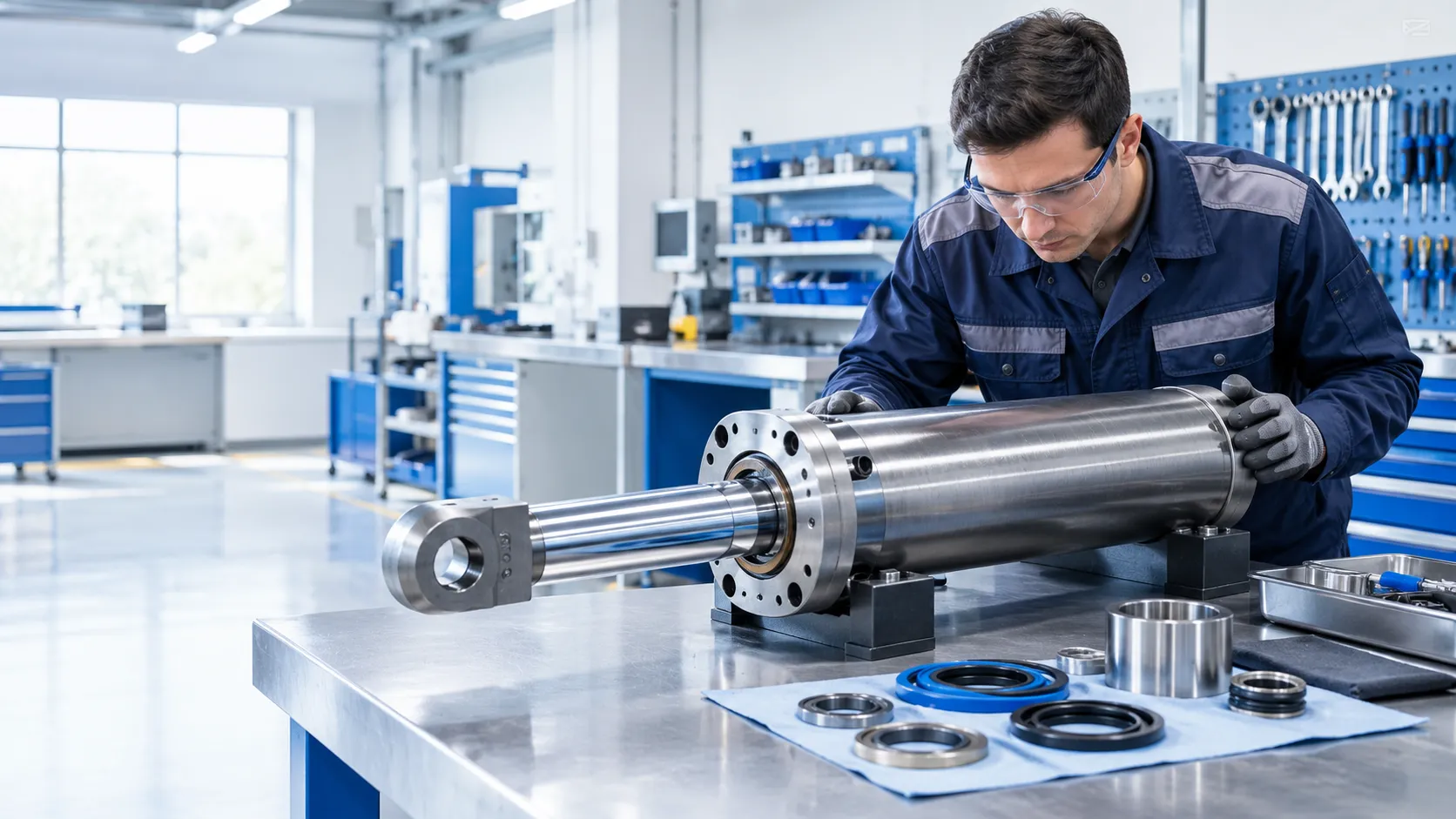
A hydraulic cylinder that leaks oil, loses force, moves unevenly, or fails to hold a load can reduce equipment performance and lead to unexpected downtime. Knowing how to repair a hydraulic cylinder starts with identifying the symptoms, locating the underlying fault, and determining whether the affected components can be safely restored.
Hydraulic cylinder repair is a diagnostic and corrective process. It focuses on fixing a specific problem, such as a leaking seal, damaged piston rod, loose connection, or confirmed internal leakage. The appropriate repair depends on the cylinder’s design, operating conditions, component condition, and manufacturer specifications.
This guide explains how to identify common hydraulic cylinder problems, understand the general repair workflow, evaluate damaged components, and decide between repair and replacement. It also covers preventive maintenance practices that can help reduce recurring failures.
Important safety note: Hydraulic systems can retain dangerous pressure even after equipment has been switched off. Always follow the equipment manufacturer’s service procedures and applicable lockout/tagout requirements. Loads must be mechanically secured before maintenance begins.
How Do You Know When a Hydraulic Cylinder Needs Repair?
A hydraulic cylinder may require inspection or repair when its performance changes, visible damage appears, or hydraulic fluid leaks from the assembly.
Common warning signs include:
- External oil leakage: Hydraulic fluid appears around the rod seal, end cap, ports, fittings, or cylinder connections.
- Internal leakage: The cylinder loses force, drifts under load, or cannot maintain its position despite no obvious external leak.
- Slow or uneven movement: The cylinder extends or retracts more slowly than expected, hesitates, or moves inconsistently.
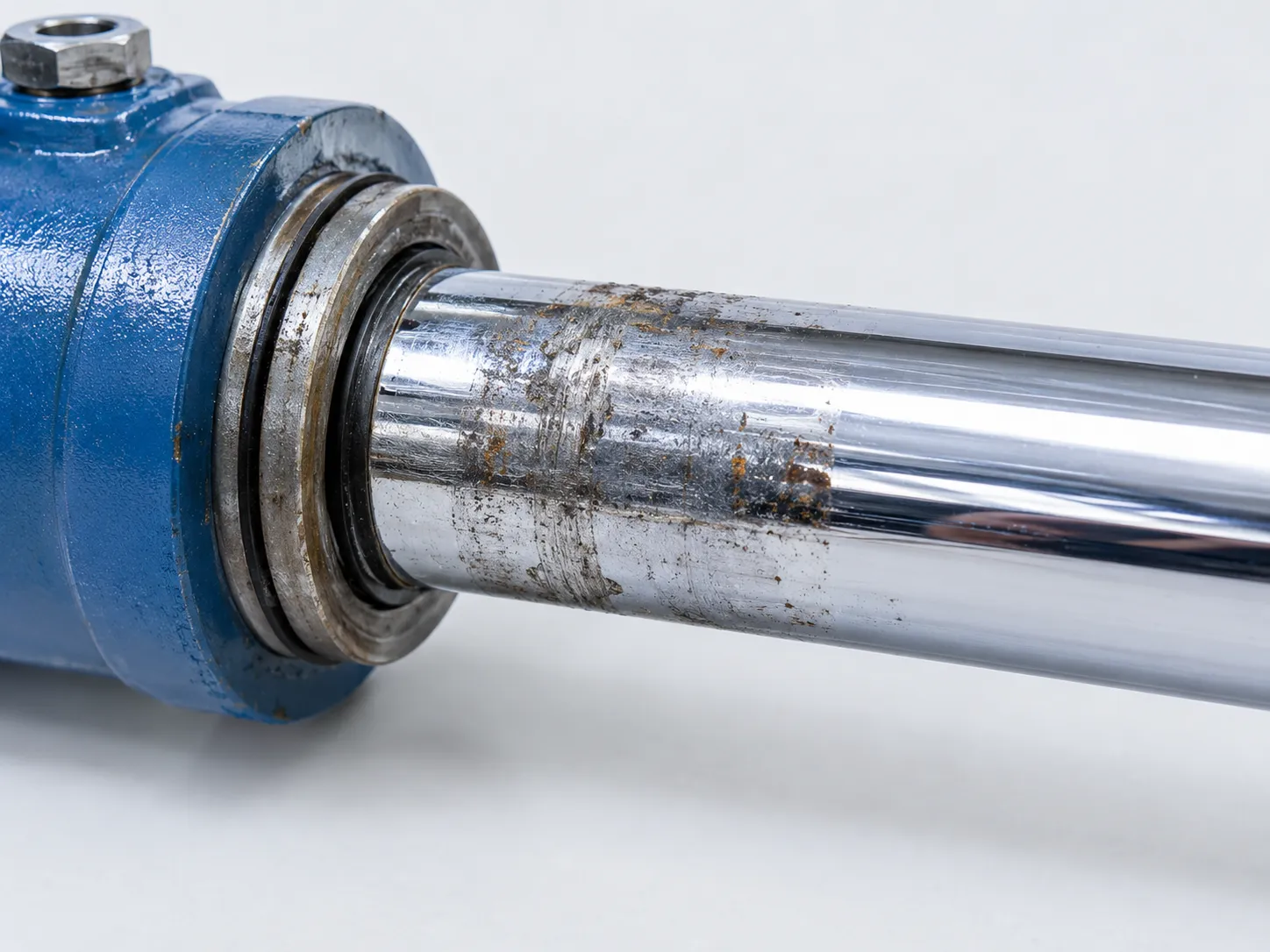
- Damaged piston rod: Scratches, corrosion, scoring, pitting, or bending can damage seals and affect cylinder operation.
- Unusual noise or vibration: Knocking, chatter, or irregular movement may indicate air in the system, alignment problems, wear, or another hydraulic fault.
- Repeated seal failure: Seals wear out prematurely because of contamination, excessive temperature, pressure conditions, misalignment, or incompatible components.
These symptoms do not always indicate that the cylinder itself is defective. A restricted hydraulic line, faulty control valve, contaminated fluid, air in the system, or an external load problem can produce similar behavior.
Before disassembling the cylinder, inspect the surrounding hydraulic system and confirm that the fault has been correctly identified.
Common Hydraulic Cylinder Problems and Solutions
Effective hydraulic cylinder troubleshooting starts with identifying the symptoms and narrowing down the possible causes before replacing components. For a more detailed breakdown of common hydraulic cylinder failures, including leaks, internal bypass, rod damage, and mounting problems, see our guide to common hydraulic cylinder failures and solutions.
The following table summarizes common problems and the appropriate next steps.
| Problem | Possible causes | Recommended action |
|---|---|---|
| External oil leakage | Worn seals, damaged rod surface, loose or damaged connections | Locate the leak source and inspect the relevant seals, rod, ports, and fittings |
| Internal leakage | Worn piston seals, damaged sealing surfaces, internal component wear | Confirm the fault using the manufacturer’s diagnostic procedure and inspect internal components if necessary |
| Slow or uneven movement | Air in the system, restricted flow, valve problems, contamination, mechanical binding | Check the hydraulic circuit and mechanical alignment before disassembling the cylinder |
| Bent or scored piston rod | Side loading, impact, corrosion, improper alignment | Have the rod professionally assessed for straightness, surface condition, and dimensional suitability |
| Cylinder drift | Internal bypass, control valve leakage, external load or circuit issues | Determine whether the cause is inside the cylinder or elsewhere in the hydraulic system |
| Repeated seal failure | Contamination, damaged sealing surfaces, unsuitable seals, excessive heat, misalignment | Identify the root cause before installing replacement seals |
| Damaged cylinder barrel | Scoring, corrosion, wear, contamination, dimensional changes | Have the bore inspected to determine whether an approved repair is feasible |
1. External Hydraulic Oil Leakage
External leakage is one of the most visible signs that a hydraulic cylinder may need repair.
Oil around the piston rod often points to a problem with the rod seal, wiper, rod surface, or guide components. Leakage near a port or fitting may instead originate from a damaged connection, unsuitable seal, or incorrect installation.
What to do:
- Identify where the oil is coming from without touching pressurized components.
- Inspect the rod surface for scoring, corrosion, pitting, or other damage after the system has been safely isolated and depressurized.
- Check the condition and compatibility of the relevant seals and sealing surfaces.
- Inspect ports and fittings for damage, using the manufacturer’s specified connection and sealing requirements.
- Replace damaged components and correct the underlying cause before returning the equipment to service.
Replacing a seal alone may not resolve the problem if the piston rod is damaged or the cylinder is operating under excessive side load.
2. Internal Leakage and Cylinder Drift
Internal leakage occurs when hydraulic fluid bypasses an internal sealing interface instead of producing the intended piston movement or holding performance.
Possible causes include worn piston seals, damaged sealing surfaces, or excessive internal wear. However, cylinder drift can also result from leakage through a directional control valve or other components in the hydraulic circuit.
What to do:
- Review the equipment manufacturer’s troubleshooting procedure.
- Check whether the problem occurs under specific loads or operating conditions.
- Confirm whether the control valve or another part of the hydraulic circuit could be responsible.
- If the cylinder is identified as the source, have its internal seals and sealing surfaces inspected.
- Replace worn or damaged components with parts that meet the required specifications.
Do not assume that every drifting cylinder needs a new piston seal. The cause must be confirmed before repair.
3. Damaged, Scratched, or Bent Piston Rod
The piston rod transfers force from the piston to the connected equipment. Its surface condition, straightness, dimensions, and protective coating are important to reliable operation.
Scratches and corrosion can damage the rod seal and cause recurring oil leakage. A bent rod may create uneven loading, accelerated wear, or binding during movement.
What to do:
- Inspect the rod for visible scoring, corrosion, dents, and coating damage after safe isolation.
- Have a qualified hydraulic repair provider assess rod straightness and dimensions.
- Determine whether an approved refurbishment process can restore the rod to the required specifications.
- Replace the rod if it cannot be restored to the necessary dimensional, surface, and safety requirements.
- Investigate alignment or side-loading problems that may have contributed to the damage.
Do not assume that polishing, grinding, or straightening a damaged rod will make it serviceable. Any machining or refinishing must follow applicable engineering specifications.
4. Worn or Damaged Hydraulic Cylinder Seals
Seals prevent unwanted fluid leakage and help maintain the pressure difference needed for cylinder operation. Their service life depends on factors such as fluid compatibility, operating pressure, temperature, contamination, rod condition, and installation quality.
Seal damage may appear as external leakage, internal bypass, or reduced performance.
What to do:
- Identify the correct seal type and dimensions for the cylinder.
- Check fluid compatibility and the equipment’s operating temperature and pressure requirements.
- Inspect the rod and bore sealing surfaces for damage that could cause premature wear.
- Replace seals using the correct installation procedures and tools.
- Check for contamination and other conditions that could damage the replacement seals.
Installing new seals without correcting damaged sealing surfaces or the original cause of failure may lead to another breakdown.
5. Scored or Damaged Cylinder Barrel
The cylinder barrel provides the working surface for the piston and its seals. Scoring, corrosion, wear, or dimensional changes can affect sealing performance and internal leakage.
What to do:
- Have the barrel bore inspected for damage, wear, roundness, and dimensional condition.
- Ask a qualified provider to determine whether approved honing or another authorized repair method is appropriate.
- Confirm that any machining can restore the bore without exceeding the specified dimensional tolerances or compromising the cylinder’s design requirements.
- Replace the barrel or cylinder assembly if it cannot be restored to the required condition.
Honing is not suitable for every damaged barrel. The decision depends on scratch depth, final bore diameter, surface finish, dimensional tolerances, and the manufacturer’s engineering requirements.
How to Repair a Hydraulic Cylinder: Step-by-Step Guide
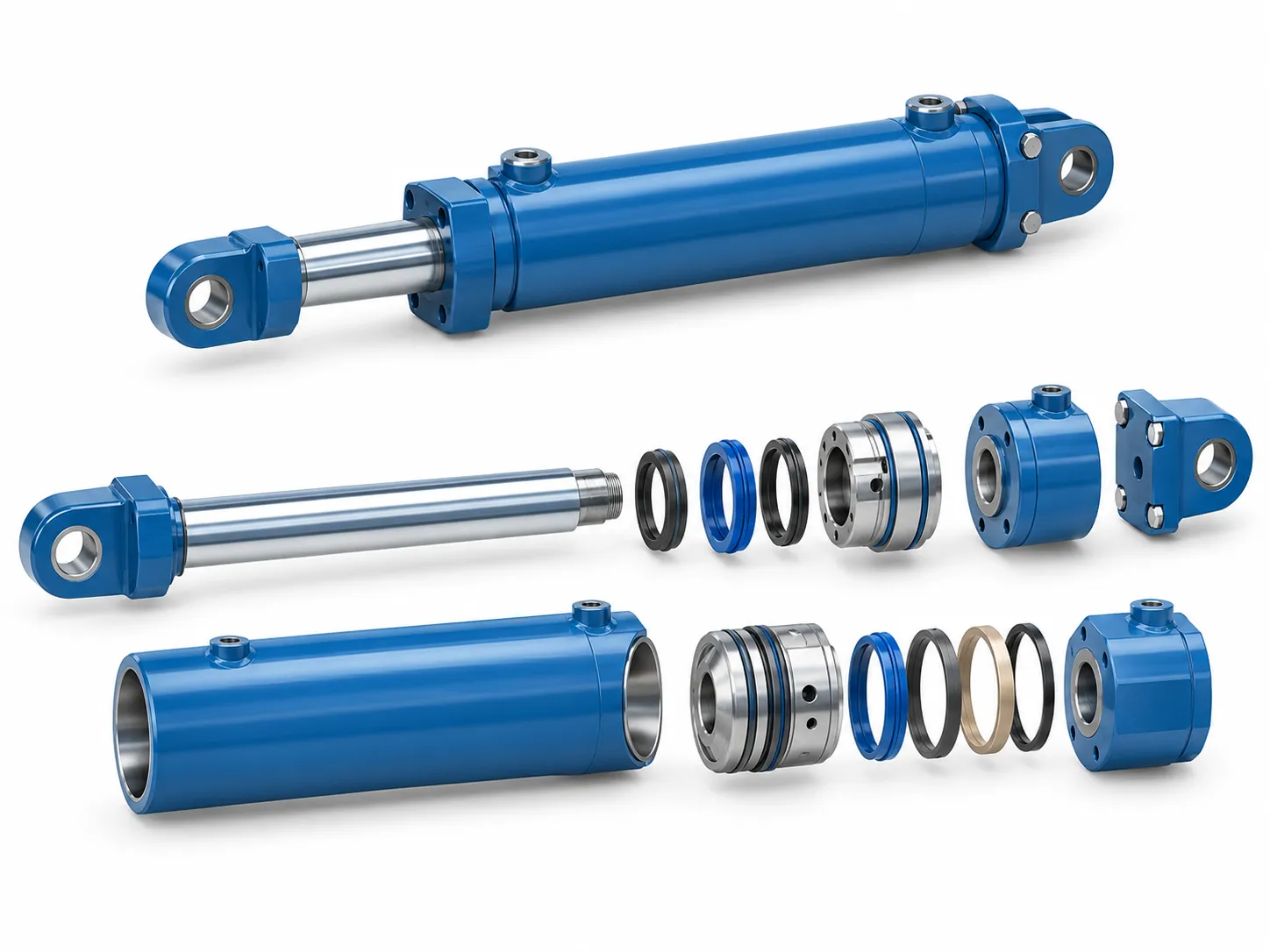
The following steps describe the general repair workflow. For a more comprehensive procedure covering complete disassembly, component replacement, and reassembly, refer to our [hydraulic cylinder rebuilding guide].
The exact procedure varies by cylinder design, including welded cylinders, tie-rod cylinders, and other specialized assemblies. Always use the applicable service manual, approved parts, and appropriate tools.
Step 1: Identify the Fault
Start by documenting the symptoms and operating conditions.
Determine whether the cylinder has external leakage, internal leakage, slow movement, rod damage, abnormal noise, or difficulty holding a load. Check the equipment’s maintenance history and identify whether the problem appeared gradually or after an impact, overload, or other event.
Inspect accessible hoses, fittings, mounting points, and the surrounding hydraulic circuit. A cylinder should not be disassembled until there is sufficient evidence that the cylinder itself is responsible.
Step 2: Isolate the Equipment and Release Stored Energy
Hydraulic systems can remain pressurized after the pump has stopped. Suspended loads may also fall if their supporting system is disturbed.
Before maintenance:
- Follow the equipment manufacturer’s shutdown and lockout/tagout procedures.
- Lower attachments where possible and mechanically support any load that could move or fall.
- Release trapped hydraulic pressure using the approved procedure.
- Confirm that the system is in a safe condition before loosening or disconnecting any connection.
- Wear appropriate personal protective equipment and follow site-specific safety requirements.
High-pressure hydraulic oil can penetrate the skin and cause severe tissue damage. Never use your hand to find a leak. Suspected hydraulic injection injuries require immediate emergency medical evaluation, even if the wound appears small or causes little initial pain.
Never rely on hydraulic pressure or a check valve alone to support a suspended load.
Step 3: Remove and Clean the Cylinder
Once the equipment has been safely isolated, follow the manufacturer’s instructions for removing the cylinder.
Support the assembly during removal and use suitable lifting equipment where required. Protect hydraulic ports from dirt and prevent contamination from entering the system.
Clean the exterior before opening the cylinder. Keep disassembled parts organized and record component orientation where useful. Use clean tools and a suitable work area to reduce the risk of introducing contaminants during reassembly.
Do not force apart components or use improvised methods that could damage precision surfaces or retaining mechanisms.
Step 4: Inspect the Internal Components
After disassembly by a qualified person, inspect the components relevant to the diagnosed fault.
Depending on the cylinder design, this may include:
- Piston rod surface, straightness, and dimensions.
- Rod seals, piston seals, wipers, and wear rings.
- Cylinder barrel bore and sealing surfaces.
- Piston, gland, end cap, and retaining components.
- Ports, threads, and mounting features.
Look for scoring, corrosion, deformation, abnormal wear, and evidence of contamination. Compare measurements with the manufacturer’s specifications rather than relying on visual inspection alone.
Document any damage that may have contributed to the original failure. This information helps determine whether targeted repair is appropriate or a more extensive rebuild or replacement is necessary.
Step 5: Repair or Replace Damaged Components
The appropriate corrective action depends on the component’s condition and the applicable engineering requirements.
- Replace worn or damaged seals: Use compatible seals of the specified type and dimensions, and inspect the related sealing surfaces before installation.
- Repair or replace a damaged piston rod: Have a qualified hydraulic repair provider assess the rod’s surface condition, straightness, dimensions, and coating before deciding whether refurbishment is acceptable or replacement is necessary.
- Evaluate cylinder barrel damage: Have a qualified provider determine whether approved honing or another authorized repair method can restore the bore without exceeding dimensional tolerances.
- Correct mounting and alignment problems: Address confirmed side loading or misalignment that may have contributed to the original failure.
Any machining, honing, rod straightening, or refinishing must follow applicable engineering specifications. Components that cannot be restored to the required dimensional and safety limits should not be returned to service.
Step 6: Reassemble the Cylinder
Reassembly should follow the manufacturer’s service instructions and use the correct components, tools, lubricants, and assembly methods.
Confirm that seals are installed in the correct orientation and are not twisted, cut, or pinched. Protect sealing lips from sharp edges and avoid contaminating the internal surfaces.
Use the specified fasteners, tightening procedures, and torque values where applicable. Do not substitute guessed torque values or improvised retaining methods for manufacturer requirements.
Before reinstalling the cylinder, confirm that the assembly is complete and that all serviced components meet the applicable specifications.
Step 7: Reinstall and Test the Cylinder
Reinstall the cylinder using the specified mounting hardware and connection requirements. Check that the mounting points, pins, and connected equipment are aligned correctly and that the cylinder can move through its intended range without binding.
Testing must follow the equipment and cylinder manufacturer’s procedures. Start under controlled conditions and increase the load gradually only as permitted by the applicable procedure.
During testing, keep personnel clear of pressurized hoses, fittings, and potential fluid discharge paths. Avoid standing in line with hose and fitting connections, and use appropriate guarding, restraints, and remote operation where required by the test procedure. Stop testing immediately if a leak, abnormal movement, or other unsafe condition is detected. Never tighten, loosen, or disconnect a pressurized connection to correct a leak.
After testing, verify that the cylinder operates as intended and inspect for leakage or abnormal movement using safe procedures. Do not return the equipment to service until the repair has been assessed and the required checks have been completed.
Can a Hydraulic Cylinder Be Repaired, or Should It Be Replaced?
Not every damaged hydraulic cylinder is a good candidate for repair. The decision depends on the severity of the damage, component availability, repair feasibility, operating requirements, and the cost of restoring reliable performance.
| Condition | Typical consideration |
|---|---|
| Worn seals with undamaged sealing surfaces | Targeted seal replacement may be suitable |
| Minor surface damage that can be restored within specifications | Professional assessment may identify an approved repair method |
| Bent rod or extensive rod coating damage | Assess repair feasibility against replacement requirements |
| Deep barrel scoring or excessive bore wear | Repair may be unsuitable if dimensional limits cannot be maintained |
| Cracked or severely deformed structural components | Replacement is often the safer option |
| Repeated failures after previous repairs | Investigate the root cause and compare rebuilding with replacement |
These are general considerations, not a substitute for engineering assessment. A qualified repair provider should evaluate the cylinder against its design requirements and intended operating conditions.
When Repair Makes Sense
Repair may be appropriate when the fault is clearly identified, affected components can be restored or replaced, and the cylinder can meet the required performance and safety specifications afterward.
For example, replacing worn seals may be a practical solution when the rod and bore are in acceptable condition and the original cause of seal failure has been addressed.
When Replacement Makes More Sense
Replacement should be considered when critical components are damaged beyond approved repair limits, suitable parts are unavailable, or repeated repairs fail to deliver reliable operation.
A replacement cylinder may also be worth evaluating when the existing design no longer meets the equipment’s pressure, stroke, mounting, dimensional, or duty-cycle requirements.
When comparing repair and replacement, consider the total cost rather than the immediate service bill alone. Labor, parts, downtime, future reliability, and the consequences of another failure can all affect the decision.
How Much Does Hydraulic Cylinder Repair Cost?
Hydraulic cylinder repair costs vary significantly with cylinder size, design, damage severity, labor requirements, and parts availability. A seal replacement is generally a different scope of work from rod replacement, barrel machining, or a complete rebuild.
Factors that influence repair cost include:
- Cylinder type, bore, rod diameter, and stroke.
- Accessibility and the labor required for removal and reinstallation.
- Seal kit and replacement component availability.
- Rod or barrel damage and whether approved machining is feasible.
- Required inspection, testing, and documentation.
- Equipment downtime and the cost of repeated failures.
For a useful estimate, provide the repair provider with the cylinder identification information, photographs of visible damage, a description of the symptoms, and available dimensional or operating specifications.
If replacement is being considered, compare a repair quotation with a replacement cylinder that meets the required dimensions and operating conditions.
How to Choose a Replacement Hydraulic Cylinder
If a cylinder cannot be repaired economically or safely, choosing the correct replacement is essential. A cylinder that looks similar may still have incompatible mounting dimensions, stroke, ports, pressure ratings, or load requirements.
Before requesting a quotation, confirm the key dimensional and operating specifications, including:
- Bore diameter and piston rod diameter.
- Stroke length and retracted length.
- Extended length and mounting configuration.
- Pin diameter, mounting width, and connection details.
- Port size, type, and location.
- Required operating pressure, load, speed, and duty cycle.
- Hydraulic fluid, temperature range, and environmental conditions.
Where a direct replacement is unavailable, a qualified manufacturer may be able to evaluate an OEM or custom hydraulic cylinder solution.
Toleng Hydraulics supplies hydraulic cylinder solutions for industrial and mobile equipment applications. Depending on the application and technical requirements, buyers can review the available standard hydraulic cylinders, welded hydraulic cylinders, and tie-rod hydraulic cylinders as starting points.
For a replacement or custom application, provide drawings or the available measurements, mounting details, operating pressure, stroke, and equipment information. These details help establish whether a standard model is suitable or a custom design needs to be evaluated.
How to Prevent Hydraulic Cylinder Failures
Preventive maintenance helps identify wear and operating problems before they cause major equipment downtime.
Inspect for Leaks and Rod Damage
Check for signs of leakage and visible rod damage during scheduled inspections. Investigate new scratches, corrosion, or recurring seal problems rather than treating them as isolated maintenance issues.
Maintain Hydraulic Fluid Cleanliness
Contamination can damage seals, wear surfaces, valves, and other hydraulic components. Follow the equipment manufacturer’s fluid specifications, filtration requirements, and maintenance intervals.
Check Alignment and Mounting
Misalignment and side loading can accelerate wear and contribute to rod damage or seal failure. Inspect mounting pins, bushings, brackets, and connected equipment for excessive wear or movement.
Operate Within Design Limits
Excessive pressure, shock loads, unsuitable operating temperatures, and loads beyond the equipment’s intended capacity can shorten component life. Follow the manufacturer’s operating limits and approved procedures.
Investigate Repeated Failures
If the same cylinder repeatedly develops leaks or performance problems, identify the underlying cause before replacing parts again. Reviewing operating conditions, fluid cleanliness, alignment, and component specifications can help prevent recurrence.
Frequently Asked Questions
1. Can I repair a hydraulic cylinder without removing it?
Some external checks may be possible while the cylinder remains installed, provided the equipment is safely isolated and the manufacturer’s procedures permit them. Internal repairs, seal replacement, and many component inspections usually require removal or disassembly. Never work on pressurized connections or an unsupported load.
2. Can a leaking hydraulic cylinder be repaired?
Yes, depending on the source and severity of the leak. Worn seals or a damaged connection may be repairable, but rod damage, barrel wear, or other underlying problems can cause leakage to return. Identify the source before replacing components.
3. What causes a hydraulic cylinder to lose pressure or drift?
Possible causes include internal leakage across piston seals, leakage through a control valve, or another fault in the hydraulic circuit. The correct diagnosis depends on the system design and operating conditions. Use the manufacturer’s troubleshooting procedure to determine the source.
4. Is it always necessary to replace hydraulic cylinder seals?
No. Seal replacement is appropriate when seals are worn or damaged and the related components remain within acceptable specifications. If the rod or bore is damaged, installing new seals alone may not resolve the problem.
5. Can a scratched hydraulic cylinder rod be repaired?
Sometimes. The decision depends on the depth and location of the damage, rod straightness, dimensions, coating condition, and the manufacturer’s requirements. A qualified provider should determine whether approved refurbishment is feasible or replacement is necessary.
6. What is the difference between hydraulic cylinder repair and rebuilding?
Repair addresses a specific identified fault, such as a leaking seal or damaged connection. Rebuilding generally involves more extensive disassembly, inspection, and replacement or restoration of multiple components. The appropriate scope depends on the cylinder’s condition and service requirements.
7. When should I replace a hydraulic cylinder instead of repairing it?
Replacement should be considered when critical components cannot be restored to the required specifications, suitable parts are unavailable, repairs are repeatedly unsuccessful, or the total cost and expected reliability favor replacement. A qualified assessment can help establish the safest and most practical option.
8. What information is needed to order a replacement hydraulic cylinder?
Useful information includes bore diameter, rod diameter, stroke, retracted and extended lengths, mounting type, pin dimensions, port details, operating pressure, and application requirements. Drawings, photographs, and the original cylinder model number can also help identify a suitable replacement.
Conclusion
Repairing a hydraulic cylinder begins with accurate diagnosis, safe isolation, and a clear understanding of the component’s condition. External leaks, internal leakage, rod damage, worn seals, and barrel damage can produce similar symptoms, so the cause should be confirmed before parts are replaced.
Targeted repairs may restore reliable operation when the affected components can meet the required specifications. When damage is extensive or repeated failures continue, a professional assessment can help determine whether rebuilding or replacement is the better option.
By following manufacturer-approved procedures, correcting the root cause of failure, and maintaining the hydraulic system properly, equipment owners can reduce avoidable downtime and make more informed repair decisions.

