
How to Choose the Right Standard Hydraulic Cylinder for Material Handling Equipment
Learn how to select a high-quality standard hydraulic cylinder and choose a reliable hydraulic cylinder manufacturer for optimal performance and durability.
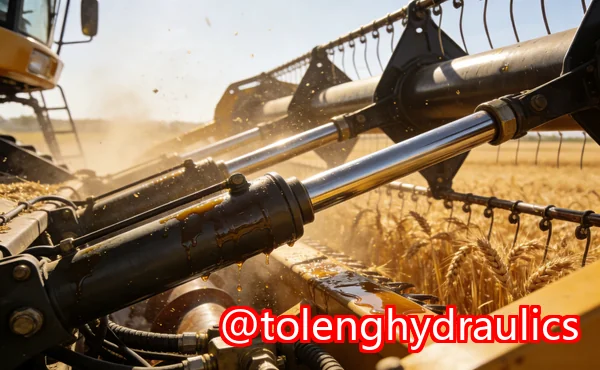
Standard hydraulic cylinders sit at the heart of modern industrial systems. From lifting heavy pallets in warehouses to powering automated production lines, these components convert hydraulic energy into precise mechanical motion. Over the years, I’ve seen how the performance of an entire machine can hinge on one decision: choosing the right cylinderand just as importantly, the right hydraulic cylinder manufacturer.
In material handling equipment especially, reliability isn’t optional. A poorly manufactured cylinder can lead to leaks, downtime, or even safety risks. That’s why working with a trusted partner like Toleng, a professional standard hydraulic cylinder manufacturer, makes a measurable difference. Their focus on precision manufacturing and strict quality control ensures consistent, long-term performance in demanding environments.
Understanding Standard Hydraulic Cylinder Specifications
When selecting a standard hydraulic cylinder, I always start with the core specifications. These define not just compatibility, but also efficiency and lifespan in real-world applications.
Bore Sizes and Stroke Lengths
Standard bore sizes typically range from 25 mm to 320 mm. Smaller bores are suitable for light-duty automation, while larger diameters are designed for heavy lifting applications like forklifts or hydraulic presses. Stroke lengths usually vary from 50 mm up to 3000 mm, offering flexibility for both compact machinery and long-reach operations.
From my experience working with industrial hydraulic cylinders, choosing the correct bore-to-stroke ratio is critical. An oversized bore wastes energy, while an undersized one struggles under load.
Working Pressure Ratings
Most standard hydraulic cylinders operate within 16 MPa to 25 MPa. For more demanding environments, high-pressure options up to 35 MPa are available. I’ve seen applications in construction where higher pressure ratings significantly improved lifting efficiency without increasing cylinder size.
Mounting Styles
Mounting configurations determine how force is transferred and how the cylinder integrates into machinery. Common options include MF, MP, MS, ME, MT, TA, TC, TB, TD, LB, FA, FB, CA, and CB.
Each mounting style serves a specific purpose. For example:
-
Flange mounts (FA, FB) provide strong, fixed positioning
-
Clevis mounts (CA, CB) allow pivoting movement
-
Trunnion mounts (TA, TB, TC) are ideal for applications with angular motion
Choosing the wrong mounting style can introduce unwanted stress and reduce service life.
Materials: Piston Rod and Tube
Material selection directly impacts durability.
-
Piston rods are commonly made from hard chrome plated C45, 1045, or 4140 steel. These materials offer excellent strength and wear resistance.
-
Cylinder tubes are typically honed seamless steel such as ST52, E355, or CK45.
In one factory audit I conducted, switching from standard carbon steel to 4140 significantly improved fatigue resistance in high-cycle applications.
Seal Options
Seal quality is often overlookedbut it shouldn’t be. Reliable seal brands like Parker, Hallite, and Merkel ensure minimal leakage and longer service intervals. A high-quality hydraulic cylinder supplier will always offer proven sealing solutions or equivalent options.
Manufacturing Quality Standards in Standard Cylinder Manufacturing
The difference between an average cylinder and a high-performance one lies in the manufacturing process. A reputable hydraulic cylinder factory invests heavily in precision, consistency, and testing.
CNC Machining Precision
Modern CNC machining allows tolerances within 0.01 mm. This level of accuracy ensures proper alignment between components, reducing internal wear and improving efficiency.
I’ve visited facilities where even slight deviations led to premature seal failure. Precision is not a luxuryit’s a necessity.
Honing Process
The internal surface of the cylinder tube is honed to achieve a surface roughness of Ra 0.20.4 m. This ultra-smooth finish minimizes friction and extends seal life.
In practical terms, better honing means smoother motion and less energy loss.
Robotic Welding
Consistent weld quality is essential for structural integrity. Robotic welding ensures uniform weld seams, reducing the risk of cracks or weak points.
Clean Assembly Conditions
Seal installation typically takes place in a Class 10,000 clean room. Contamination during assembly is one of the leading causes of early failure. Dust particles, even microscopic ones, can damage seals and cause leakage.
Comprehensive Testing Procedures
A quality-focused custom hydraulic cylinder manufacturer will perform rigorous testing on every unit:
-
100% pressure testing at 1.5 working pressure
-
Leakage rate 0.05 ml/min at rated pressure
-
Endurance testing up to 500,000 cycles
-
Dimensional inspection using CMM equipment
I always recommend asking for actual test reports. A trustworthy manufacturer will have no hesitation in providing them.
Why the Hydraulic Cylinder Manufacturer Matters
Choosing a hydraulic cylinder manufacturer is not just about priceit’s about long-term value.
Material Traceability
Top manufacturers provide full traceability, including mill certificates for steel components. This ensures consistent quality and compliance with international standards.
Certifications
Look for certifications such as ISO 9001:2015, CE, and SGS. These indicate that the manufacturer follows standardized quality management systems.
In-House Manufacturing vs Outsourcing
Manufacturers with full in-house capabilitiesfrom machining to assemblyoffer better quality control and shorter lead times. Outsourcing often introduces variability and delays.
Lead Time Efficiency
For standard cylinders, a reliable manufacturer can deliver within 715 days. This is crucial for minimizing downtime in maintenance or replacement scenarios.
Technical Support
A quality hydraulic cylinder supplier doesn’t just sell productsthey provide engineering support. I’ve worked with teams that helped optimize cylinder selection, improving both performance and cost efficiency.
Customization Capabilities
Even when using standard hydraulic cylinders, customization is often required. Leading manufacturers offer:
-
Special port locations
-
Custom rod end configurations
-
Integrated sensors for monitoring
-
Corrosion-resistant coatings for harsh environments
OEM hydraulic cylinders often combine standard designs with tailored features, providing the best of both worlds.
Applications for Industrial Hydraulic Cylinders
Standard hydraulic cylinders are used across a wide range of industries. Their versatility makes them indispensable.
Construction Equipment
Excavators, loaders, and bulldozers rely on powerful cylinders for lifting and digging. High-pressure options are particularly valuable here.
Agricultural Machinery
Tractors, harvesters, and balers use hydraulic cylinders for precise control and durability in outdoor conditions.
Industrial Automation
Presses, conveyors, and lifting systems depend on consistent motion and repeatabilityareas where high-quality standard cylinder manufacturing excels.
Material Handling
Forklifts and pallet jacks are classic examples. In these applications, reliability directly affects productivity and safety.
Mobile Hydraulics
Trucks, cranes, and aerial platforms require compact yet powerful cylinders that can withstand variable loads and environmental conditions.
Final Thoughts: A Practical Selection Guide
After years in the field, I’ve developed a simple checklist for selecting the right hydraulic cylinder factory or supplier:
-
Verify ISO certification and overall quality system
-
Request material certificates and detailed test reports
-
Inspect machining tolerances and surface finish standards
-
Review lead times and after-sales technical support
-
Compare warranty terms (typically 1224 months)
Making the right choice upfront saves time, reduces maintenance costs, and improves overall equipment performance.
If you’re evaluating options, I recommend starting here:
Browse our standard hydraulic cylinder catalog: 🔗 https://tolenghydraulics.com/standard-hydraulic-cylinder/
You can also request a full specification sheet to compare technical details and ensure the best fit for your application.
FAQ
1. What are the standard bore sizes for hydraulic cylinders?
Standard bore sizes range from 25 mm to 320 mm, covering both light-duty and heavy-duty applications.
2. How do I verify if a manufacturer is ISO certified?
Request a copy of their ISO 9001:2015 certificate and verify it through the issuing body.
3. What pressure ratings are available for standard cylinders?
Typical ratings are 16 MPa to 25 MPa, with high-pressure options reaching 35 MPa.
4. Can standard cylinders be customized?
Yes, many manufacturers offer OEM hydraulic cylinders with custom ports, rod ends, and coatings.
5. What is the typical lead time from a manufacturer?
Standard cylinders are usually delivered within 715 days, depending on availability and specifications.
6. How do you test cylinder quality before shipping?
Testing includes pressure tests at 1.5 rated pressure, leakage checks, endurance cycles, and dimensional inspections.
7. What mounting styles are considered standard?
Common styles include MF, MP, MS, ME, MT, TA, TC, TB, TD, LB, FA, FB, CA, and CB.
8. Do you provide CAD drawings for standard cylinders?
Yes, most professional manufacturers provide CAD files to support design integration and engineering validation.
Keywords
Primary: standard hydraulic cylinder, hydraulic cylinder manufacturer, standard cylinder
Secondary: manufacturing, factory, CNC machining, quality control, pressure testing, ISO 9001, bore sizes, mounting styles, piston rod, seal kit, OEM, lead time, technical support

