
Absolute Safety First Zero-Drift Hydraulic Cylinders for Lifting and Handling Equipment | Standard Hydraulic Cylinder Manufacturer Insights
standard hydraulic cylinder manufacturer guide covering specs, production, testing, and how to choose a reliable supplier for industrial applications.
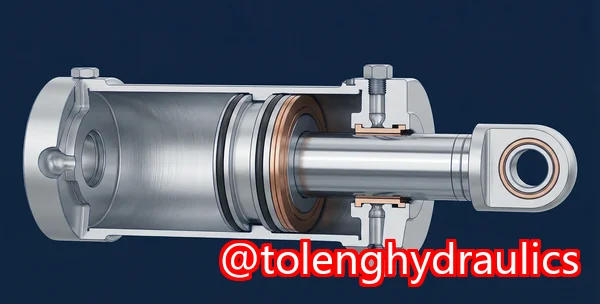
Industrial machinery today depends heavily on the performance and consistency of hydraulic systems. Among these, the standard hydraulic cylinder plays a central role in lifting, pushing, pressing, and positioning operations across construction, agriculture, and manufacturing sectors. From my experience working with industrial buyers and maintenance teams, I’ve seen that the performance of a hydraulic system often comes down to one decision: choosing the right hydraulic cylinder manufacturer.
A poorly manufactured cylinder can lead to leakage, drift, downtime, and even safety hazards. On the other hand, a precision-engineered product from a quality hydraulic cylinder supplier ensures long service life, stable performance, and predictable maintenance cycles. At Toleng, we focus on delivering consistent industrial hydraulic cylinders that meet global standards while supporting OEM and custom applications with strict quality control at every stage.
Standard Hydraulic Cylinder Specifications You Should Know
When I evaluate any standard cylinder manufacturing line, I always start with the core specifications. These define whether the product is suitable for heavy-duty industrial use or light automation systems.
Standard bore sizes typically range from 25mm to 320mm (1″ to 12.5″). This wide range allows engineers to match force output precisely with system requirements. Smaller bore sizes are often used in automation and agricultural machinery, while larger bores are essential in construction and mining equipment.
Standard stroke lengths vary from 50mm up to 3000mm (2″ to 118″). In real-world applications such as excavators or hydraulic presses, longer strokes provide greater flexibility, while compact strokes are preferred in confined mechanical assemblies.
Working pressure ratings are another critical factor. Most standard hydraulic cylinder designs operate between 16MPa and 25MPa (23203625 PSI). However, for demanding applications like heavy lifting or industrial presses, high-pressure options up to 35MPa are available.
Mounting styles also determine compatibility with machinery design. Common options include MF, MP, MS, ME, MT, TA, TC, TB, TD, LB, FA, FB, CA, and CB. I always advise engineers to confirm mounting compatibility early in the design phase to avoid costly redesigns later.
For piston rod materials, we typically use hard chrome plated C45, 1045, and 4140 steel. These materials provide excellent strength, corrosion resistance, and wear durability under continuous load cycles.
Cylinder tubes are manufactured using honed seamless steel such as ST52, E355, or CK45. The honing process ensures dimensional accuracy and smooth internal surfaces, which are critical for sealing performance.
Seal systems are equally important. High-quality seals from Parker, Hallite, Merkel, or equivalent brands significantly reduce leakage risk and improve long-term reliability. In my experience, seal selection often determines the real-world lifespan of OEM hydraulic cylinders more than any other component.
Manufacturing Quality Standards in a Hydraulic Cylinder Factory
A reliable hydraulic cylinder factory is defined not just by its equipment, but by its discipline in process control. At Toleng, we follow strict engineering and quality protocols throughout production.
CNC machining capabilities ensure tolerances within 0.01mm. This level of precision is essential for maintaining smooth piston movement and preventing internal leakage.
The honing process is another critical step. We achieve surface finishes between Ra 0.20.4m, which reduces friction and enhances seal life. A smoother bore surface directly translates to better performance under high pressure.
Welding quality is maintained through robotic welding systems. Unlike manual welding, robotic systems ensure consistent penetration, alignment, and structural strength across every unit.
Assembly is performed in controlled clean room environments (Class 10,000). This prevents dust and contamination from entering the sealing system, which is one of the most common causes of early failure in industrial hydraulic cylinders.
Testing procedures are extremely strict:
-
100% pressure testing at 1.5x working pressure
-
Leakage testing 0.05 ml/min at rated pressure
-
Endurance testing up to 500,000 cycles minimum
-
Dimensional inspection using CMM equipment
I always emphasize that a true quality hydraulic cylinder manufacturer does not rely on sampling tests. Every single cylinder must pass full inspection before shipment.
Why Choosing the Right Hydraulic Cylinder Manufacturer Matters
In procurement decisions, the manufacturer matters as much as the product itself. I’ve seen many cases where buyers chose cheaper suppliers only to face repeated breakdowns and unplanned downtime.
Material traceability is one of the first indicators of a reliable supplier. At Toleng, all steel materials come with full mill certificates and traceable batch records. This ensures consistency in strength, hardness, and chemical composition.
Quality certifications also reflect manufacturing discipline. ISO 9001:2015, CE, and SGS certifications demonstrate that the production system follows internationally recognized standards.
Another key factor is in-house capability. A manufacturer that controls CNC machining, honing, welding, assembly, and testing internally has far greater consistency compared to outsourced production chains.
Lead time is also crucial in industrial supply chains. For standard hydraulic cylinders, we typically deliver within 715 days. This allows equipment manufacturers and maintenance teams to reduce downtime significantly.
Technical support is often overlooked. A strong custom hydraulic cylinder manufacturer should provide engineering assistance for load calculations, mounting selection, and system integration.
Customization capabilities further distinguish top-tier suppliers. These may include:
-
Special hydraulic port locations
-
Custom piston rod end designs
-
Integrated position sensors for automation systems
-
Corrosion-resistant coatings for marine or outdoor environments
Applications of Standard Hydraulic Cylinders in Industry
Standard hydraulic cylinders are used across a wide range of industries, and I often see them in applications where reliability is non-negotiable.
In construction equipment, they are essential in excavators, loaders, and bulldozers, where high force and durability are required under extreme conditions.
In agriculture, tractors, harvesters, and balers rely on hydraulic cylinders for lifting, steering, and cutting operations.
Industrial automation systems use hydraulic cylinders in presses, conveyors, and lifting platforms where controlled linear motion is required.
Material handling equipment such as forklifts and pallet jacks depend on compact yet powerful cylinder systems to ensure safe lifting and transport.
Mobile hydraulics, including cranes, trucks, and aerial work platforms, rely heavily on stable cylinder performance for safety-critical operations.
Across all these industries, the demand for reliable industrial hydraulic cylinders continues to grow as machinery becomes more automated and efficiency-driven.
Conclusion: How to Select the Right Hydraulic Cylinder Manufacturer
Based on my experience working with procurement teams and engineers, I recommend using a structured checklist when selecting a supplier:
-
Verify ISO certification and quality management systems
-
Request full material certificates and pressure test reports
-
Inspect machining tolerances and surface finish standards
-
Evaluate lead times and after-sales technical support
-
Compare warranty terms (standard is typically 1224 months)
Choosing the right hydraulic cylinder manufacturer is not just about priceit is about long-term reliability, safety, and system efficiency.
If you are looking for a dependable partner in hydraulic systems, I recommend exploring our range of standard hydraulic cylinders here:
🔗 https://tolenghydraulics.com/standard-hydraulic-cylinder/
We also provide detailed specification sheets and engineering support for OEM and custom hydraulic cylinder requirements upon request.
FAQ: Standard Hydraulic Cylinders
-
What are the standard bore sizes for hydraulic cylinders?
Standard bore sizes range from 25mm to 320mm, depending on application requirements.
-
How do I verify if a manufacturer is ISO certified?
You can request ISO 9001:2015 certificates and verify them through issuing certification bodies.
-
What pressure ratings are available for standard cylinders?
Typical ratings are 1625MPa, with high-pressure versions up to 35MPa.
-
Can standard cylinders be customized?
Yes, options include rod ends, ports, coatings, and integrated sensors.
-
What is the typical lead time from a manufacturer?
Standard production usually takes 715 days.
-
How do you test cylinder quality before shipping?
Each unit undergoes pressure, leakage, dimensional, and endurance testing.
-
What mounting styles are considered standard?
Common styles include MF, MP, MS, ME, MT, TA, TC, TB, TD, LB, FA, FB, CA, and CB.
-
Do you provide CAD drawings for standard cylinders?
Yes, CAD drawings and technical documentation are available for engineering integration.
Keywords Section
Primary: standard hydraulic cylinder, hydraulic cylinder manufacturer, standard cylinder
Secondary: manufacturing, factory, CNC machining, quality control, pressure testing, ISO 9001, bore sizes, mounting styles, piston rod, seal kit, OEM, lead time, technical support

