
Learn how particulate, water, and air contamination silently destroy hydraulic cylinder parts. Discover proven filtration strategies, oil cleanliness standards, and preventive maintenance practices that dramatically extend component life and prevent repeat failures.
✔ Contamination Types & Sources Explained
✔ ISO 4406 Cleanliness Targets for Cylinders
✔ Filtration, Breathers & Oil Analysis Best Practices
✔ How Contamination Causes Seal & Rod Damage
✔ OEM Cylinder Flushing & Clean Assembly Solutions

Quick Answer
Hydraulic system contamination—solid particles, water, air, and degraded oil—is the root cause of over 70% of hydraulic cylinder failures. Abrasive particles embed in seals and score rods and barrels, water causes corrosion and oil degradation, and air leads to cavitation and erratic motion. Reducing contamination requires a layered approach: proper filtration, regular oil analysis, effective breathers, careful fluid handling, and clean cylinder assembly. Maintaining fluid cleanliness to ISO 4406 18/16/13 or better can double or triple the service life of seals and hard parts.
Key Takeaways
-
The most damaging particles are often invisible to the naked eye (5–15 microns), fitting perfectly into seal clearances.
-
A single dirty oil top-up can introduce more contaminants than the cylinder sees in months of normal operation.
-
Water concentrations as low as 0.1% can reduce bearing life by up to 90% in hydraulic systems.
-
New oil is not necessarily clean oil—always filter new fluid before it enters the reservoir.
-
Contamination control is significantly cheaper than replacing scored rods, barrels, and seals.
Who Should Read This Guide?
✔ Hydraulic system maintenance technicians and reliability engineers
✔ Fleet managers seeking to reduce hydraulic component failures
✔ Design engineers specifying filtration for new equipment
✔ Anyone experiencing recurring seal failures, rod scoring, or pump wear
✔ OEMs wanting to deliver cleaner hydraulic cylinders to customers
Why Contamination Control Is the Foundation of Cylinder Life
Every hydraulic cylinder component—the barrel, piston rod, seals, and gland—is manufactured to precise tolerances. Yet, even the best OEM-quality seal or the most perfectly chrome-plated rod will fail prematurely if the hydraulic fluid is contaminated.
Contamination is not a single problem; it is a chain reaction. A hard particle embeds in a wiper seal, scratches the rod, and that scratch then grinds away the rod seal with every stroke. The resulting metal particles circulate, scoring the barrel and piston. Meanwhile, water in the oil reduces viscosity, causing boundary lubrication and accelerated wear on all moving surfaces. Before you know it, a cylinder that should have lasted 15,000 hours is leaking at 2,000 hours—and the same failure pattern repeats after every rebuild.
Effective contamination control breaks this chain. It starts with understanding what contaminants exist, where they come from, and how to stop them at every entry point.
Types of Contaminants That Destroy Hydraulic Cylinders
| Contaminant Type | Typical Sources | Damage Mechanism | Affected Components |
|---|---|---|---|
| Solid Particles (silica, metal, fibers) | Built-in from manufacturing, ingressed through breathers and wipers, generated by component wear | Abrasive wear, embedding in seals, scoring rods and bores, blocking orifices | Rods, seals, barrels, pistons, cushion orifices |
| Water | Condensation (breather), cooler leaks, new oil, washdown ingress | Corrosion, oil oxidation, viscosity reduction, additive depletion | Rod surface (pitting), barrel bore, seals (swelling/hardening) |
| Air | Low reservoir level, leaking suction lines, cylinder cavitation | Spongy operation, oxidation, cavitation erosion, loss of lubrication | Pumps, barrel bore, seals (dieseling damage) |
| Heat / Oxidized Oil | Overworking, internal bypass, insufficient cooling | Varnish and sludge formation, seal hardening, oil thickening | Seals, valves, orifices, overall system performance |
| Chemical Contaminants | Wrong oil, mixing incompatible fluids, cleaning solvents | Seal swelling or shrinkage, corrosion, additive breakdown | Seals, all metal surfaces |
Where Contamination Comes From: The Three Entry Paths
1. Built-In Contamination (Manufacturing & Assembly)
New hydraulic cylinders are not automatically clean. Residual machining chips, grinding swarf, welding scale, thread-cutting debris, and even dust from assembly areas can be trapped inside a cylinder when it leaves the factory. Without a thorough flushing and cleaning process, this built-in contamination is pumped directly into the hydraulic system on the first cycle.
Toleng’s solution: Every cylinder we manufacture undergoes a multi-stage cleaning process, including bore flushing, followed by a clean-room assembly protocol, and a final pressure test with clean, filtered oil. We can also provide cylinders flushed to specific cleanliness levels for contamination-sensitive applications.
2. Ingested Contamination (During Operation)
This is the most common ongoing source. Contaminants enter the system during normal operation through:
-
Rod wiper seals: When the rod retracts, a tiny film of whatever is on the rod—dirt, water, salt—can be pulled past a worn or low-quality wiper seal. This is why weekly rod and wiper inspections are critical.
-
Reservoir breather: As the cylinder extends and retracts, the reservoir “breathes” in and out. An open breather or one with a degraded filter element ingests airborne dust and humidity directly into the oil.
-
Oil top-ups and changes: Pouring new oil from a dirty container, using a dirty funnel, or simply opening the reservoir cap in a dusty or windy environment introduces particles.
3. Generated Contamination (Wear Particles)
As components wear, they generate their own contaminants. A tiny metal flake from a pump wear plate, a fiber from a disintegrating filter element, or a piece of a deteriorating seal all circulate and create a chain reaction of further wear. This is why oil analysis is so important—it detects the type and quantity of particles, helping you identify which component is failing before it causes a complete breakdown.
How Contamination Damages Specific Cylinder Parts
Understanding the exact failure mechanism helps justify the investment in contamination control.
Rod and Rod Seal
The dynamic seal interface is the most contamination-sensitive area. A hard particle (often silica from dirt) that is only 5–15 microns across embeds in the polyurethane rod seal lip. As the rod strokes, this particle acts like a cutting tool, machining a fine scratch along the entire length of the chrome. That scratch then becomes a leak path. In saltwater environments, it also becomes a corrosion initiation point. The damaged rod, in turn, destroys a new seal within hours, creating a vicious cycle. Read more about rod material selection for corrosive environments.
Piston Seal and Barrel
Particles circulating in the oil are pressurized into the clearance between the piston and barrel. They can embed in the softer piston seal material (especially PTFE) and score the barrel bore. Once the bore is scored, internal bypass occurs, causing cylinder drift and overheating. A scored barrel must be honed oversize or replaced—a repair that costs many times more than a high-quality hydraulic filter.
Gland Bushing and Wear Rings
Contaminated oil wears the gland bushing and piston wear rings faster. As these guiding elements wear, clearance increases, allowing the piston and rod to run off-center. This misalignment then unevenly loads the seals, accelerating their failure. The resulting metal particles from the worn bushing further contaminate the oil.
Cushion Components
The small metering orifices in hydraulic cushions are easily blocked by particles or sludge. A blocked cushion fails to decelerate the piston, causing end-of-stroke hammering that can crack the end cap or mounts over time.
Establishing Cleanliness Targets: ISO 4406 and NAS 1638
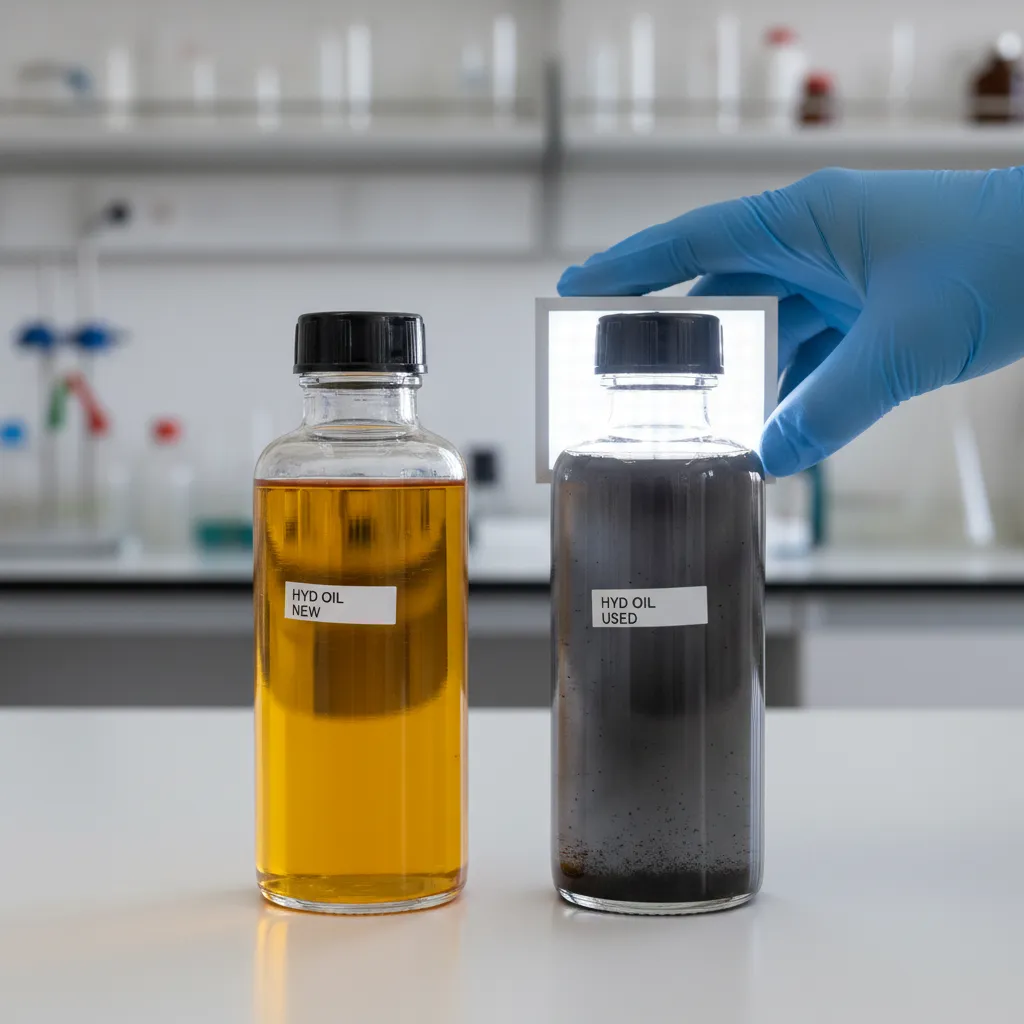
To control contamination, you need a measurable target. The most widely used standard is ISO 4406:1999, which expresses cleanliness as a three-number code, e.g., 18/16/13.
-
First number: Number of particles ≥ 4 µm per milliliter of fluid.
-
Second number: Number of particles ≥ 6 µm per milliliter.
-
Third number: Number of particles ≥ 14 µm per milliliter.
Typical recommended cleanliness levels for hydraulic cylinders:
-
High-pressure cylinders (>250 bar) with proportional/servo valves: 16/14/11 or better
-
Standard industrial and mobile cylinders: 18/16/13
-
Low-pressure, general-purpose cylinders: 20/18/15
NAS 1638 is an older standard that uses a single class number (e.g., NAS 7, NAS 9). ISO 4406 is preferred for modern systems because it provides a more detailed particle size breakdown.
Action: Send a representative oil sample to a certified lab. If your results exceed the targets above, implement the following control measures immediately.
Proven Strategies to Reduce Contamination
1. Install and Maintain Proper Filtration
Filtration is the kidney of the hydraulic system. A well-designed filtration strategy includes:
-
Pressure filter after the pump, protecting downstream components.
-
Return-line filter before the reservoir, capturing generated and ingested particles.
-
Off-line (kidney loop) filter for continuous polishing of reservoir oil, especially on large systems or those in dirty environments.
-
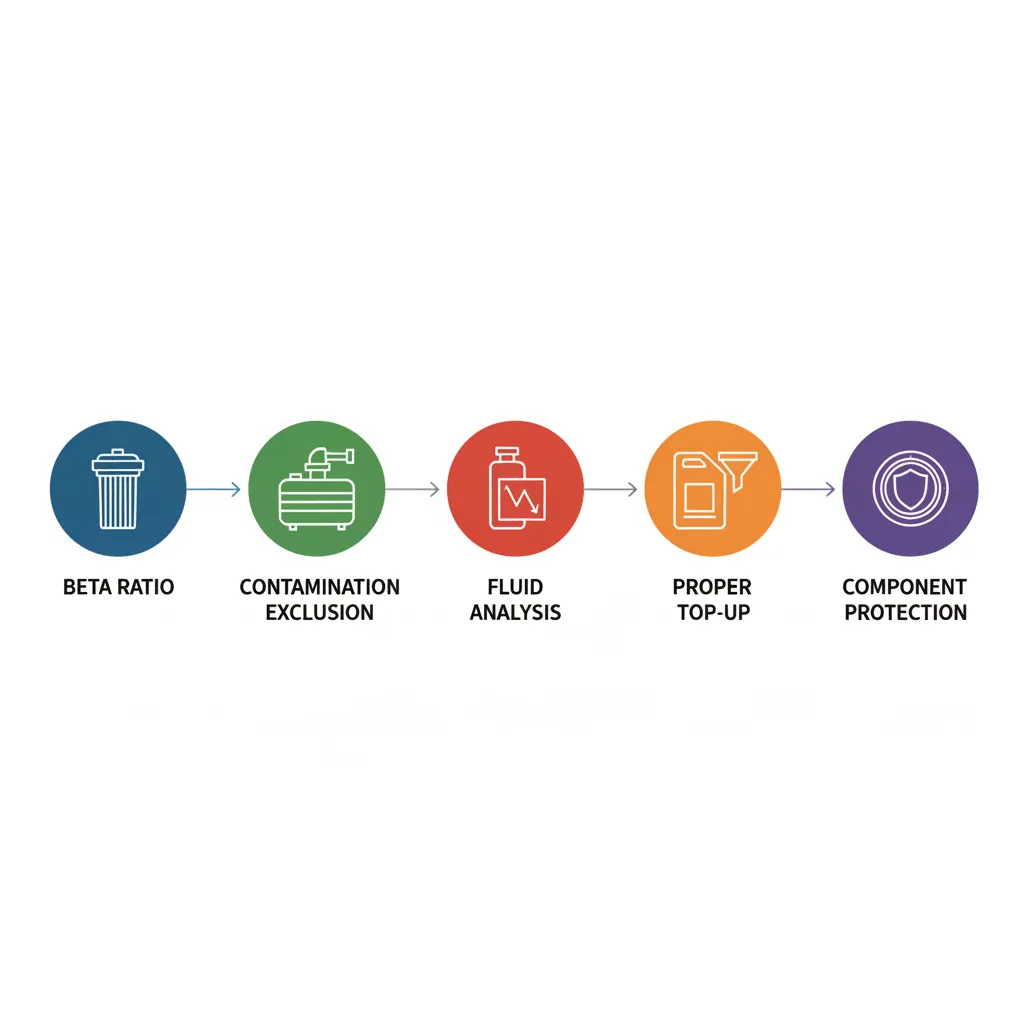
Beta ratio selection: For high-pressure cylinders, select a return filter with Beta₅ ≥ 1000 (captures 99.9% of particles ≥5 µm).
Change filter elements based on condition (indicator or differential pressure), not just on a time schedule. A clogged filter goes into bypass and provides no protection. A filter changed too early wastes money. Use clogging indicators.
2. Upgrade Reservoir Breathers
Replace standard breather caps with desiccant breathers that remove both particulate and moisture from the air entering the reservoir. In marine or high-humidity environments, this single upgrade can dramatically reduce water contamination and internal corrosion.
3. Practice Clean Oil Handling
-
Always filter new oil to the system’s target cleanliness before adding it. New oil is often delivered at ISO 22/20/17 or dirtier.
-
Use dedicated, clean, sealed containers for oil transfer.
-
Install quick-connect couplings with dust caps on the reservoir fill port to prevent open access.
-
Never use a rag (a source of lint and fibers) to wipe a dipstick or fill cap—use a lint-free cloth or clean paper towel.
4. Maintain Rod Wipers and Seals
A high-quality polyurethane wiper seal with a secondary lip is your first line of defense. Inspect wipers weekly—any hardening, cracking, or gap means contamination is already entering. In extreme environments (mining, forestry, waste), consider a metal-encased wiper or an external rod scraper/bellows for additional protection.
5. Flush New and Repaired Cylinders
Before connecting a new or rebuilt cylinder to the system, flush the cylinder and connecting hoses to remove any assembly debris. Circulate clean, filtered oil through the cylinder, cycling it fully, and then test the fluid cleanliness before returning to service. Toleng can supply cylinders pre-flushed and capped to a guaranteed cleanliness level.
6. Implement Regular Oil Analysis
Oil analysis is not just a lab test—it’s a predictive maintenance tool. Sample oil from a consistent location (preferably a turbulent point like before the return filter) and track:
-
Particle count (ISO 4406 trend)
-
Water content (ppm, target <200 ppm, ideally <100 ppm)
-
Viscosity
-
Additive depletion (TBN/TAN)
-
Wear metals (iron, chromium, copper, aluminum—indicating which component is wearing)
A rising particle count or a spike in iron (from rods/barrels) or chromium (from chrome wear) provides an early warning to inspect the hydraulic cylinders before a catastrophic failure.
Frequently Asked Questions
Q: What is the most dangerous particle size for hydraulic cylinders?
A: Particles in the 5–15 micron range are the most dangerous because they match the typical clearance gaps in seals and between moving parts. They are also invisible to the naked eye.
Q: Can you see contaminated oil?
A: Not reliably. Oil can look clean but have millions of particles per 100ml. Only a lab particle count or a portable particle counter can accurately assess cleanliness.
Q: How often should I sample hydraulic oil for analysis?
A: For critical systems with high-pressure cylinders, every 500 hours or quarterly. For general industrial systems, every 1,000 hours or biannually. Increase frequency if a trend is worsening.
Q: Is a kidney loop filter worth the investment?
A: Yes, for large reservoirs or systems in dirty environments. It continuously polishes the oil independently of the main system flow, maintaining cleanliness even when the main system is off.
Q: Can a dirty system be cleaned without replacing all the oil?
A: In many cases, yes. Portable filter carts (kidney loop units) can be connected to the reservoir and run until the oil reaches the target cleanliness. However, badly degraded oil (oxidized, high water content) should be replaced.
Q: Does Toleng supply contamination control products?
A: While our primary focus is hydraulic cylinders and components, we work with filtration partners and can advise on the correct filtration setup for your cylinder application. We also supply cylinders pre-cleaned to specific ISO cleanliness levels.
Protect Your Hydraulic Cylinders with Clean Systems and Components
Whether you need contamination-resistant cylinder designs, pre-flushed OEM assemblies, or engineering support to diagnose contamination-related failures, Toleng’s expertise is at your service.
✔ Pre-flushed cylinders to your cleanliness specification
✔ Heavy-duty wiper and seal upgrades for dirty environments
✔ Failure analysis to break the contamination-failure cycle
Request a Consultation

