
The Ultimate Guide to Hydraulic Cylinders: Types, Applications, Selection & OEM Expertise (2026)
Quick Answer: What is a Hydraulic Cylinder?
A hydraulic cylinder (often called a hydraulic ram or linear hydraulic actuator) is a mechanical device that uses pressurized hydraulic fluid to produce linear force and motion. It acts as the “muscle” of heavy machinery, converting fluid power into push/pull force.
The most common types of hydraulic cylinders include:
Welded Hydraulic Cylinders: Compact and durable, ideal for mobile machinery.
Tie-Rod Cylinders: Modular and repairable, used in industrial clamping and forming.
Telescopic Cylinders: Multi-stage, designed for long strokes in confined spaces (e.g., dump trucks).
Single Acting Cylinders: Pressure extends the rod; spring or gravity returns it.
Double Acting Cylinders: Pressure controls both the extension and retraction strokes.
How Does a Hydraulic Cylinder Work?
Understanding the basic physics helps you choose a cylinder that won’t fail under load. A standard hydraulic cylinder consists of a cylinder barrel, a piston, a piston rod, and end caps.
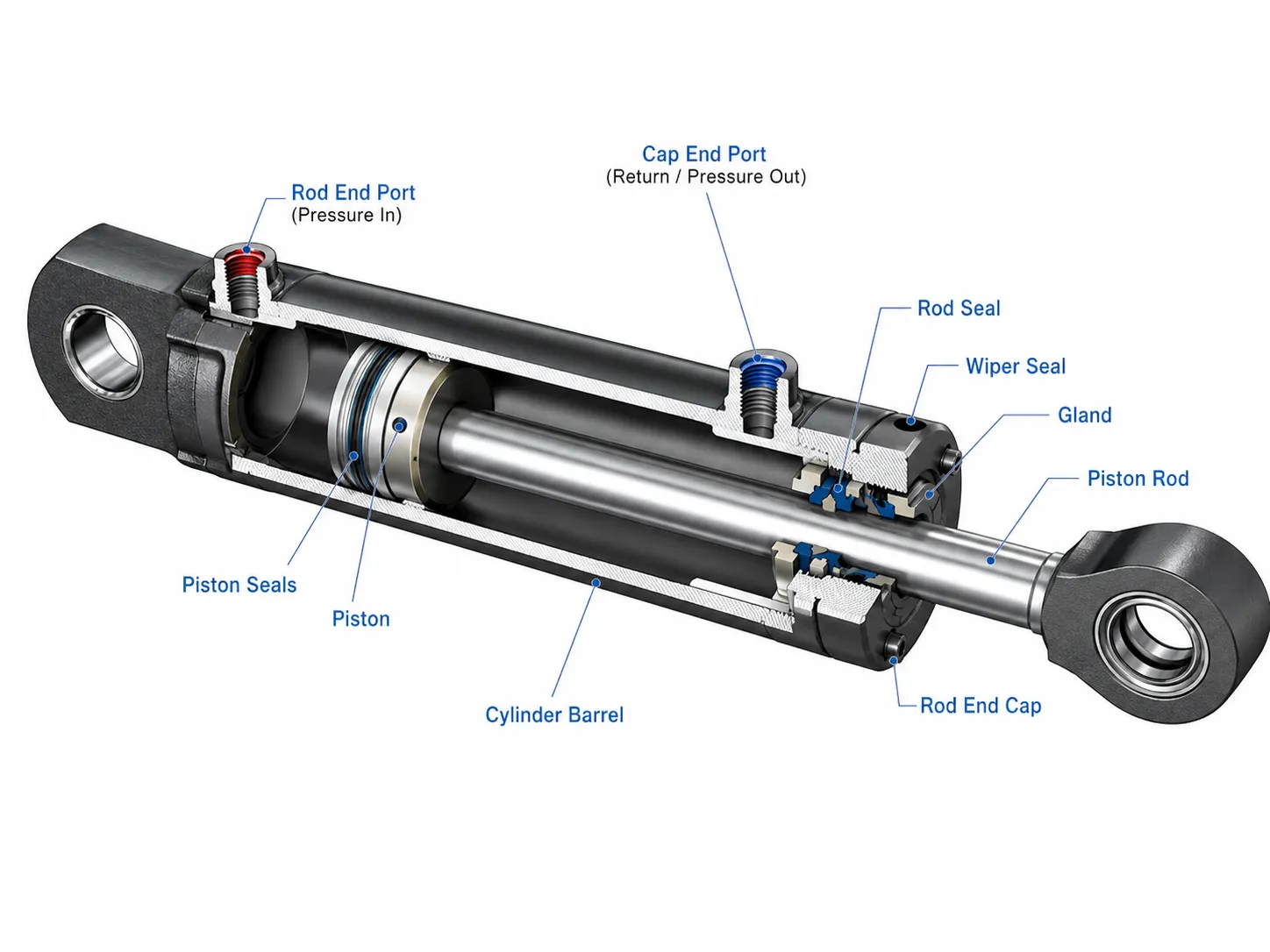
The Extend Cycle:
Hydraulic fluid is pumped into the base port (or cap-end port).
Fluid pressure acts against the surface area of the piston.
This force pushes the piston, extending the piston rod outward.
The Retract Cycle (for Double Acting Cylinders):
The direction of hydraulic fluid flow is reversed.
Fluid enters the rod port (near the gland).
Pressure pushes the piston back toward the cap, retracting the rod.
Important Data Point: Proper maintenance is critical because seal failures account for approximately 70–80% of hydraulic cylinder leaks, leading to bypass and internal drift.
Visual Analysis of Hydraulic Cylinder Types
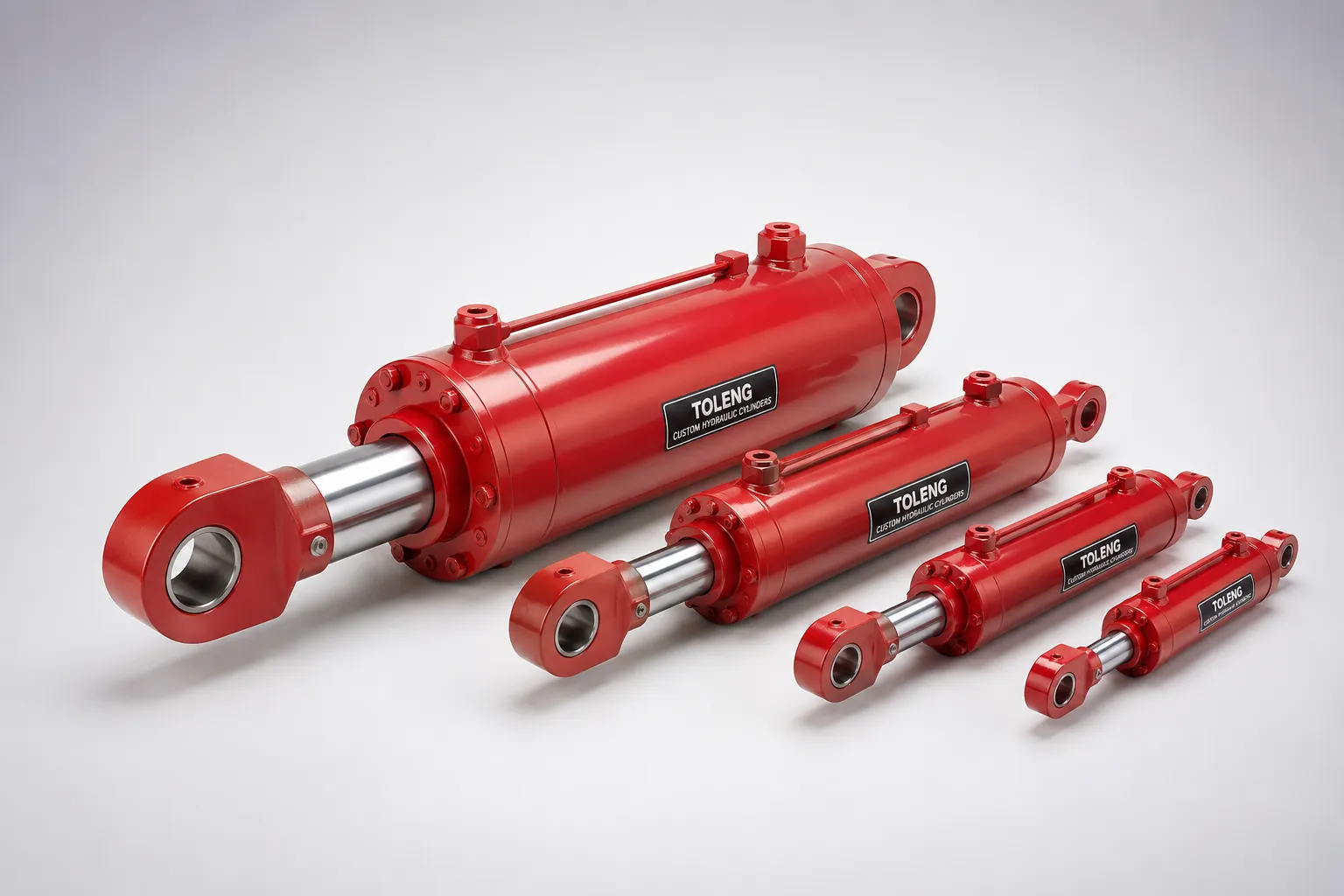
The featured image shows four custom-manufactured cylinders. Here is a professional breakdown:
1. Multi-Stage / Telescopic-Style Cylinders (Top Two)
These cylinders exhibit a tiered, stepped barrel profile. While their exact internal nesting can only be verified during assembly, they are visually consistent with telescopic hydraulic cylinders. Their robust gland design is engineered for applications demanding an exceptionally long stroke length while requiring a compact retracted size, such as dump truck hoists.
2. Standard Welded Double-Acting Cylinder (Third One)
The third unit is a classic example of a welded double-acting hydraulic cylinder, identifiable by its two clearly visible oil ports. Here, the system actively pumps fluid to both extend and retract the rod. This makes it ideal for excavators, backhoes, and industrial press machines.
3. Compact OEM Custom Cylinder (Bottom One)
The smallest cylinder showcases a threaded male rod end. Depending on the exact application requirements provided by the OEM, this compact model can be customized as either a spring-return single-acting cylinder for simple lifting tasks, or a small-bore double-acting unit for precise industrial automation.
Diving Deeper: Key Hydraulic Cylinder Varieties
If you are an OEM buyer, you need to distinguish the engineering differences:
Welded Cylinders vs. Tie-Rod Cylinders: Welded cylinders feature a welded-on gland and cap. They have a smaller envelope, fewer leak points, and are perfect for heavy-duty, high-shock applications (excavators). Tie-rod cylinders are clamped with four threaded tie rods, making them easier to disassemble for seal replacement in factory environments.
Single Acting vs. Double Acting: Single acting requires hydraulic pressure only for extending; it relies on external forces (like a heavy load) or an internal spring to retract, making it simple and cost-effective for jacks. Double acting utilizes pressure for both directions, offering total control for industrial hydraulic cylinders and robotic arms.
Telescopic (Multi-Stage) Hydraulic Cylinders: Often used in mobile hydraulic cylinders (waste trucks, snow plows). They can extend up to 4 times their closed length, maximizing lifting height without requiring a tall, protruding cylinder.
Common Hydraulic Cylinder Applications Across Industries
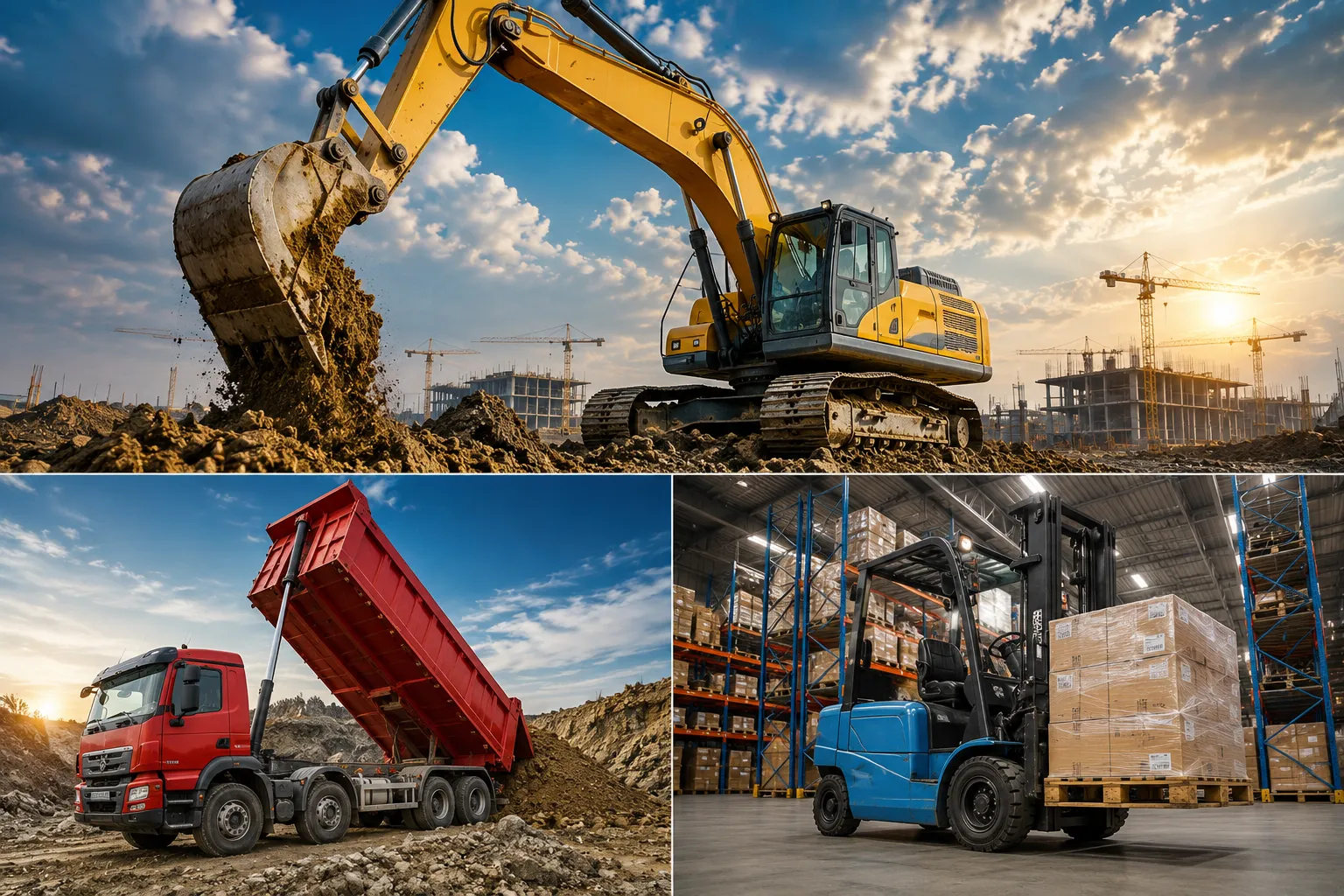
Hydraulic cylinders power virtually every heavy industrial sector. Here is where you will find them:
Construction Equipment: Excavators (boom, arm, bucket), backhoes, wheel loaders, bulldozers.
Agriculture Machinery: Tractors (3-point hitches), combine harvesters, cotton pickers, plows.
Material Handling: Forklifts (tilt and lift), pallet jacks, container handlers, overhead cranes.
Mining Equipment: Rock breakers, haul trucks, continuous miners.
Waste Trucks & Snow Plows: Garbage truck compactors, dump truck tipper beds, snowplow blade angle controls.
Forestry Machinery: Wood chippers, log loaders, forest harvesters.
Marine & Offshore: Winches, steering systems, hatch covers on cargo ships.
Injection Molding & Presses: Industrial clamping mechanisms.
Quick Comparison Table: Find the Right Cylinder in Seconds
Type Best For / Applications Stroke Length Cost / Complexity Mounting Style
Welded Cylinder Heavy machinery, excavators, dump trucks Medium $$ Flange, Trunnion, Clevis
Tie-Rod Cylinder Industrial presses, manufacturing, forming Medium $$$ Flange, Clevis, Side-Lug
Telescopic Cylinder Truck tipping, waste compactors, cranes Very Long $$$$ Cross-tube, Clevis
Single Acting Jacks, lift tables, simple push mechanisms Short $ Threaded, Base mount
Double Acting Robotics, backhoes, precise linear movements Medium $$ Universal
The Authoritative OEM Buying Guide: 6 Steps to Specification
At Toleng, one of the most common mistakes we see is customers specifying the correct stroke but overlooking the mounting type or rod diameter. Even a perfectly sized cylinder can fail prematurely if the mounting configuration does not match the equipment’s load path.
Follow these 6 essential steps to source the exact component:
Step 1: Determine the Bore Size (Force)
The bore determines your potential push force. Calculate it using: Force (Tons) = Pressure (PSI) × Piston Area (in²). We always recommend a 20% safety margin above your theoretical maximum load.
Step 2: Measure the Stroke Length
This is the rod’s travel distance from fully retracted to fully extended. Tip: Add 3–5% extra stroke length to your measurement to avoid “bottoming out” the piston.
Step 3: Verify Working Pressure (PSI/Bar)
Know your hydraulic pump’s maximum output. Heavy-duty industrial cylinders typically operate between 3,000 PSI (210 Bar) and 5,000 PSI (350 Bar). Always specify your cylinder to withstand the peak, not just the average, pressure.
Step 4: Select the Correct Mounting Type
The mounting style dictates how the cylinder attaches to the machine chassis:
Flange Mount: For rigid, straight-line pushing.
Trunnion Mount: For pivoting arms (e.g., excavator booms).
Clevis/Crosstube Mount: For wider angular pivots.
[Learn more in our guide: Hydraulic Cylinder Mounting Types]
Step 5: Choose the Rod Diameter & Material
A thinner rod gives faster retraction speed but risks buckling. For heavy pushing, choose a thicker rod. Toleng manufactures rods with hard chrome coating (20-30μm thickness) to provide exceptional wear resistance.
Step 6: Confirm Port Threads and Seals
Ensure your port sizes match your hose fittings (SAE, NPT, BSPP). For extreme temperatures, specify Viton (FKM) seals; for standard agriculture/construction, Polyurethane (PU) is the industry standard.
Maximizing Cylinder Lifespan: Maintenance Data You Should Know
Proper maintenance extends the life of your heavy-duty hydraulic cylinders by thousands of hours. Below is our internal engineering data for standard, clean-environment applications:
Component Expected Lifetime Cause of Failure
Seal / Wiper Set 2000 – 4000 Operating Hours Heat degradation, friction, contaminant ingress.
Piston Rod Surface 10,000+ Hours Exposure to abrasive dust, impact scoring.
Cylinder Barrel 20,000+ Hours Internal scoring from contaminated fluid.
Crucial Maintenance Tips:
Wipe the rod daily: Dust and grit on the exposed chrome rod will rip apart the wiper seals within days.
Check for cylinder drift: If your equipment slowly lowers overnight, your piston seals are bypassing fluid internally.
[See our guide: Troubleshooting Hydraulic Cylinder Drift]
Change hydraulic fluid regularly: Contaminated fluid is the #1 cause of barrel scoring.
Why OEMs Choose Toleng for Custom Hydraulic Cylinders
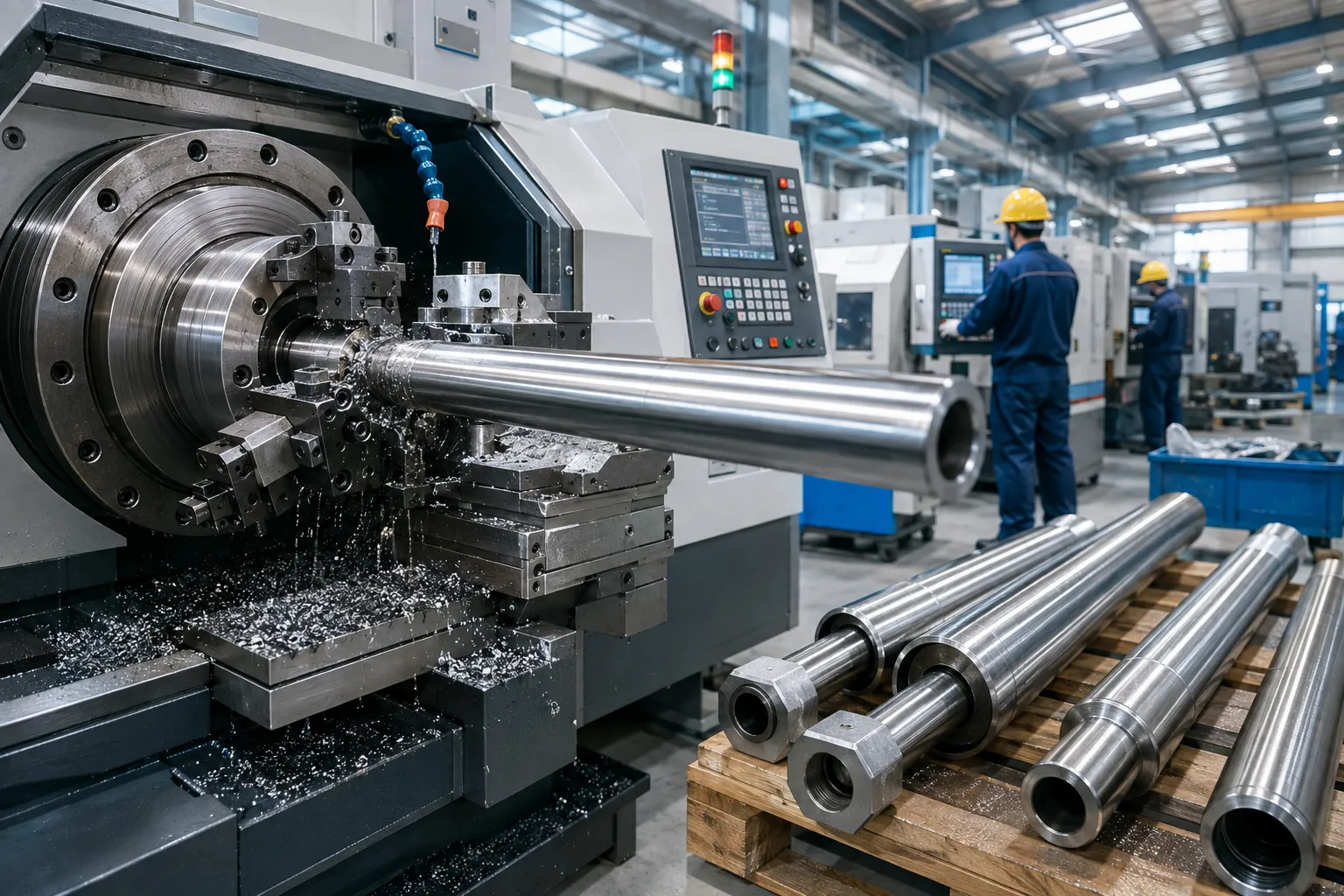
At Toleng Hydraulics, we are more than just an industrial hydraulic cylinder supplier. We are an ISO9001-certified manufacturer with over 20 years of hands-on manufacturing experience.
What sets Toleng apart from general hydraulic cylinder distributors:
1st-Hand Engineering: We don’t just box parts; we machine them.
100% Pressure Tested: Every single unit undergoes pressure testing up to 150% of its working pressure to guarantee zero leaks before shipment.
OEM & ODM Capabilities: We produce cylinders strictly to your custom blueprints or application data.
Material Excellence: Precision CNC machining ensures tight tolerance on bore and rod diameters. Hard chrome rod coating (20-30μm) provides superior corrosion and wear resistance.
Wide Customization Range: Bore 25–320mm, Stroke up to 6000 mm, Standard or High-pressure ratings (up to 5000 PSI).
Because we manufacture welded cylinder and telescopic hydraulic cylinder units directly, we can offer significantly better lead times and competitive custom pricing compared to major corporations like Parker or Magister.
Frequently Asked Questions (FAQ)
Q1: What is the difference between welded and tie-rod hydraulic cylinders?
A: Welded hydraulic cylinders have the cap and gland welded directly to the barrel, making them more compact and strong for high-vibration construction machinery. Tie-rod cylinders are clamped with threaded rods, allowing for easier rebuilding and seal replacement in industrial maintenance settings.
Q2: What pressure do standard hydraulic cylinders operate at?
A: Most industrial and mobile hydraulic cylinder suppliers design units to operate between 2,000 PSI and 5,000 PSI. However, heavy mining equipment may require custom high-pressure cylinders up to 10,000 PSI.
Q3: How long do hydraulic cylinders last?
A: With routine maintenance, a high-quality custom hydraulic cylinder can last 5 to 10 years. However, the seal components typically require replacement every 1 to 2 years depending on operating hours and environmental contamination.
Q4: Can hydraulic cylinders be repaired?
A: Yes. If the internal barrel is not heavily scored, standard repairs involve replacing the main seals, O-rings, and wiper seals. If the piston rod is scratched deeply, the rod itself must be replaced.
Q5: What causes hydraulic cylinder drift?
A: Cylinder drift (where equipment slowly lowers while the valve is closed) is almost always caused by worn or damaged internal piston seals. This allows fluid to bypass from the cap side to the rod side.
Q6: How do I prevent hydraulic cylinder rod seal leaks?
A: 70% of seal failures are caused by debris on the chrome rod. Use a clean, lint-free cloth to wipe down the piston rod every day when the machine is in heavy use. [For a full checklist, check our Cylinder Inspection Guide]
Ready to Source Your Custom Cylinder?
If you are looking for a reliable hydraulic cylinder manufacturer to supply quality parts for your construction, agricultural, or industrial OEM equipment, Toleng is ready to assist.
We provide:
✔ Free engineering evaluation of your application requirements.
✔ OEM drawings accepted (we can work from your design or reverse-engineer existing parts).
✔ 24-hour quotation turnaround on standard size requests.
✔ Worldwide shipping with durable packaging to prevent corrosion during transit.
Stop settling for distributors that don’t understand the machining process. Talk to the manufacturer directly.

