
Introduction
Hydraulic cylinders are among the most important components in hydraulic systems, converting fluid power into linear mechanical force. They are widely used in construction machinery, agricultural equipment, industrial automation, mining, marine applications, and material handling systems.
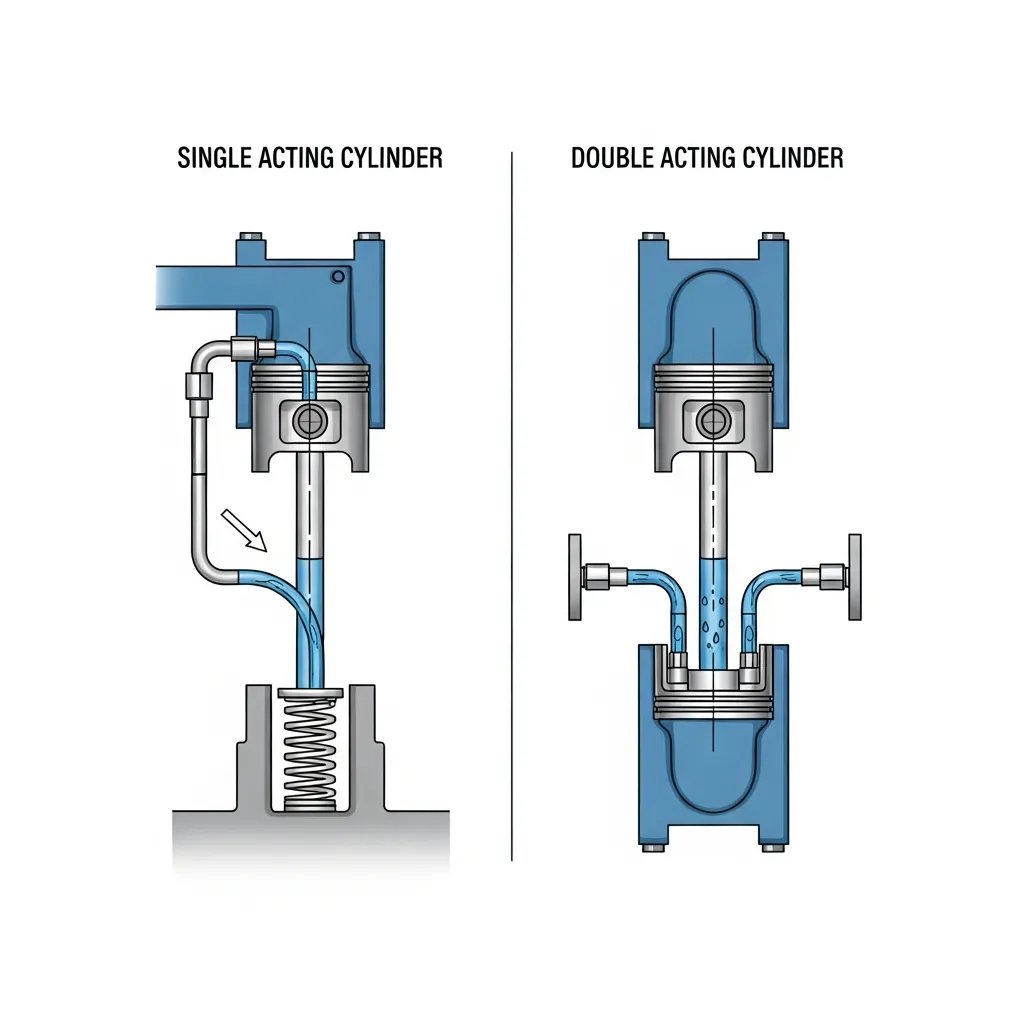
When selecting a hydraulic cylinder, one of the first decisions engineers and equipment manufacturers face is whether to use a single acting hydraulic cylinder or a double acting hydraulic cylinder. While both perform linear motion, their operating principles, performance characteristics, and ideal applications differ significantly.
Choosing the wrong cylinder type can lead to reduced efficiency, increased maintenance costs, and even system failure. This guide explains the differences between single acting and double acting hydraulic cylinders, their advantages and disadvantages, and how to determine which option is best for your application.
What Is a Single Acting Hydraulic Cylinder?
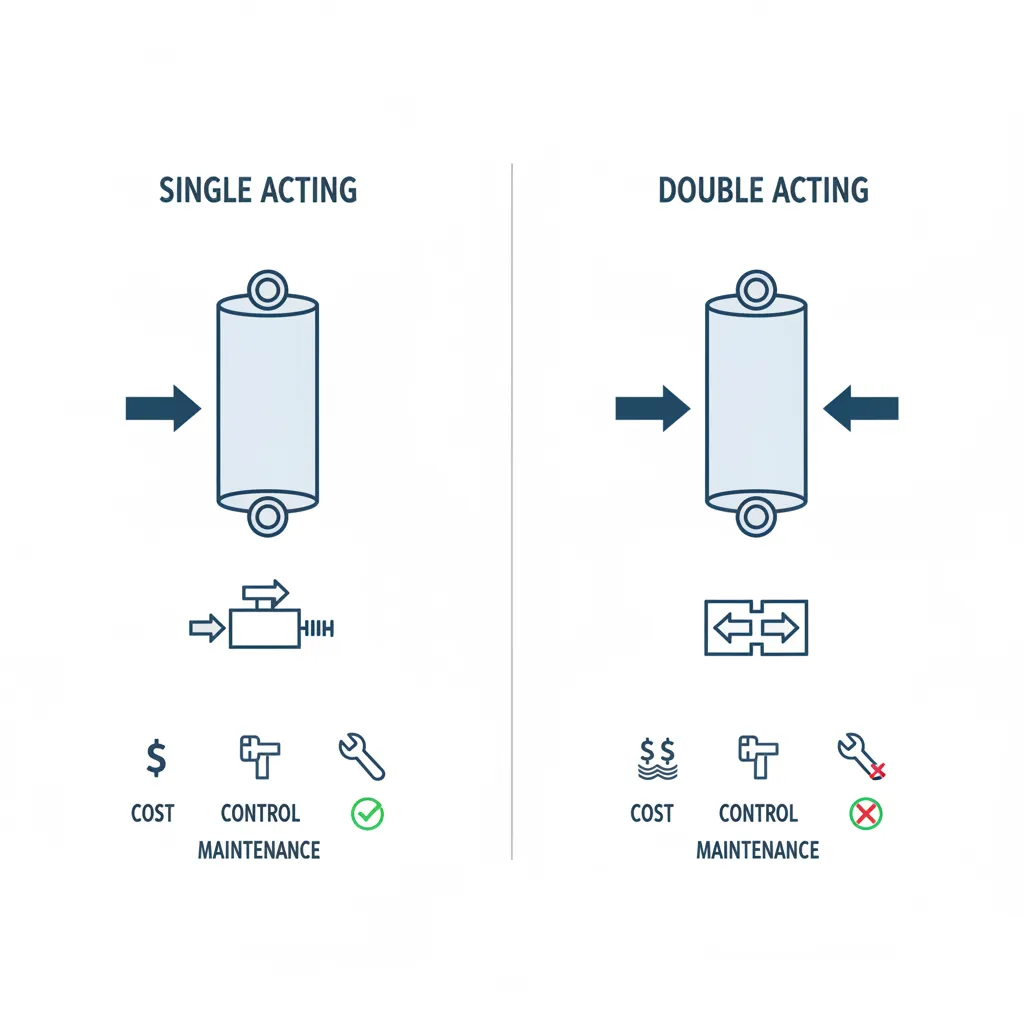
A single acting hydraulic cylinder generates force in only one direction using hydraulic pressure.
Working Principle
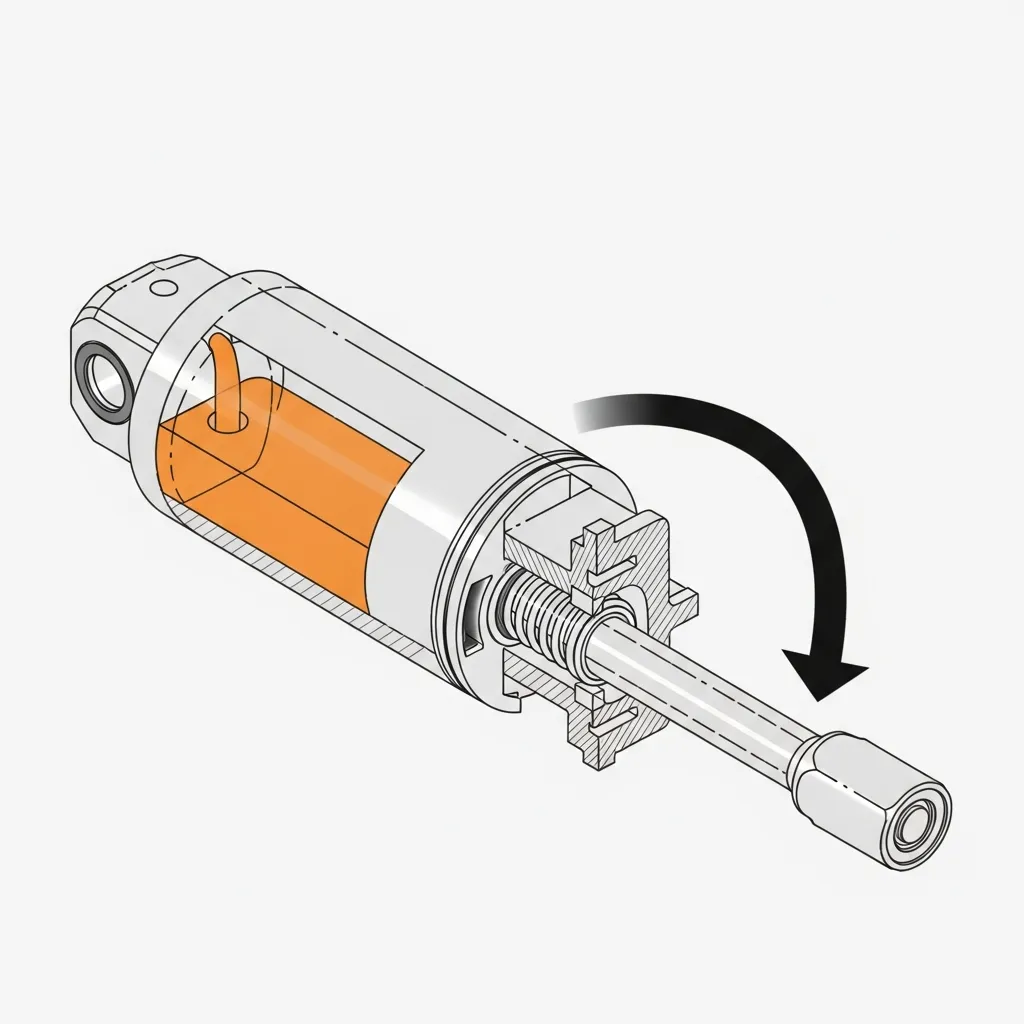
In a single acting cylinder, hydraulic fluid enters through a single port and pushes the piston in one direction, typically extending the rod.
The return stroke occurs through an external force such as:
- Gravity
- Spring force
- Load weight
- Mechanical assistance
Because pressure is applied to only one side of the piston, these cylinders require fewer hydraulic components and simpler control systems.
How It Works
- Hydraulic oil enters the cylinder.
- Pressure pushes the piston outward.
- Hydraulic pressure is released.
- Gravity, spring force, or load weight retracts the piston.
Common Usage Examples
Single acting cylinders are commonly used in applications where force is only needed in one direction.
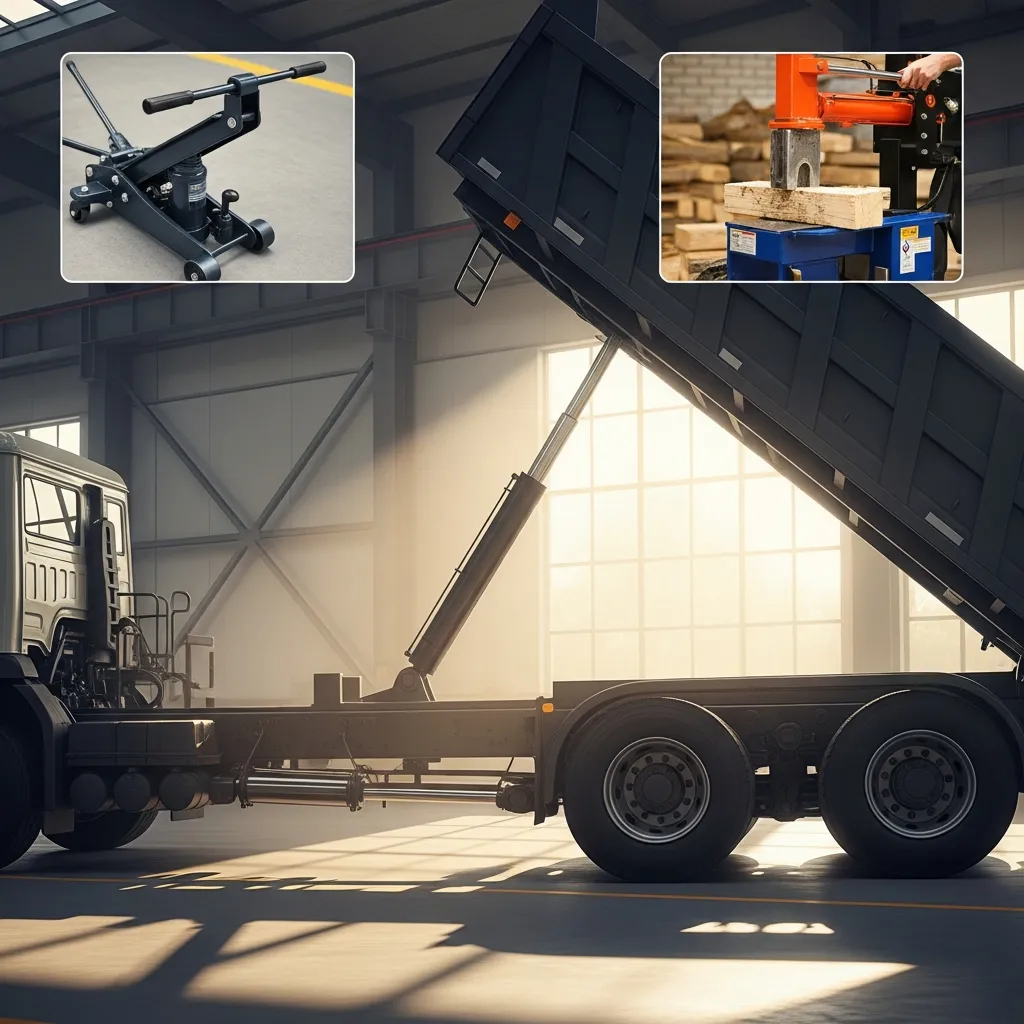
Typical applications include:
- Dump truck lifting systems
- Hydraulic jacks
- Agricultural log splitters
- Vehicle hoists
- Pressing equipment
- Material lifting devices
These applications benefit from simple operation and lower installation costs.
What Is a Double Acting Hydraulic Cylinder?
A double acting hydraulic cylinder uses hydraulic pressure for both extension and retraction.
Working Principle
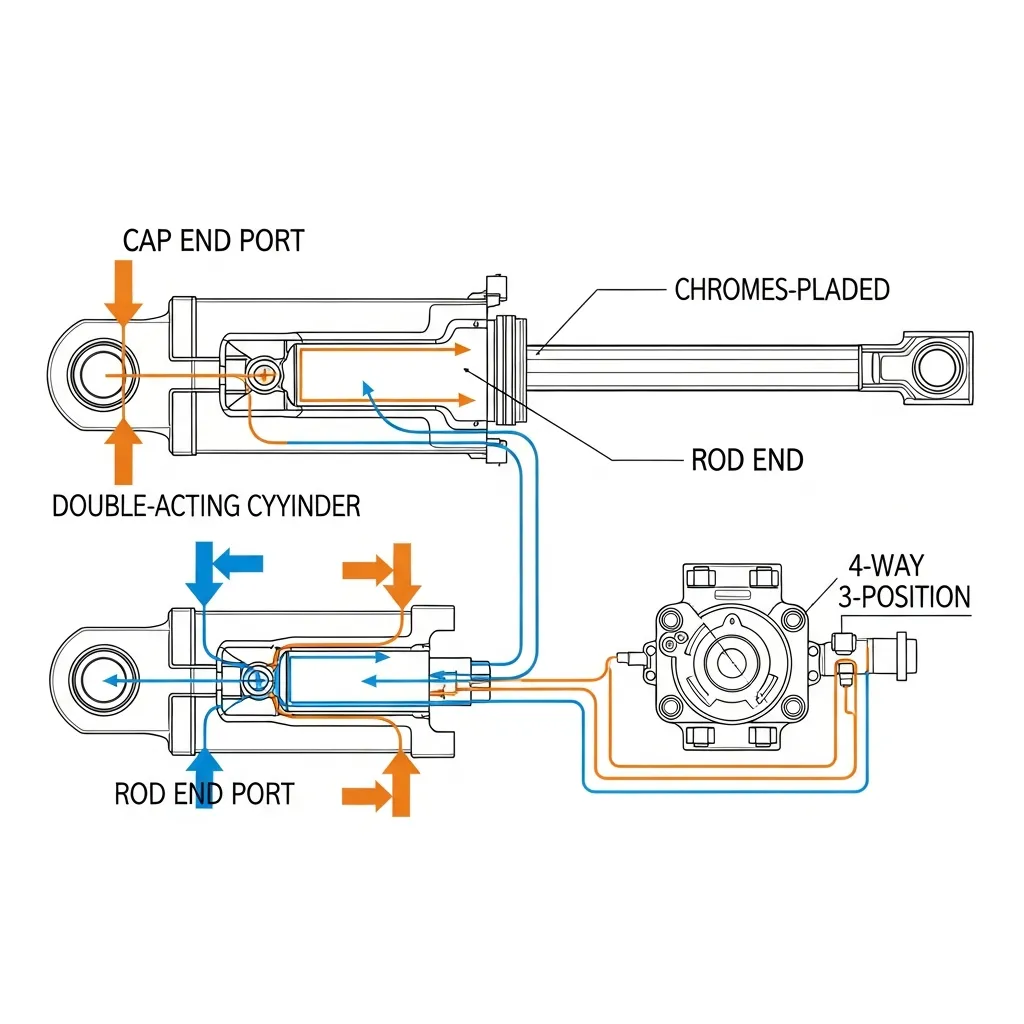
Unlike a single acting cylinder, a double acting cylinder has two hydraulic ports.
Hydraulic fluid alternately enters either side of the piston:
- One side powers extension.
- The opposite side powers retraction.
This design provides full control of motion in both directions.
How It Works
- Hydraulic oil enters the cap end to extend the rod.
- Oil on the rod side returns to the reservoir.
- Directional valve shifts.
- Oil enters the rod side.
- The piston retracts under hydraulic power.
Common Usage Examples
Double acting cylinders are preferred when controlled movement is required in both directions.
Typical applications include:
- Excavators
- Forklifts
- Injection molding machines
- Hydraulic presses
- Industrial automation systems
- Mining equipment
- Marine steering systems
- Material handling equipment
These applications often require continuous cycling and precise positioning.
Key Differences Between Single and Double Acting Cylinders
The following comparison highlights the most important differences.
| Feature | Single Acting Cylinder | Double Acting Cylinder |
|---|---|---|
| Number of Ports | 1 | 2 |
| Force Direction | One direction | Both directions |
| Return Stroke | Gravity, spring, or load | Hydraulic pressure |
| Hydraulic Circuit | Simple | More complex |
| Initial Cost | Lower | Higher |
| Control Capability | Limited | Excellent |
| Maintenance | Simpler | Moderate |
| Typical Applications | Lifting, pressing | Push-pull operations |
| Energy Consumption | Lower | Higher |
| Position Control | Basic | Precise |
Stroke Length Considerations
Both cylinder types are available in short and long stroke configurations.
However:
- Single acting cylinders are often used in vertical applications where gravity assists return.
- Double acting cylinders are better suited for long strokes requiring controlled motion throughout the entire travel range.
For heavy-duty industrial equipment, long-stroke double acting cylinders generally provide superior control and safety.
Energy Efficiency
Single acting cylinders can be more energy-efficient because hydraulic power is only required for one movement direction.
However, efficiency depends heavily on application conditions.
For example:
- A dump trailer raised once per cycle is ideal for a single acting cylinder.
- An excavator bucket moving hundreds of times per hour requires a double acting cylinder for maximum productivity.
Maintenance and Sealing
Single acting cylinders typically have:
- Fewer seals
- Simpler plumbing
- Lower maintenance requirements
Double acting cylinders contain:
- Additional seals
- Two hydraulic ports
- More complex control valves
Although maintenance requirements are slightly higher, modern double acting cylinders provide excellent service life when properly designed and maintained.
When to Use a Single Acting Cylinder
A single acting hydraulic cylinder is often the best choice when:
Low-Cycle Applications
The cylinder operates infrequently and does not require powered retraction.
Gravity-Assisted Return
The load naturally returns the cylinder to its original position.
Examples include:
- Dump bodies
- Lift platforms
- Certain agricultural machinery
Cost-Sensitive Designs
Single acting cylinders generally offer:
- Lower purchase cost
- Reduced hydraulic plumbing
- Simplified controls
Limited Installation Space
Systems with restricted valve capacity or simple hydraulic circuits often benefit from single acting designs.
When to Use a Double Acting Cylinder
A double acting hydraulic cylinder is usually preferred when:
Precise Motion Control Is Required
Hydraulic power controls movement in both directions.
Ideal for:
- Positioning systems
- Industrial automation
- Manufacturing machinery
High-Speed Repetitive Cycles
Applications involving continuous operation require powered extension and retraction.
Examples include:
- Excavators
- Presses
- Production equipment
Horizontal Applications
Gravity cannot assist retraction in horizontal installations.
Double acting cylinders ensure consistent performance regardless of mounting orientation.
Heavy-Duty Continuous Operation
Industries such as mining, steel production, and marine engineering rely heavily on double acting cylinders for durability and operational control.
Common Mistakes in Cylinder Selection
Selecting the wrong cylinder type can increase costs and reduce performance.
Using a Single Acting Cylinder When Retraction Requires Force
If the application must actively pull or retract a load, a single acting cylinder is usually unsuitable.
Ignoring Duty Cycle Requirements
Frequent cycling may overwhelm a design intended for occasional use.
Overlooking Environmental Conditions
Factors such as:
- Dust
- Moisture
- Corrosive environments
- Extreme temperatures
can significantly affect cylinder life and seal performance.
Underestimating Retraction Force Requirements
Double acting cylinders often require careful force calculations for both extension and retraction strokes.
Engineers should verify pressure, bore size, rod diameter, and load characteristics during system design.
Frequently Asked Questions (FAQ)
Can a Single Acting Cylinder Be Used Horizontally?
Yes, but it often requires an external spring or mechanical force for retraction because gravity assistance is unavailable.
Which Cylinder Type Lasts Longer?
Neither design inherently lasts longer.
Service life depends on:
- Seal quality
- Rod surface finish
- Operating pressure
- Maintenance practices
- Environmental conditions
A properly engineered cylinder of either type can provide many years of reliable service.
Do I Need a Different Pump for a Double Acting Cylinder?
Not necessarily.
However, double acting cylinders usually require directional control valves capable of supplying hydraulic flow to both cylinder ports.
What Is a Telescopic Cylinder?
A telescopic cylinder contains multiple nested stages that extend sequentially.
Telescopic cylinders may be:
- Single acting
- Double acting
Single acting telescopic cylinders are commonly found on dump trucks, while double acting versions are often used in specialized industrial applications.
How Toleng Hydraulic Supports Custom Cylinder Applications
In real-world industrial equipment, standard catalog cylinders do not always meet performance requirements. OEM manufacturers often need customized solutions based on mounting dimensions, operating pressure, stroke length, environmental conditions, and duty cycle requirements.
As an experienced hydraulic cylinder manufacturer, Toleng Hydraulic provides custom-engineered single acting and double acting hydraulic cylinders for industries including:
- Construction equipment
- Agricultural machinery
- Material handling systems
- Marine applications
- Mining equipment
- Industrial automation
By matching cylinder design to the specific operating environment, equipment manufacturers can improve reliability, reduce downtime, and extend service life.
Conclusion
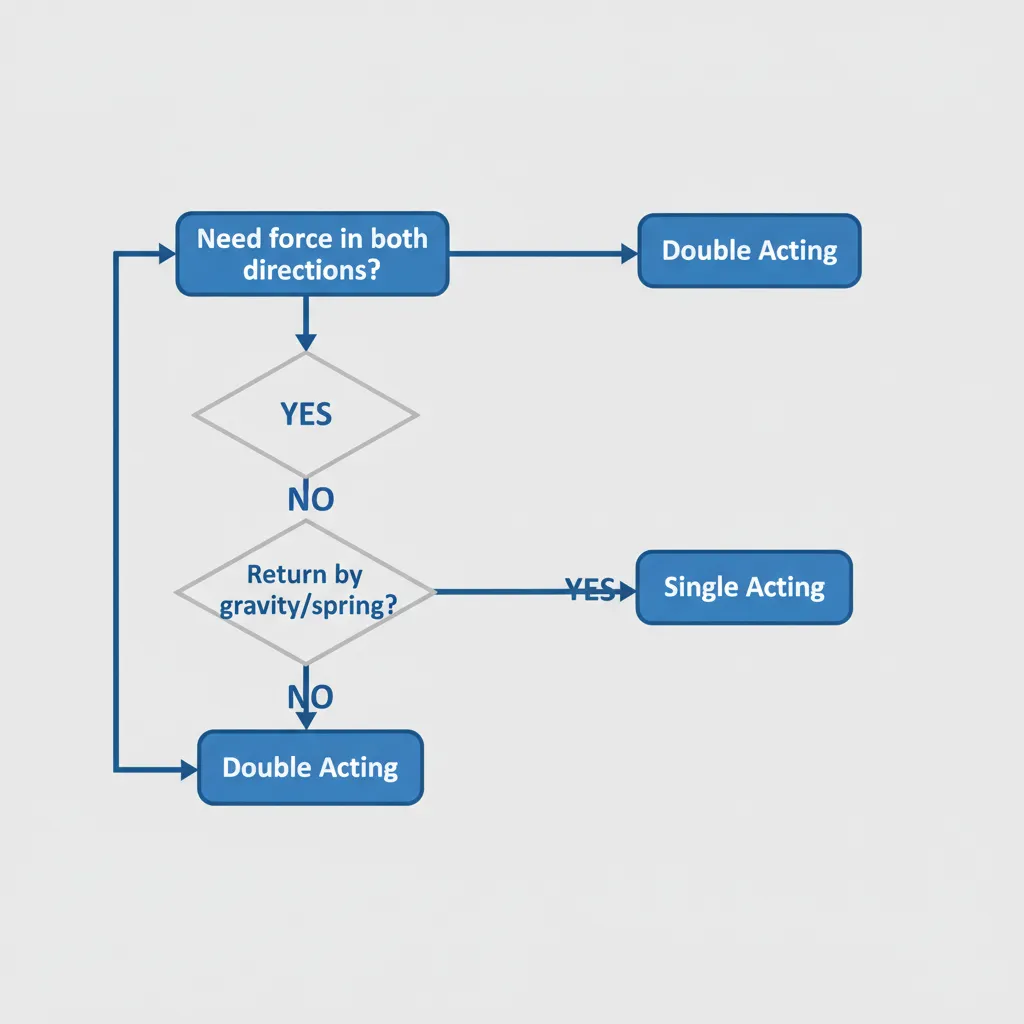
Understanding the difference between single acting and double acting hydraulic cylinders is essential for selecting the right solution for your hydraulic system.
Quick Rule of Thumb
Choose a Single Acting Cylinder When:
- Force is required in one direction only
- Gravity or springs can provide return motion
- Simplicity and lower cost are priorities
Choose a Double Acting Cylinder When:
- Force is needed in both directions
- Precise control is required
- Continuous or heavy-duty operation is expected
Ultimately, the best choice depends on load requirements, operating conditions, control needs, and budget. Evaluating these factors early in the design process will help ensure optimal performance, safety, and long-term reliability.

