
Hydraulic Cylinder Materials Guide: Standard Hydraulic Cylinder Manufacturer Insights
Explore standard hydraulic cylinder quality specs, manufacturing excellence from leading hydraulic cylinder manufacturer ensuring reliability, performance.
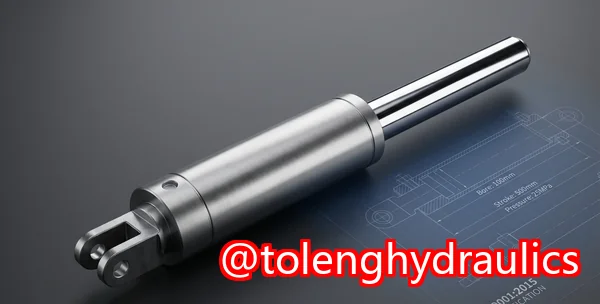
Hydraulic cylinders are at the heart of almost every heavy-duty industrial system I’ve worked withfrom construction equipment to automated production lines. In my experience as an industrial blogger and someone closely observing hydraulic systems in real-world applications, I’ve found that the performance of any machine depends heavily on one core component: the standard hydraulic cylinder. Even more importantly, the choice of hydraulic cylinder manufacturer directly determines durability, efficiency, and long-term operational cost.
At Toleng, we position ourselves as a professional hydraulic cylinder factory specializing in standard hydraulic cylinders and OEM hydraulic cylinders. Over the years, I’ve seen how proper engineering, material selection, and manufacturing discipline separate a quality hydraulic cylinder supplier from an average one. Let’s take a deep look at what truly defines a reliable standard hydraulic cylinder manufacturer and why it matters for your business.
Standard Hydraulic Cylinder Specifications in Industrial Use
When I evaluate any standard cylinder manufacturing system, I always begin with specifications. These define compatibility, load capacity, and application suitability.
Standard Bore Sizes
In most industrial hydraulic cylinders, bore size is a critical performance factor. We typically see:
-
25mm to 320mm (1″ to 12.5″)
Smaller bore sizes are commonly used in precision equipment, while larger bores are essential for heavy lifting applications like excavators and presses.
Standard Stroke Lengths
Stroke length defines how far the cylinder extends:
-
50mm to 3000mm (2″ to 118″)
From compact automation systems to large construction machinery, I’ve seen this range cover nearly all standard hydraulic cylinder applications.
Working Pressure Ratings
Pressure capability determines force output:
-
Standard: 16MPa to 25MPa (23203625 PSI)
-
High-pressure options: up to 35MPa
In industrial hydraulic cylinders, I always recommend matching pressure rating with safety margins rather than pushing limits.
Mounting Styles
Flexibility in installation is crucial. Common mounting styles include:
MF, MP, MS, ME, MT, TA, TC, TB, TD, LB, FA, FB, CA, CB
From my experience, choosing the correct mounting style early in design avoids alignment issues later in system integration.
Piston Rod Materials
Rod strength and surface treatment directly affect lifespan:
-
Hard chrome plated C45
-
1045 steel
-
4140 alloy steel
I’ve seen 4140 rods perform exceptionally well in high-impact environments due to superior fatigue resistance.
Tube Materials
Cylinder barrels must withstand pressure and wear:
-
Honed seamless steel tubes (ST52, E355, CK45)
A well-honed tube ensures smooth piston movement and reduces seal wear significantly.
Seal Options
Seal quality determines leakage control:
-
Parker
-
Hallite
-
Merkel
-
Equivalent high-quality brands
In my observation, seal selection is often underestimated, yet it is one of the most important reliability factors in a standard hydraulic cylinder.
Manufacturing Quality Standards in Hydraulic Cylinder Factory Production
A true hydraulic cylinder manufacturer is defined not just by design capability but by how precisely it controls manufacturing.
CNC Machining Capabilities
At Toleng, CNC machining accuracy is maintained within:
-
0.01mm tolerance
This precision ensures perfect fit between components, which is essential for smooth hydraulic operation.
Honing Process
The internal surface finish is critical:
-
Ra 0.20.4m
A fine surface finish reduces friction and increases seal life. I’ve seen cylinders with poor honing fail prematurely due to seal abrasion.
Welding Standards
We use robotic welding systems to ensure:
-
Consistent weld penetration
-
Structural strength
-
Reduced human error
This is especially important in industrial hydraulic cylinders exposed to high loads.
Assembly Environment
Seal installation is performed in:
-
Class 10,000 clean room conditions
This minimizes contamination, which is a common cause of early hydraulic failure.
Testing Procedures
Every standard hydraulic cylinder undergoes strict testing:
-
100% pressure testing at 1.5 working pressure
-
Leakage test: 0.05ml/min at rated pressure
-
Endurance testing: minimum 500,000 cycles
-
Dimensional inspection using CMM equipment
From what I’ve seen, manufacturers who skip full-cycle testing often face higher field failure rates.
Why Choosing the Right Hydraulic Cylinder Manufacturer Matters
Over time, I’ve learned that not all suppliers are equal. A reliable hydraulic cylinder manufacturer provides more than just a productit delivers consistency, traceability, and engineering support.
Material Traceability
We ensure full certification from steel mills. This allows every standard hydraulic cylinder to be traced back to its raw material source.
Quality Certifications
A reputable hydraulic cylinder factory should hold:
-
ISO 9001:2015
-
CE certification
-
SGS verification
These are not just labelsthey reflect structured quality systems.
In-House Manufacturing Advantage
I strongly prefer manufacturers with in-house capabilities rather than outsourced production. It ensures:
-
Better quality control
-
Faster lead times
-
Improved consistency
Lead Time Efficiency
For standard hydraulic cylinders:
-
Typical delivery: 715 days
In urgent industrial projects, this responsiveness can significantly reduce downtime.
Technical Support
A strong hydraulic cylinder manufacturer provides engineering assistance, including:
-
Load calculations
-
Cylinder sizing recommendations
-
Application optimization
Customization Capabilities
Even for a standard cylinder, customization is often required:
-
Special port locations
-
Custom rod ends
-
Integrated sensors
-
Corrosion-resistant coatings
From my experience, OEM hydraulic cylinders are essential for specialized machinery performance.
Applications of Standard Hydraulic Cylinders
Standard hydraulic cylinders are widely used across industries. I’ve seen them perform in extremely demanding environments such as:
Construction Equipment
-
Excavators
-
Loaders
-
Bulldozers
These machines rely on high-force, high-durability cylinders.
Agricultural Machinery
-
Tractors
-
Harvesters
-
Balers
Consistency and reliability are critical in seasonal operations.
Industrial Automation
-
Hydraulic presses
-
Conveyor systems
-
Lifting platforms
Precision and repeatability matter most here.
Material Handling Equipment
-
Forklifts
-
Pallet jacks
Compact design and smooth operation are key.
Mobile Hydraulics
-
Trucks
-
Cranes
-
Aerial work platforms
These applications demand both strength and safety.
Conclusion: How to Choose a Reliable Hydraulic Cylinder Manufacturer
From my perspective, selecting the right supplier is not just a purchasing decisionit’s an engineering decision. I always recommend evaluating manufacturers using a structured approach.
5-Point Manufacturer Checklist
-
Verify ISO certification and quality system
-
Request material certificates and test reports
-
Inspect machining tolerances and surface finish quality
-
Review lead time and after-sales support capability
-
Compare warranty terms (standard: 1224 months)
A trustworthy hydraulic cylinder manufacturer will always be transparent in these areas.
If you are sourcing standard hydraulic cylinders or OEM hydraulic cylinders, I recommend reviewing our full catalog here:
🔗 https://tolenghydraulics.com/standard-hydraulic-cylinder/
For engineering teams and procurement specialists, we also provide downloadable specification sheets to support technical evaluation and system integration.
Frequently Asked Questions (FAQ)
1. What are the standard bore sizes for hydraulic cylinders?
Standard bore sizes typically range from 25mm to 320mm depending on application requirements.
2. How do I verify if a manufacturer is ISO certified?
You should request a valid ISO 9001:2015 certificate and verify it through issuing certification bodies.
3. What pressure ratings are available for standard cylinders?
Most standard hydraulic cylinders operate at 1625MPa, with high-pressure options up to 35MPa.
4. Can standard cylinders be customized?
Yes, even standard hydraulic cylinders can be customized with special rod ends, ports, and coatings.
5. What is the typical lead time from a manufacturer?
For standard hydraulic cylinders, typical lead time is 715 days depending on order volume.
6. How do you test cylinder quality before shipping?
We perform pressure testing, leakage testing, endurance cycling, and full dimensional inspection.
7. What mounting styles are considered standard?
Common styles include MF, MP, MS, ME, MT, TA, TC, TB, TD, LB, FA, FB, CA, and CB.
8. Do you provide CAD drawings for standard cylinders?
Yes, CAD drawings are available to support engineering integration and system design.
Keywords Section
Primary keywords: standard hydraulic cylinder, hydraulic cylinder manufacturer, standard cylinder, industrial hydraulic cylinders, custom hydraulic cylinder manufacturer
Secondary keywords: manufacturing, hydraulic cylinder factory, CNC machining, quality control, pressure testing, ISO 9001, bore sizes, mounting styles, piston rod, seal kit, OEM hydraulic cylinders, lead time, technical support

