
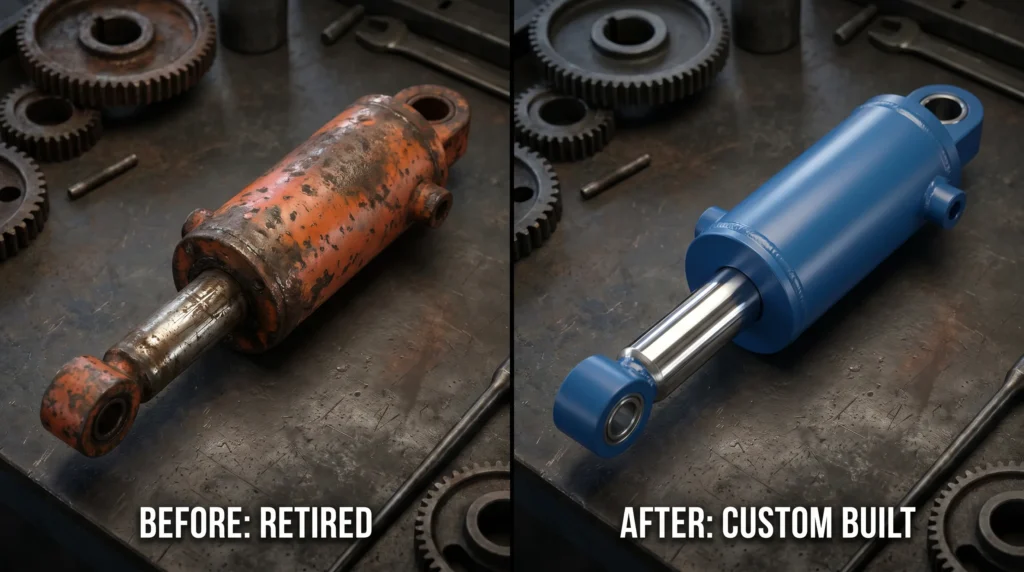
When a hydraulic cylinder becomes obsolete, it can create serious challenges for equipment owners and OEMs. Spare parts may no longer be available, delivery times can stretch for months, and adapting a standard replacement often requires costly modifications. In many cases, the most practical and cost-effective solution is to replace the outdated unit with a custom hydraulic cylinder designed to match the original application.
As an experienced hydraulic cylinder manufacturer, Toleng Hydraulic works with equipment builders and maintenance teams to reverse engineer obsolete cylinders and produce high-quality replacements that restore performance while improving durability.
Why Hydraulic Cylinders Become Obsolete
Hydraulic cylinders may become obsolete for several reasons:
- The original manufacturer has discontinued the product.
- The equipment OEM is no longer in business.
- Design standards have changed.
- Original materials or seals are no longer available.
- Imported cylinders have inconsistent supply.
For industries such as construction, mining, agriculture, marine, and industrial automation, equipment often remains in service for decades. Replacing an obsolete cylinder with a custom hydraulic cylinder can extend machine life and eliminate the need for expensive equipment upgrades.
Problems with Trying to Use Standard Cylinders
Although off-the-shelf cylinders are readily available, they rarely match the exact specifications of older equipment.
Common Issues Include
- Incorrect mounting dimensions
- Limited stroke options
- Incompatible rod diameters
- Pressure rating mismatches
- Seal incompatibility
- Reduced service life
Even small dimensional differences can affect machine geometry, load distribution, and operating efficiency.
Advantages of Custom Hydraulic Cylinder Replacement
A custom hydraulic cylinder is designed specifically to replicate—or improve upon—the original cylinder.
1. Exact Dimensional Match
Custom cylinders can be manufactured to match:
- Bore size
- Stroke length
- Rod diameter
- Closed and extended lengths
- Mounting style
- Port location
- Cushioning configuration
This allows the replacement cylinder to fit directly into existing equipment without modification.
2. Improved Materials and Surface Treatments
Modern manufacturing allows obsolete cylinders to be upgraded with:
- High-strength alloy steel
- Precision honed tubing
- Induction-hardened rods
- Hard chrome or alternative corrosion-resistant coatings
- Wear-resistant bushings
These enhancements often outperform the original design.
3. Updated Seal Technology
Older cylinders may use seals that are no longer available. A custom hydraulic cylinder manufacturer can redesign the gland and piston to accept modern seal systems, improving:
- Leak resistance
- Temperature performance
- Chemical compatibility
- Service life
4. Higher Pressure Capability
Replacement cylinders can be engineered to handle increased operating pressures and shock loads, making them suitable for more demanding conditions.
5. Reduced Downtime
Once drawings are established, future orders can be produced quickly, minimizing downtime and simplifying maintenance planning.
Reverse Engineering Obsolete Hydraulic Cylinders
A professional hydraulic cylinder manufacturer can reproduce a cylinder even when no technical drawings exist.
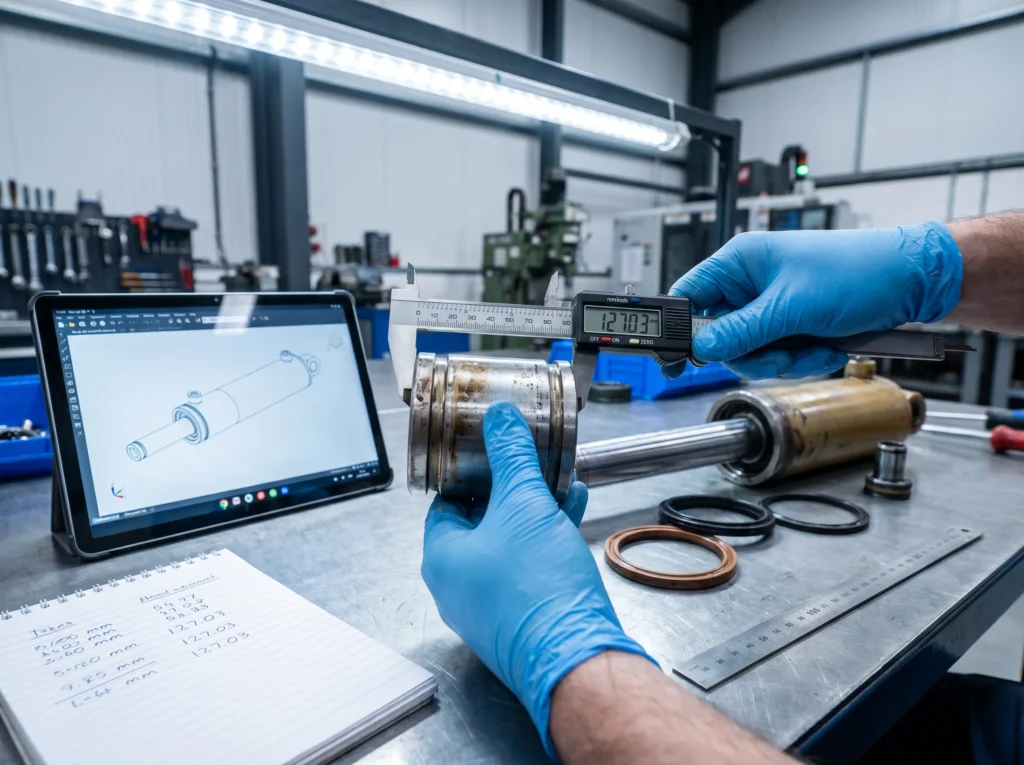
Information Typically Required
- Overall retracted and extended lengths
- Bore and rod diameter
- Mounting details
- Port thread type and location
- Operating pressure
- Application description
- Photos of the existing cylinder
Using this information, engineers create production drawings and recommend design improvements where beneficial.
Industries That Frequently Replace Obsolete Cylinders
Custom replacement cylinders are commonly used in:
- Excavators and backhoes
- Agricultural implements
- Material handling equipment
- Steel mills
- Marine deck machinery
- Hydraulic presses
- Waste compactors
- Forestry equipment
In many of these applications, replacing the cylinder is significantly less expensive than replacing the entire machine.
Custom Hydraulic Cylinder Manufacturing Process
A reliable hydraulic cylinder manufacturer follows a structured process:
- Application review
- Measurement and reverse engineering
- Engineering design
- Material selection
- CNC machining
- Welding and assembly
- Pressure testing
- Quality inspection
- Delivery and documentation
This process ensures the replacement cylinder meets both dimensional and performance requirements.
Key Factors to Consider When Ordering a Replacement Cylinder
Before ordering a custom hydraulic cylinder, confirm:
- Maximum working pressure
- Required force
- Stroke length
- Mounting configuration
- Environmental conditions
- Seal material
- Surface protection
- Delivery timeline
Providing accurate application details helps ensure optimal performance and longevity.
Cost Comparison: Custom Cylinder vs. Equipment Replacement
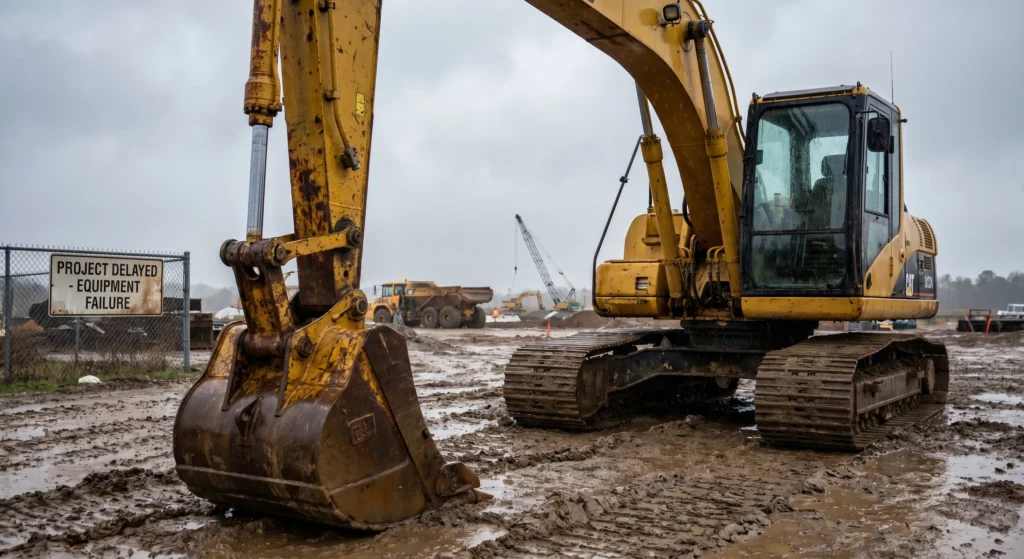
Although a custom hydraulic cylinder may cost more than a generic off-the-shelf unit, it is often far more economical than:
- Modifying machinery to fit a standard cylinder
- Replacing related components
- Purchasing new equipment
- Prolonged downtime
For critical equipment, a custom replacement typically offers the best return on investment.
Why Choose Toleng Hydraulic
Toleng Hydraulic specializes in designing and manufacturing custom hydraulic cylinders for OEM and replacement applications.
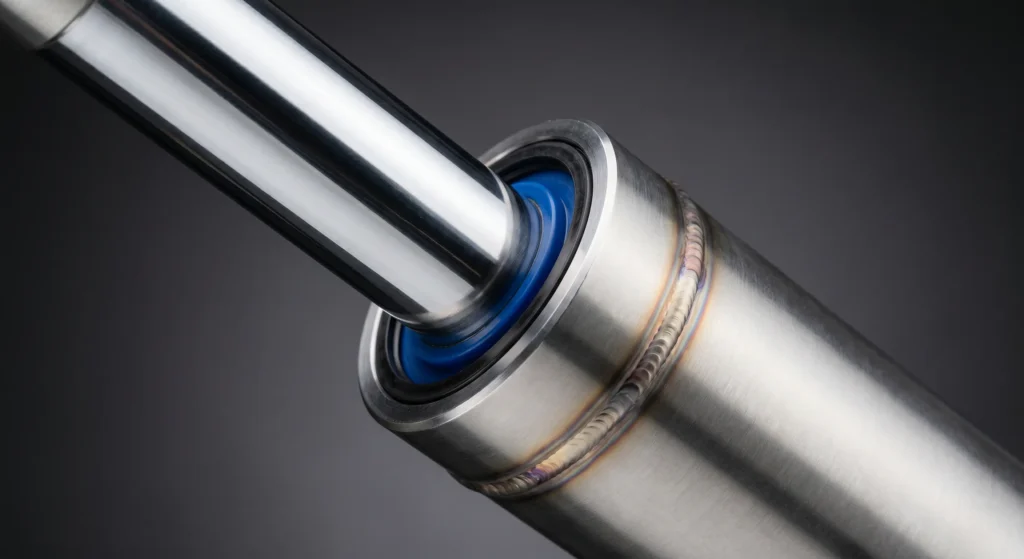
Capabilities Include
- Reverse engineering obsolete cylinders
- OEM and aftermarket production
- Custom mounting and port configurations
- High-pressure cylinder design
- Specialized seal solutions
- Strict quality testing
With extensive manufacturing experience, Toleng helps customers restore equipment quickly and reliably.
Frequently Asked Questions
Can you manufacture a cylinder without drawings?
Yes. An experienced hydraulic cylinder manufacturer can reverse engineer the cylinder using dimensions, photos, and application details.
Can the replacement cylinder be upgraded?
Absolutely. Materials, coatings, and seals can be improved to increase durability and performance.
What if original seals are no longer available?
The cylinder can be redesigned to use modern seal profiles with equivalent or superior performance.
How long does it take to manufacture a custom replacement cylinder?
Lead time depends on design complexity and quantity, but once the design is documented, repeat orders are typically produced much faster.
Conclusion
Replacing obsolete cylinders with custom hydraulic cylinders is a practical way to extend equipment life, reduce downtime, and improve reliability. By duplicating the original dimensions and upgrading materials and seal technology, a custom replacement cylinder can deliver better performance than the discontinued component it replaces.

