
In many hydraulic systems, choosing the right cylinder can significantly impact machine performance, service life, and overall operating cost. Standard hydraulic cylinders are widely used because they are readily available and generally less expensive upfront. However, when equipment has unique space limitations, demanding duty cycles, or specialized performance requirements, a custom hydraulic cylinder often delivers much greater long-term value.
As an experienced hydraulic cylinder manufacturer, Toleng works with OEMs and industrial users to design cylinders tailored to exact operating conditions. The result is better performance, fewer failures, and lower lifecycle costs.
What Is the Difference Between Custom and Standard Hydraulic Cylinders?
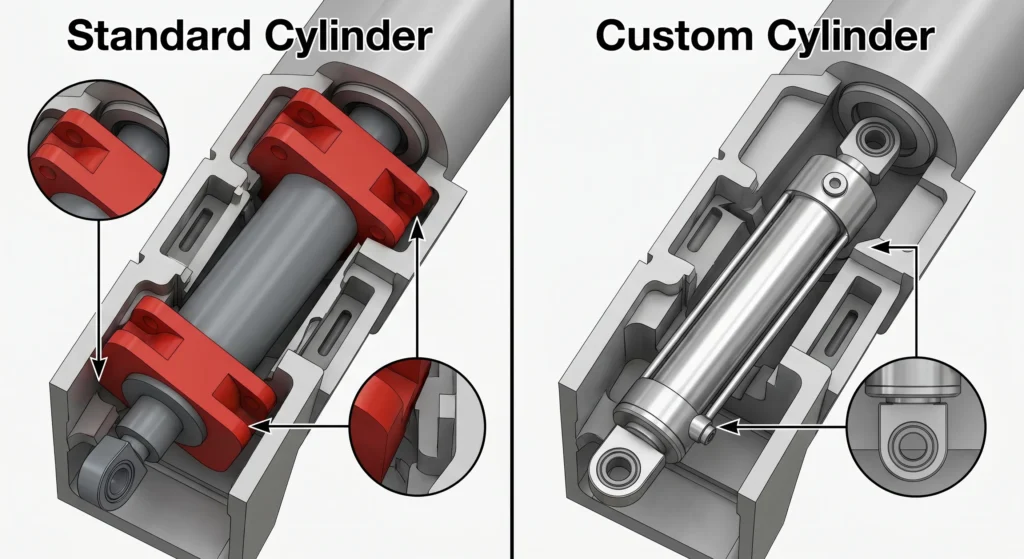
A standard hydraulic cylinder is produced in common bore sizes, stroke lengths, and mounting configurations. These cylinders are ideal for general-purpose applications where operating conditions fit industry norms.
A custom hydraulic cylinder is engineered specifically for a particular application. Parameters such as bore diameter, rod size, mounting style, seals, materials, coatings, and pressure ratings are selected based on actual working requirements.
Standard Hydraulic Cylinders
- Off-the-shelf availability
- Lower initial purchase cost
- Limited design flexibility
- Suitable for common industrial applications
Custom Hydraulic Cylinders
- Designed for exact machine specifications
- Optimized for performance and durability
- Greater flexibility in materials and sealing options
- Lower total cost of ownership over time
1. Perfect Fit for Unique Equipment Designs
One of the biggest advantages of custom hydraulic cylinders is dimensional flexibility.
OEM machines often have:
- Tight installation spaces
- Unusual mounting points
- Non-standard stroke requirements
- Specific rod-end connections
Standard cylinders may require:
- Structural modifications
- Adapter brackets
- Reduced working range
- Compromised machine geometry
Custom cylinders are manufactured to exact dimensions, ensuring seamless integration and preserving the original equipment design.
2. Improved Performance and Efficiency
Custom hydraulic cylinders are engineered according to actual load, speed, and pressure requirements.
Design optimization includes:
- Correct bore and rod ratios
- Balanced force output
- Proper cushioning
- Reduced internal friction
This leads to:
- Faster cycle times
- Smoother operation
- Lower energy consumption
- Better overall machine efficiency
3. Longer Service Life in Harsh Conditions
Industrial environments can be extremely demanding. Exposure to dust, mud, chemicals, seawater, and high temperatures accelerates wear.
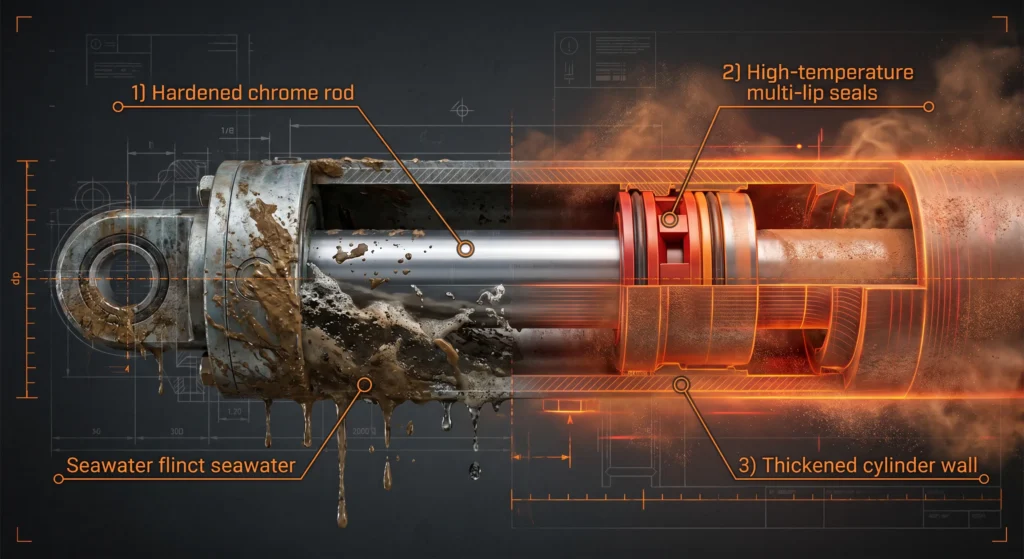
Custom cylinders can be configured with:
- Induction-hardened rods
- Hard chrome or nickel plating
- Stainless steel components
- Corrosion-resistant coatings
- High-temperature or low-temperature seals
These enhancements significantly extend service life and reduce maintenance requirements.
4. Enhanced Sealing Performance
Seal failure is one of the most common causes of hydraulic cylinder downtime.
Custom cylinders allow selection of seals based on:
- Pressure range
- Temperature
- Fluid type
- Contamination level
- Speed
Options include:
- Polyurethane seals
- PTFE seals
- Viton seals
- Heavy-duty wipers
Proper seal selection minimizes leakage, contamination ingress, and premature wear.
5. Higher Pressure and Load Capacity
Standard cylinders are typically designed for common pressure ratings.
Applications such as:
- Mining equipment
- Steel mills
- Construction machinery
- Hydraulic presses
often require reinforced designs.
Custom cylinders can incorporate:
- Thicker tube walls
- Larger rod diameters
- Heavy-duty pistons
- Strengthened end caps
This ensures safe and reliable performance under extreme loads.
6. Reduced Downtime and Maintenance Costs
Although custom cylinders usually cost more initially, they often save money over the equipment’s lifespan.
Benefits include:
- Fewer breakdowns
- Longer maintenance intervals
- Lower spare parts consumption
- Reduced labor costs
- Less production interruption
For critical equipment, avoiding even one unexpected failure can justify the additional investment.
7. Better Corrosion Resistance
In marine, agricultural, and chemical applications, corrosion can rapidly damage standard cylinders.
Custom options include:
- 316 stainless steel rods
- Ceramic coatings
- Nickel-chrome plating
- Specialized paint systems
These materials protect components and maintain performance in aggressive environments.
8. Optimized Weight and Space Utilization
In mobile equipment and compact machinery, every inch and every pound matter.
Custom designs can:
- Reduce unnecessary material
- Shorten retracted length
- Minimize weight
- Improve machine balance
This is particularly valuable for:
- Aerial lifts
- Forestry equipment
- Agricultural machinery
- Robotics
9. Integration of Special Features
Custom hydraulic cylinders can include additional functionality, such as:
- Position sensors
- Internal cushioning
- Lock valves
- Counterbalance valves
- Ports in custom locations
These features simplify system design and improve control and safety.
10. Consistent Quality for OEM Production
OEM manufacturers require repeatable quality and precise documentation.
A qualified hydraulic cylinder manufacturer can provide:
- Engineering drawings
- Material certifications
- Pressure testing reports
- Dimensional inspection records
- Stable production batches
Toleng supports OEM customers with reliable custom cylinder manufacturing and long-term production consistency.
11. Lower Total Cost of Ownership
When evaluating hydraulic cylinders, the purchase price tells only part of the story.
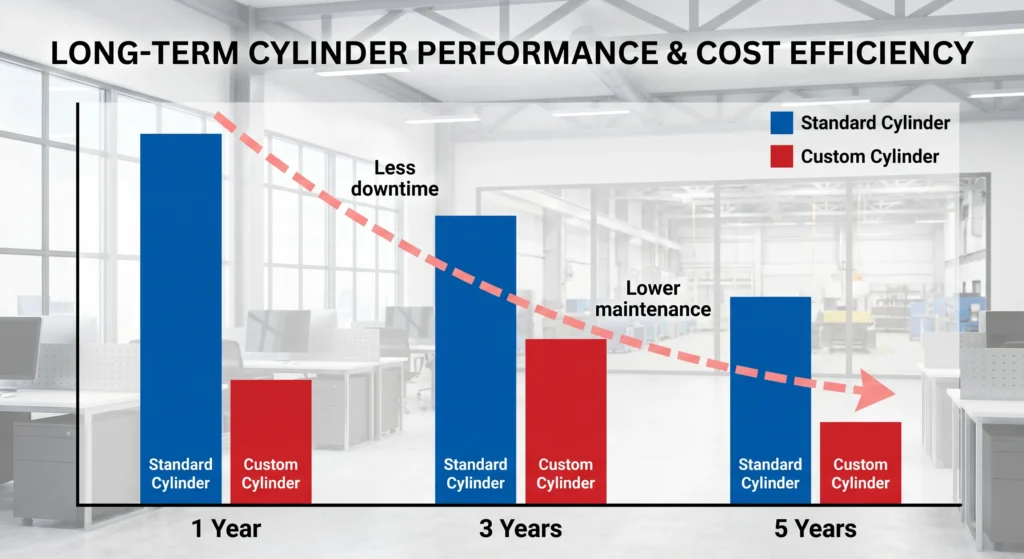
Custom cylinders reduce:
- Unplanned downtime
- Replacement frequency
- Energy losses
- Repair expenses
Over years of operation, these savings often outweigh the higher upfront cost.
Typical Applications for Custom Hydraulic Cylinders
Custom hydraulic cylinders are commonly used in:
- Excavators
- Loaders
- Cranes
- Agricultural equipment
- Mining machinery
- Marine systems
- Hydraulic presses
- Waste handling equipment
- Special-purpose industrial machines
When Should You Choose a Custom Hydraulic Cylinder?
A custom hydraulic cylinder is recommended when:
- Standard sizes do not fit available space
- Operating conditions are unusually harsh
- Pressure or loads exceed standard ratings
- Downtime is expensive
- Specialized materials or seals are required
- OEM design optimization is important
For simple, non-critical applications, standard cylinders may still be the most economical solution.
Standard vs. Custom Hydraulic Cylinders: Quick Comparison
| Feature | Standard Cylinder | Custom Cylinder |
|---|---|---|
| Initial Cost | Lower | Higher |
| Availability | Immediate | Design and production lead time |
| Fit Accuracy | Limited | Exact |
| Performance | General-purpose | Optimized |
| Durability | Standard | Enhanced |
| Special Features | Limited | Extensive |
| Lifecycle Cost | Higher in demanding applications | Lower |
How Toleng Supports Custom Hydraulic Cylinder Projects
As a professional hydraulic cylinder manufacturer, Toleng provides complete design and manufacturing services, including:
- Engineering consultation
- 3D design support
- Material and seal selection
- CNC machining
- Welding and assembly
- Pressure and leak testing
- OEM and private label production
Whether you need a single prototype or large-scale production, Toleng delivers custom hydraulic cylinders built to your exact specifications.
Conclusion
Standard hydraulic cylinders are suitable for many general applications, but they are not always the most cost-effective option. When equipment operates under demanding conditions or requires exact dimensions, custom hydraulic cylinders provide substantial advantages.
From improved performance and longer service life to lower maintenance costs and better reliability, custom cylinders offer a smarter long-term investment.
If you are designing new equipment or upgrading an existing system, working with an experienced hydraulic cylinder manufacturer like Toleng can help you achieve optimal performance and lower total operating costs.

