
Introduction
Hydraulic cylinders are the backbone of many industrial and mobile equipment systems, converting hydraulic energy into precise linear motion. Choosing the right cylinder is crucial for ensuring equipment efficiency, reliability, and longevity. While standard hydraulic cylinders are widely available, they may not perfectly fit your specific application needs. This is where a custom hydraulic cylinder comes into play.
A custom cylinder allows engineers to optimize performance, avoid common failures, and extend the service life of equipment. Companies like Toleng Hydraulic Cylinder Manufacturer specialize in designing and producing custom solutions tailored to unique requirements. This guide will help you understand how to specify a custom hydraulic cylinder correctly and effectively.
Why Use a Custom Hydraulic Cylinder?
Custom hydraulic cylinders are designed to meet the exact requirements of your machinery. Here are some reasons to consider them:
- Tailored fit for your equipment: Custom cylinders match your machine’s movement and spatial constraints more precisely than standard options.
- Optimized performance: Achieve accurate load handling, speed, and pressure specifications.
- Reduced downtime: Minimize leaks, stick-slip motion, and unplanned stops.
- Special environments: Suitable for high-temperature, corrosive, or heavy-load applications.
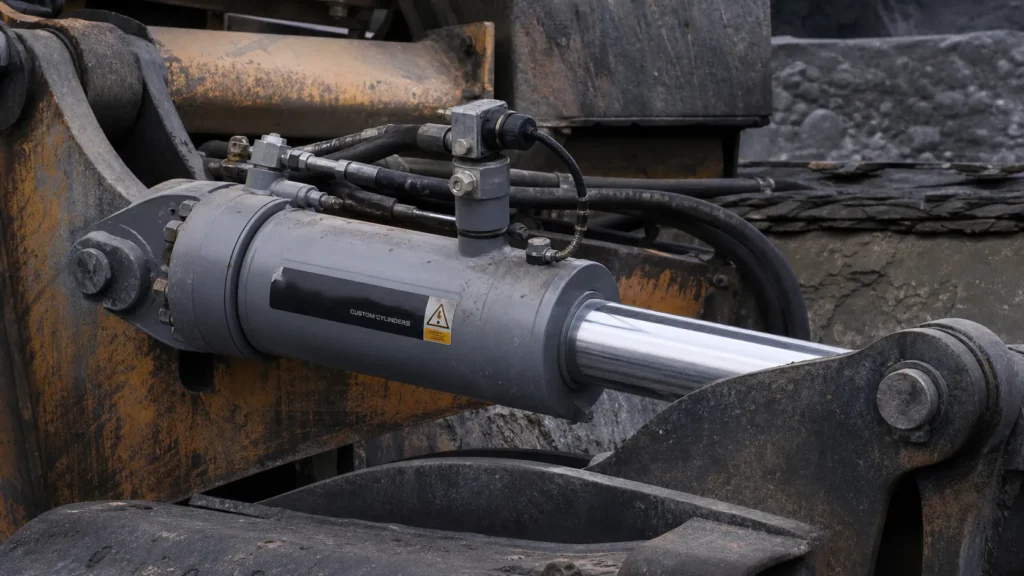
A professional hydraulic cylinder manufacturer like Toleng can advise on material, sealing, and mounting choices to ensure your cylinder is optimized for its working conditions.
8 Key Specifications for a Custom Hydraulic Cylinder
1. Bore Size
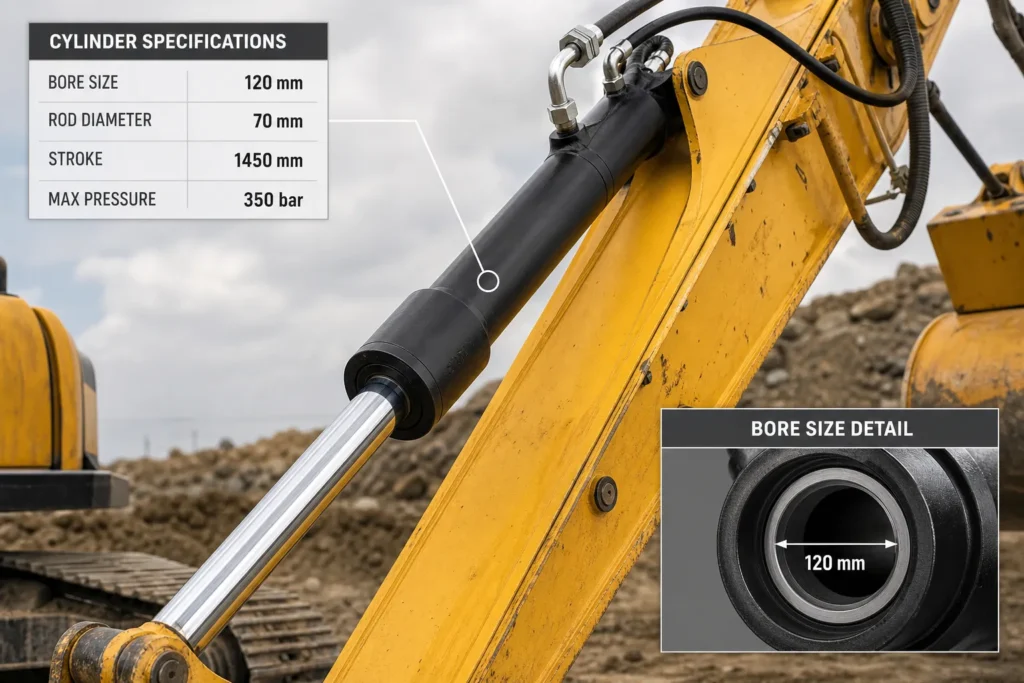
The bore diameter determines the cylinder’s thrust (pushing) and pull (retracting) force.
- How to choose: Calculate required force based on your load and system pressure.
- Consider flow rate: Ensure your hydraulic system can supply sufficient flow to match the bore size without compromising speed.
2. Stroke Length
Stroke length defines how far the piston moves within the cylinder.
- Determine maximum and minimum stroke requirements based on machine operation.
- Check installation constraints: Avoid interference with other components and ensure proper clearances.
3. Mounting Style
Cylinder mounting affects alignment, stability, and life span.
- Common types: Flange, Clevis, Trunnion.
- Impact on performance: The wrong mounting can lead to uneven loads, increased wear, and reduced service life.
4. Working Pressure
Working pressure defines how much force the cylinder can safely handle.
- Specify system maximum pressure and include a safety factor.
- Match with hydraulic components: Pumps, valves, and hoses must be rated for the same pressure to ensure system reliability.
5. Piston Rod Material & Finish
Rod materials and surface treatments affect durability and corrosion resistance.
- Material options: Chrome-plated steel or stainless steel.
- Surface finish: Choose treatments that resist wear, corrosion, and environmental exposure.
6. Seal Selection
Seals prevent fluid leakage and ensure smooth motion.
- Factors to consider: Temperature, hydraulic fluid type, speed, and pressure.
- Choose durable, low-friction seals that minimize maintenance and downtime.
7. Port Type & Size
Ports connect the cylinder to your hydraulic system.
- Options: NPT, BSP, Flanged.
- Ensure compatibility: Select the correct type and size for your pressure requirements and avoid leakage.
8. Additional Custom Features
Enhance cylinder functionality with optional features:
- Cushioning: Reduces impact at the end of stroke.
- Sensors: Position or pressure feedback for automation.
- Special coatings or protection: For extreme environments, like high corrosion or dust exposure.
Manufacturers like Toleng can integrate these additional features efficiently, ensuring the cylinder meets your exact operational demands.
How to Prepare Your Specification for the Manufacturer
To ensure your custom hydraulic cylinder is manufactured correctly:
- Provide detailed drawings or CAD files.
- List all key parameters: bore size, stroke, mounting style, and working pressure.
- Describe operating conditions: load, speed, temperature, and environment.
- Specify the application scenario, whether for construction machinery, agriculture, or automation.
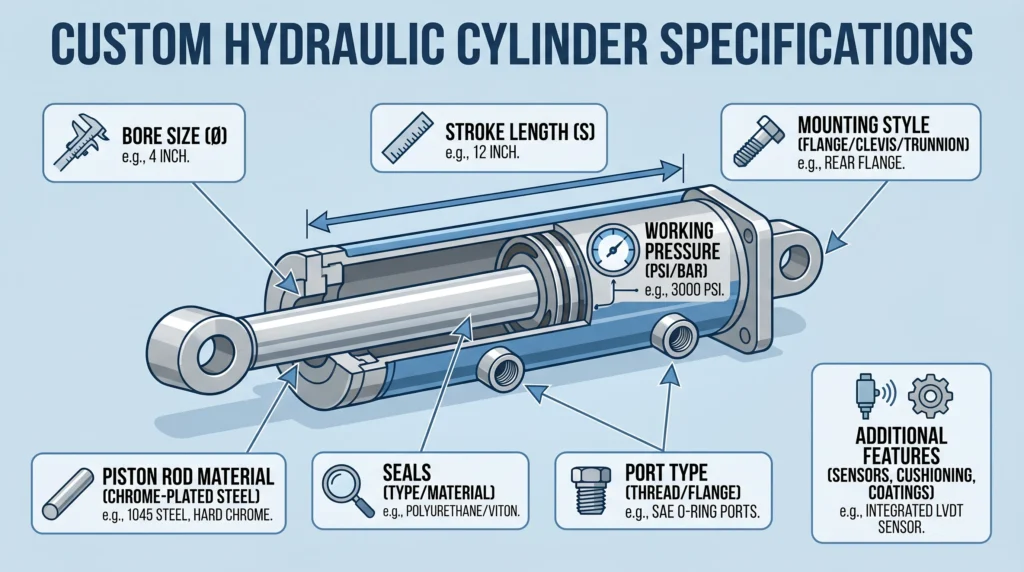
Working closely with an experienced hydraulic cylinder manufacturer ensures that your specifications are correctly interpreted and executed.
Common Mistakes to Avoid When Specifying a Hydraulic Cylinder
- Underestimating system pressure: Selecting a cylinder rated too low can lead to failure.
- Incorrect mounting style: Causes misalignment and premature wear.
- Inaccurate bore or stroke selection: Leads to insufficient force or interference issues.
- Ignoring environmental factors: Corrosion, high temperatures, and dust can drastically reduce cylinder life.
- Mismatch between seals and hydraulic fluid: Results in leaks and operational issues.
Avoiding these mistakes ensures a safe, durable, and efficient custom cylinder. Partnering with a reliable supplier like Toleng Hydraulic Cylinder Manufacturer can help prevent these common errors.
Conclusion
Specifying a custom hydraulic cylinder correctly is key to maximizing equipment performance and longevity. By considering all critical parameters and collaborating with a professional hydraulic cylinder manufacturer, you can avoid common pitfalls and achieve optimal results.
Contact Toleng to discuss your application and get a tailored custom hydraulic cylinder solution that meets your specific needs.
Frequently Asked Questions (FAQ)
Q1: What’s the difference between standard and custom hydraulic cylinders?
Standard cylinders come in pre-defined sizes and specifications, while custom cylinders are designed specifically for your machine’s needs, including special stroke, bore, materials, and mounting styles.
Q2: How do I calculate the right bore size for my load?
Bore size is calculated based on required force and available system pressure:
Bore Area=ForcePressure\text{Bore Area} = \frac{\text{Force}}{\text{Pressure}}
Then select the nearest standard or custom size that meets or exceeds the required force.
Q3: Can I add sensors to a custom cylinder?
Yes, position or pressure sensors can be integrated for automation and real-time monitoring.
Q4: How long does it take to make a custom hydraulic cylinder?
Depending on complexity, materials, and features, lead time typically ranges from 4 to 12 weeks.
Q5: Can custom cylinders work in high-temperature or harsh environments?
Absolutely. Custom cylinders can be designed with special materials, coatings, and seals to withstand extreme temperatures, corrosion, and heavy-duty conditions.

