
Excavator bucket linkage systems operate under some of the most demanding conditions in construction and mining. The hydraulic cylinder responsible for driving bucket movement must deliver high breakout force, withstand severe shock loads, and maintain reliable sealing in muddy, abrasive environments. When standard products do not meet dimensional or performance requirements, a custom hydraulic cylinder for excavator bucket linkage becomes the optimal solution.
As an experienced hydraulic cylinder manufacturer, Toleng designs and produces custom cylinders engineered specifically for excavator applications. This guide explains how bucket linkage cylinders work, what design factors matter most, and how to choose a dependable manufacturing partner.
What Is a Custom Hydraulic Cylinder for Excavator Bucket Linkage?
A custom hydraulic cylinder for excavator bucket linkage is a specially designed double-acting cylinder used to control bucket rotation and digging force. It is engineered to match:
- Exact installation dimensions
- Required breakout force
- Working pressure
- Pin diameters and mounting geometry
- Seal materials
- Surface protection specifications
Unlike standard hydraulic cylinders, custom units are optimized for a particular excavator model, bucket size, and operating environment.
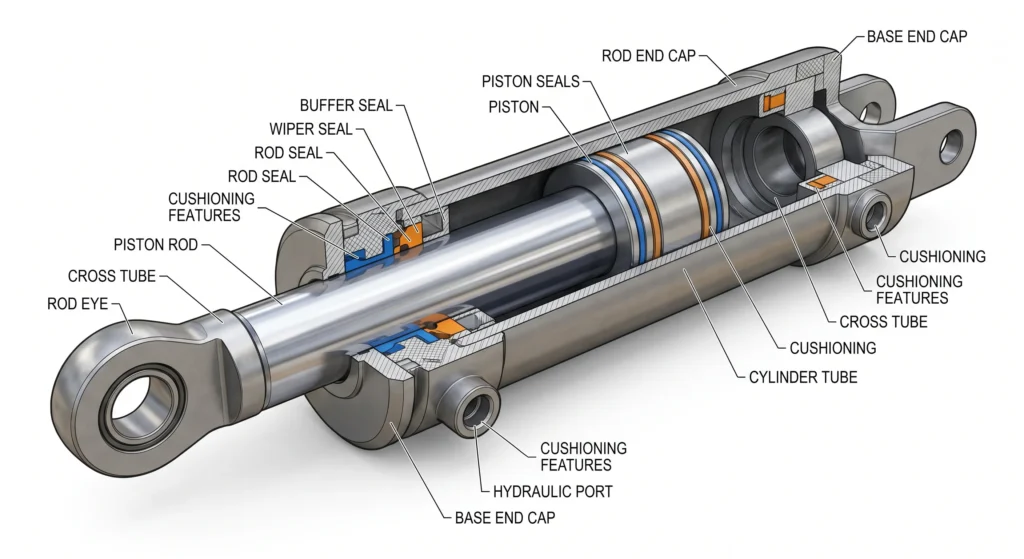
How Excavator Bucket Linkage Cylinders Work
The bucket cylinder converts hydraulic pressure into linear motion. This motion is transferred through the bucket linkage to rotate the bucket.
Working Process
- Hydraulic oil enters the cap end.
- Pressure pushes the piston and rod outward.
- Linkage rotates the bucket inward for digging.
- Oil enters the rod end to retract the cylinder.
- Bucket curls outward for dumping.
The force generated can be calculated using:
F=P×AF = P \times A
Where:
- F = Output force
- P = Hydraulic pressure
- A = Effective piston area
Because excavators often operate at pressures of 3,000–5,000 psi (210–350 bar), bucket cylinders must be built with high-strength materials and robust seals.
Why Choose a Custom Hydraulic Cylinder?
Standard cylinders may not fit OEM geometry or deliver the required performance. A custom hydraulic cylinder offers several advantages:
Exact Dimensional Compatibility
- Pin-to-pin length matches original equipment
- Correct stroke and rod extension
- Proper mounting widths and tolerances
Enhanced Structural Strength
- Thicker cylinder tubes
- Oversized rod diameters
- Heavy-duty welded construction
Improved Seal Performance
- Dust-resistant rod seals
- High-pressure piston seals
- Wear rings for side-load resistance
Corrosion and Wear Protection
- Hard chrome plated rods
- Nickel-chrome options
- Specialized coatings for marine or mining applications
OEM and Aftermarket Flexibility
- Direct replacement for existing cylinders
- Performance upgrades
- Private-label manufacturing
Key Design Parameters for Bucket Linkage Cylinders
Bore Diameter
Determines force output. Larger bores generate higher digging forces.
Typical sizes:
- 80 mm
- 100 mm
- 125 mm
- 160 mm
- 200 mm
Rod Diameter
Affects buckling resistance and impact strength.
Typical rod sizes:
- 45 mm
- 60 mm
- 80 mm
- 100 mm
Stroke Length
Depends on bucket rotation geometry.
Common strokes:
- 300 mm to 1,500 mm
Operating Pressure
Typical design pressures:
- 250 bar
- 300 bar
- 350 bar
Mounting Style
Most bucket cylinders use:
- Cross tube mounts
- Spherical bushings
- Hardened steel pins
Cushioning
Internal cushions reduce shock when the cylinder reaches the end of its stroke.
Materials Used in Custom Excavator Cylinders
Cylinder Tube
- High-strength seamless steel
- Precision honed interior
Piston Rod
- Induction-hardened medium-carbon steel
- Hard chrome plated
Piston
- Ductile iron or alloy steel
End Caps
- Forged or CNC-machined steel
Bushings
- Hardened steel or self-lubricating bronze
Seal Systems for Excavator Applications
Excavator cylinders operate in mud, dust, water, and abrasive debris. High-performance sealing is essential.
Typical seal components include:
- Rod seal
- Wiper seal
- Buffer seal
- Piston seal
- Guide rings
- Static O-rings
Seal materials:
- Polyurethane
- Nitrile (NBR)
- Fluorocarbon (FKM)
- PTFE composites
Manufacturing Process for Custom Hydraulic Cylinders
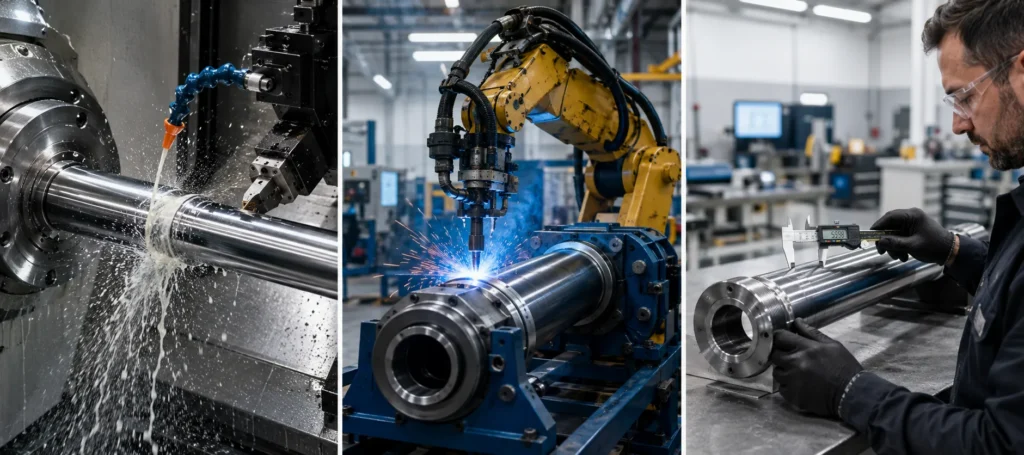
A professional hydraulic cylinder factory follows strict quality procedures.
1. Engineering Design
- CAD modeling
- Force and stress analysis
- Seal groove design
2. Material Procurement
Certified steel and seal components.
3. CNC Machining
Precision machining of:
- Rods
- Pistons
- Glands
- End caps
4. Welding
Automated welding ensures consistent strength.
5. Surface Finishing
- Honing
- Chrome plating
- Polishing
6. Assembly
Clean-room assembly with contamination control.
7. Pressure Testing
- Leak testing
- Load testing
- Stroke verification
8. Painting and Packaging
Protective coatings and export packaging.
Quality Standards for Excavator Hydraulic Cylinders
Reliable manufacturers adhere to:
- ISO 9001 quality systems
- Material traceability
- Non-destructive weld inspection
- Pressure testing to 1.5× rated pressure
- Salt spray resistance requirements
Common Failure Modes in Bucket Linkage Cylinders
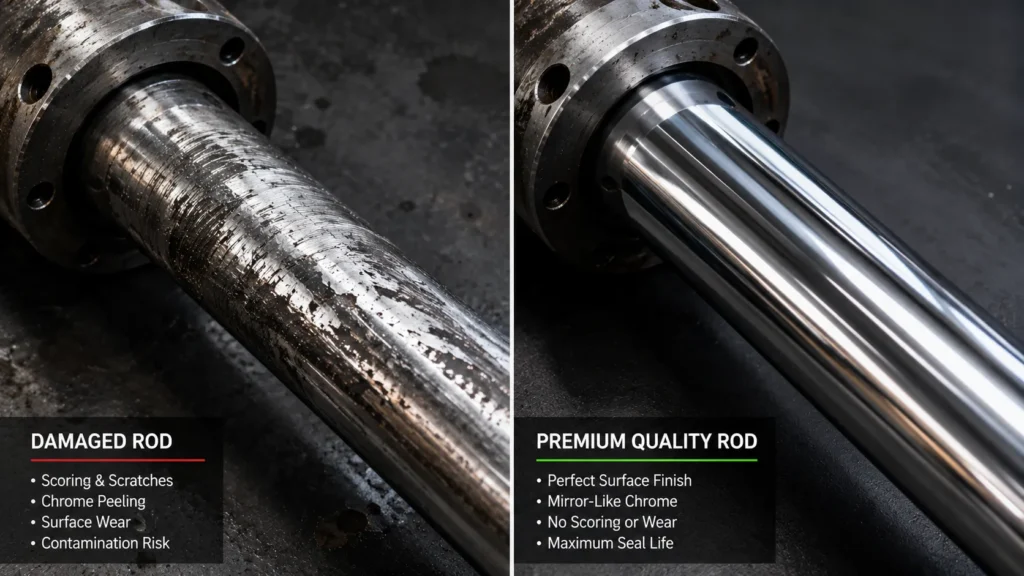
Rod Scoring
Caused by dirt contamination or damaged wipers.
Seal Leakage
Results from worn seals or excessive pressure spikes.
Rod Bending
Occurs when side loads exceed design limits.
Tube Cracking
Often linked to poor welding or shock overload.
Pin Bore Wear
Leads to loose mounting and misalignment.
Custom engineering addresses these issues through stronger materials and optimized geometry.
Typical Applications
Custom bucket linkage cylinders are widely used in:
- Crawler excavators
- Mini excavators
- Wheel excavators
- Backhoe loaders
- Demolition equipment
- Mining excavators
OEM and Aftermarket Manufacturing Services
A professional hydraulic cylinder manufacturer can provide:
- OEM production
- Aftermarket replacement cylinders
- Reverse engineering from samples
- Prototype development
- Low- and high-volume manufacturing
- Private-label branding
Reverse Engineering Existing Excavator Cylinders
If original drawings are unavailable, manufacturers can reproduce cylinders using:
- Overall dimensions
- Bore and rod measurements
- Mounting details
- Seal identification
- Pressure requirements
This process is ideal for obsolete or hard-to-source excavator components.
Information Needed for a Custom Quote
To receive an accurate quotation, provide:
- Excavator brand and model
- Bucket capacity
- Bore size
- Rod diameter
- Stroke
- Closed and extended lengths
- Mounting style
- Operating pressure
- Seal material preference
- Quantity required
Photos or technical drawings can significantly speed up the process.
How to Choose a Reliable Hydraulic Cylinder Manufacturer
When selecting a supplier, evaluate:
Engineering Capability
Ability to design cylinders for high-load excavator applications.
Manufacturing Capacity
Modern CNC machining, welding, and testing equipment.
Quality Control
100% pressure testing and material traceability.
Customization Flexibility
Support for OEM and special requirements.
Industry Experience
Proven expertise in construction equipment cylinders.
Global Export Experience
Professional packaging and international shipping support.
Why Toleng Is a Trusted Custom Hydraulic Cylinder Manufacturer
Toleng specializes in custom hydraulic cylinders for excavators and heavy equipment.
Our advantages include:
- Complete in-house engineering and production
- OEM and aftermarket manufacturing
- High-strength materials
- Advanced sealing solutions
- Strict pressure testing
- Competitive factory pricing
- Worldwide delivery
Whether you need a single prototype or large-scale production, Toleng can deliver durable hydraulic cylinders tailored to your excavator bucket linkage system.
Maintenance Tips for Longer Service Life
- Inspect rods regularly for scratches
- Keep pin joints lubricated
- Replace worn seals promptly
- Prevent contamination during hose service
- Monitor for abnormal drift or leakage
Routine maintenance significantly extends cylinder life and reduces downtime.
Frequently Asked Questions
Can you manufacture a cylinder from a sample?
Yes. Reverse engineering is available even without drawings.
What pressure ratings can you support?
Custom cylinders can be designed for pressures up to 350 bar and beyond.
Do you offer OEM branding?
Yes. We provide private-label and custom packaging services.
What is the typical lead time?
Prototype and production lead times vary by complexity and order quantity.
Are your cylinders fully tested?
Yes. Every cylinder undergoes pressure and leak testing before shipment.
Conclusion
A custom hydraulic cylinder for excavator bucket linkage is essential when standard cylinders cannot meet specific dimensional, structural, or performance requirements. By optimizing bore size, rod strength, sealing systems, and mounting geometry, custom cylinders deliver reliable digging power and long service life.
Working with an experienced hydraulic cylinder manufacturer ensures your excavator cylinders are engineered for durability, tested for performance, and delivered with consistent quality.
If you are looking for OEM or aftermarket custom excavator cylinders, Toleng offers complete design, manufacturing, and global supply solutions tailored to your exact application.

