
Hydraulic Cylinder Manufacturer in China: Manufacturing, Quality & OEM Solutions
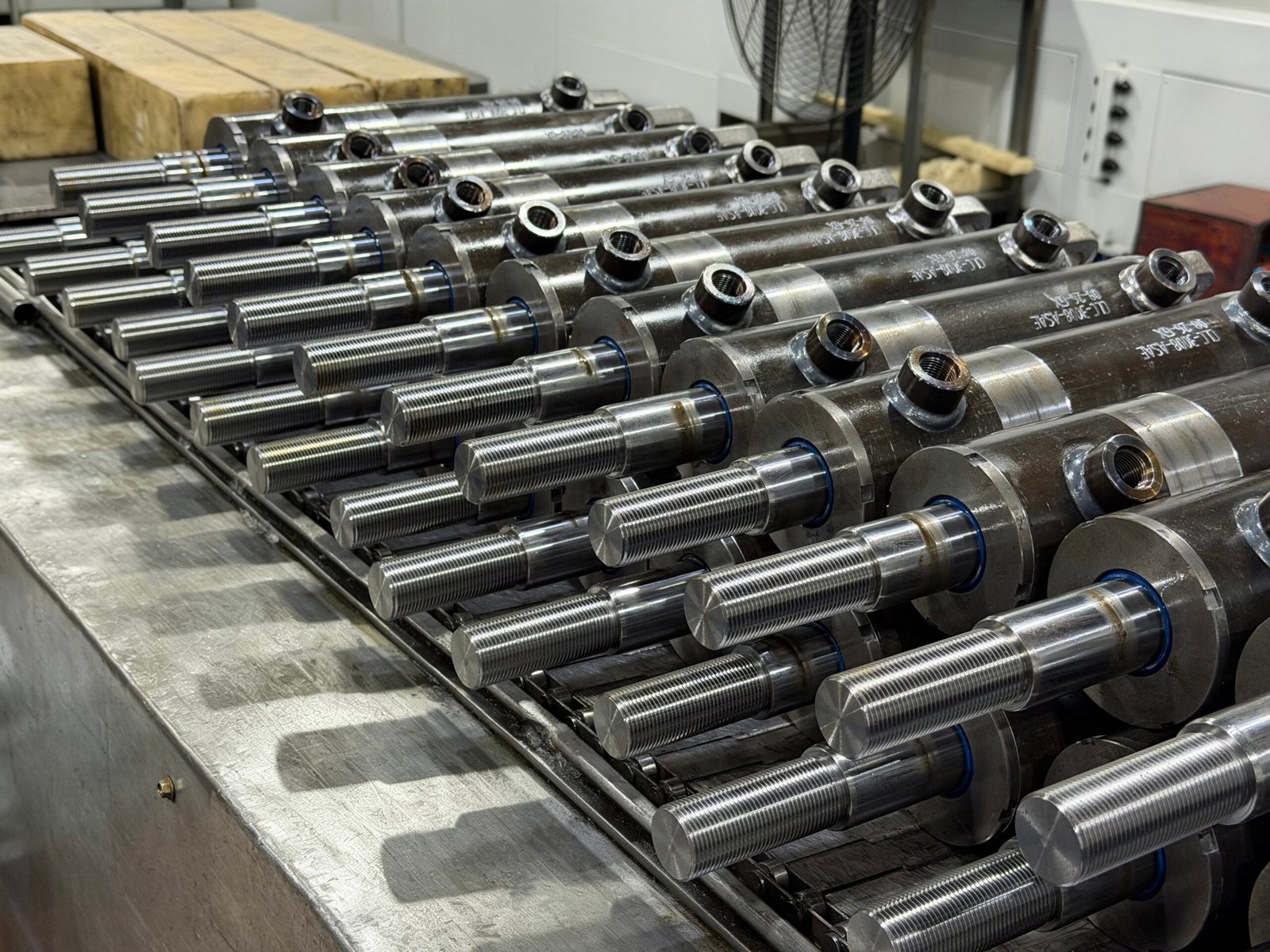
Choosing the right hydraulic cylinder manufacturer in China is an important decision for equipment manufacturers, OEM buyers, and industrial procurement teams. Beyond competitive pricing, a reliable manufacturing partner must deliver consistent product quality, accurate engineering, dependable production, and technical support throughout the product lifecycle.
China has developed a comprehensive hydraulic manufacturing supply chain, covering cylinder tubes, piston rods, seals, precision machining, surface treatment, welding, and hydraulic assembly. This allows manufacturers to produce a wide range of hydraulic cylinders for construction machinery, agricultural equipment, transportation, material handling, and industrial applications.
However, not every supplier offers the same level of manufacturing control or engineering capability. Some specialize in standardized products, while others focus on custom OEM development, heavy-duty applications, or high-volume production.
For international buyers, the challenge is identifying a factory that can meet specific technical requirements and maintain consistent quality across repeat orders.
In this guide, we explain how hydraulic cylinders are manufactured, what quality control processes matter, how to evaluate a Chinese hydraulic cylinder factory, and what to consider when selecting an OEM manufacturing partner.
We also introduce Toleng Hydraulics and its manufacturing capabilities for international equipment manufacturers.
1. What to Look for in a Hydraulic Cylinder Manufacturer in China
When evaluating hydraulic cylinder manufacturers in China, buyers should look beyond product catalogs and quotations.
A professional manufacturer should demonstrate the ability to control critical production processes, understand application requirements, and provide reliable technical support.
Here are six important factors to evaluate.
1.1 In-House Manufacturing Capabilities
A manufacturer’s actual production capabilities directly influence its control over product quality, delivery schedules, and manufacturing consistency.
Look for a factory with relevant equipment and experience in:
- CNC precision machining
- Cylinder tube processing and honing
- Piston rod machining and surface treatment
- Hydraulic cylinder welding
- Component assembly
- Dimensional inspection
- Hydraulic pressure testing
Not every manufacturer needs to perform every process internally. However, suppliers should clearly identify which operations are completed in-house and which are outsourced.
This distinction is important because outsourced processes can affect lead times, inspection responsibilities, and quality traceability.
1.2 Engineering and Design Support
A hydraulic cylinder is not simply a steel tube with a piston and rod. Its performance depends on the relationship between hydraulic pressure, mechanical loading, material properties, sealing systems, and installation conditions.
An experienced engineering team should be able to review:
- Bore and rod diameters
- Stroke and retracted length
- Working pressure
- Mounting configurations
- Load direction and side loading
- Operating speed and duty cycle
- Hydraulic fluid and temperature
- Environmental exposure
For OEM projects, engineering support is particularly valuable when the customer needs to modify an existing design or develop a cylinder for new equipment.
1.3 Material Selection and Traceability
The materials used in a hydraulic cylinder must match its operating conditions.
Important components include the cylinder barrel, piston rod, piston, gland, end caps, and sealing elements.
For example:
- Cylinder barrels require suitable mechanical properties and internal surface quality.
- Piston rods need appropriate strength, dimensional accuracy, and wear-resistant surface treatment.
- Pistons and glands must maintain correct dimensions and component clearances.
- Sealing materials must be compatible with hydraulic fluid, pressure, and temperature.
Ask whether the manufacturer performs incoming material inspections and maintains material identification records.
For projects with strict procurement requirements, request material certificates and confirm that the documented material grades match the approved specifications.
1.4 Manufacturing Process Control
A good hydraulic cylinder factory should have established production procedures for its critical manufacturing operations.
These procedures help maintain dimensional consistency and reduce manufacturing defects.
Important processes include precision machining, honing, welding, surface treatment, and assembly.
1.5 Documented Quality Inspection
Quality control should take place throughout production rather than only when the finished cylinder is ready for shipment.
Ask the manufacturer how it inspects raw materials, machined components, welded assemblies, sealing components, and finished cylinders.
Inspection records should be available according to the agreed project requirements.
1.6 OEM and Export Experience
International OEM projects often require more than manufacturing.
A suitable supplier should understand technical communication, drawing approval, production planning, export packaging, and after-sales support.
Previous export experience can help reduce misunderstandings when working across different engineering standards and purchasing procedures.
2. Inside a Hydraulic Cylinder Manufacturing Factory
Understanding the manufacturing process helps buyers evaluate whether a supplier has the capabilities needed to produce reliable hydraulic cylinders.
Although production methods vary according to cylinder design, the following processes are commonly involved in manufacturing welded and tie-rod hydraulic cylinders.
2.1 Cylinder Barrel Processing and Honing
The cylinder barrel provides the internal working surface along which the piston moves.
Its internal diameter, roundness, straightness, and surface finish affect piston guidance, seal performance, and friction.
Honing is used to improve the internal geometry and surface condition of the cylinder tube.
During this process, manufacturers must control:
- Internal diameter
- Roundness
- Cylindricity
- Surface roughness
- Dimensional consistency along the barrel
An unsuitable bore surface can contribute to accelerated seal wear, internal leakage, and inconsistent cylinder movement.
For OEM production, barrel inspection should be based on the dimensions and tolerances specified in the approved drawing.
2.2 Piston Rod Machining and Surface Treatment
The piston rod transfers hydraulic force to the external mechanical load.
It must withstand tensile and compressive forces, repeated movement, and exposure to the operating environment.
Typical manufacturing operations include:
- Cutting the steel rod to the required length.
- CNC machining of threaded ends and mounting features.
- Precision grinding to achieve the specified diameter.
- Applying the required surface treatment.
- Final dimensional and surface inspection.
Hard chrome plating is a commonly used treatment for hydraulic cylinder piston rods.
A properly manufactured rod should have suitable surface hardness, wear resistance, corrosion resistance, and surface finish for the intended sealing system.
The specified finish should be verified against the seal manufacturer’s requirements rather than selected using a universal value.
2.3 CNC Machining of Pistons and Glands
The piston and gland are important components in maintaining cylinder performance.
The piston separates the pressure chambers and supports the piston rod through its mechanical connection.
The gland guides the rod and accommodates the rod sealing system.
Precision CNC machining helps maintain the dimensional relationships between these components.
Important inspection points include:
- Piston outside diameter
- Seal groove dimensions
- Gland bore diameter
- Rod guide dimensions
- Thread specifications
- Component concentricity
Dimensional errors can affect seal compression, friction, alignment, and overall cylinder performance.
2.4 Welding and Structural Assembly
Welding is a critical manufacturing operation for welded hydraulic cylinders.
Welded structures must withstand the mechanical and pressure loads associated with the cylinder’s intended operating conditions.
The manufacturing process should control welding parameters, joint preparation, component alignment, and weld inspection.
Depending on the design and applicable requirements, inspection may include visual examination and additional non-destructive testing.
After welding, critical dimensions and alignment should be checked before the cylinder proceeds to final assembly.
2.5 Seal Installation and Final Assembly
Before assembly, internal components should be properly cleaned and inspected.
Seals must be installed in the correct orientation without cutting, twisting, or damaging their sealing lips.
Assembly procedures should also control:
- Component cleanliness
- Seal compatibility
- Piston and gland installation
- Thread engagement
- Fastening requirements
- Internal lubrication
- Final alignment
Contamination introduced during assembly can damage sealing surfaces and contribute to premature component wear.
For this reason, clean assembly conditions are an important part of hydraulic cylinder manufacturing.
2.6 Final Testing and Inspection
After assembly, the finished cylinder should undergo the inspections and tests specified for its design.
Depending on the project, these may include:
- Dimensional inspection
- Appearance inspection
- Extension and retraction testing
- Hydrostatic pressure testing
- External leakage inspection
- Internal leakage or drift testing, where specified
Testing procedures should define the test pressure, duration, acceptance criteria, and applicable inspection records.
A pressure test is not a substitute for correct design or manufacturing. It is one part of a broader quality assurance process.
3. Hydraulic Cylinder Quality Control: What Buyers Should Verify
Quality control is one of the most important differences between hydraulic cylinder suppliers.
A factory may have modern machinery, but equipment alone does not guarantee that every cylinder meets its specifications.
Buyers should understand how the manufacturer measures and verifies critical components.
3.1 Cylinder Bore Inspection
The cylinder bore affects piston movement, sealing performance, and internal leakage.
Important inspection parameters include:
| Inspection Parameter | Why It Matters |
|---|---|
| Bore diameter | Maintains the specified piston clearance |
| Roundness | Reduces uneven piston and seal contact |
| Cylindricity | Supports consistent movement along the bore |
| Surface roughness | Influences friction and seal wear |
| Straightness | Helps maintain correct piston guidance |
Suitable measuring instruments may include bore gauges, internal micrometers, and other calibrated dimensional inspection equipment.
3.2 Piston Rod Inspection
Piston rod quality directly affects the rod sealing system and the cylinder’s external durability.
Inspection should consider:
- Rod diameter
- Straightness
- Surface roughness
- Surface hardness, where specified
- Chrome plating thickness, where applicable
- Corrosion resistance, where required
A damaged or poorly finished rod can accelerate seal wear and lead to external hydraulic leakage.
3.3 Welding Quality Inspection
For welded hydraulic cylinders, weld quality is important to structural integrity.
Inspection requirements should be based on the cylinder design, material, welding procedure, and applicable standards.
Depending on the project, these may include:
- Visual weld inspection
- Dimensional inspection
- Weld appearance and continuity
- Additional non-destructive examination when required
Buyers should clarify which inspection methods are included in the manufacturer’s standard production process and which require additional approval.
3.4 Hydrostatic Pressure Testing
Hydrostatic testing helps verify the pressure integrity of an assembled hydraulic cylinder.
During testing, the cylinder is filled with suitable hydraulic fluid and pressurized according to the agreed test procedure.
The inspection may evaluate:
- External leakage
- Pressure retention
- Structural integrity
- Functional movement
- Abnormal deformation
The test pressure and holding time must be determined according to the applicable design, standards, and customer specifications.
For example, a test pressure of 1.5 times the rated working pressure may be specified for certain projects, but this should never be treated as a universal requirement for all hydraulic cylinders.
3.5 Quality Inspection Checklist
Before placing an OEM order, buyers can use the following checklist to evaluate the manufacturer’s inspection capabilities.
| Quality Control Stage | Verification Questions |
|---|---|
| Raw materials | Are material grades and certificates checked? |
| Barrel processing | Are bore dimensions and surface quality inspected? |
| Rod processing | Are diameter, straightness, and surface finish measured? |
| Machining | Are critical component dimensions verified? |
| Welding | Are welding procedures and inspection criteria documented? |
| Assembly | Are seals installed correctly in a clean environment? |
| Pressure testing | Are test conditions and acceptance criteria recorded? |
| Final inspection | Are finished products checked against approved drawings? |
A reliable manufacturer should be able to explain its inspection process and provide relevant documentation.
4. Types of Hydraulic Cylinders Manufactured in China
Chinese hydraulic cylinder manufacturers offer a wide range of designs for mobile equipment and industrial machinery.
The appropriate design depends on installation space, load requirements, operating cycles, maintenance needs, and hydraulic system configuration.
4.1 Welded Hydraulic Cylinders

Welded hydraulic cylinders use welded construction to connect major structural components.
Their compact design makes them suitable for applications where installation space and structural strength are important.
Common applications include:
- Excavators
- Wheel loaders
- Agricultural machinery
- Dump trailers
- Forestry equipment
- Snow removal machinery
- Material handling equipment
Heavy-duty welded cylinders are commonly used in mobile machinery exposed to vibration, repeated loading, and demanding operating conditions.
Explore Toleng’s welded hydraulic cylinder range.
4.2 Tie-Rod Hydraulic Cylinders

Tie-rod hydraulic cylinders use external threaded rods to hold the end caps and cylinder assembly together.
This construction allows convenient disassembly and maintenance, making it suitable for many industrial hydraulic systems.
Common applications include:
- Industrial presses
- Manufacturing machinery
- Automation systems
- Packaging equipment
- Material handling systems
- General industrial applications
For applications requiring standardized mounting dimensions, NFPA-compatible tie-rod cylinders may be an appropriate solution.
Explore Toleng’s tie-rod hydraulic cylinder range.
4.3 Telescopic Hydraulic Cylinders

Telescopic hydraulic cylinders contain multiple nested stages that extend sequentially to provide a long stroke from a relatively short retracted length.
They are commonly used in equipment requiring substantial lifting travel within limited installation space.
Typical applications include:
- Dump trucks
- Dump trailers
- Agricultural trailers
- Tipping platforms
- Garbage trucks
- Lifting equipment
Both single-acting and double-acting configurations are available depending on the required operating system.
4.4 Single-Acting Hydraulic Cylinders
Single-acting cylinders use hydraulic pressure to move the piston in one direction.
The return movement is provided by an external force, such as gravity, a spring, or the mechanical load.
They are suitable for applications where powered movement is only required in one direction.
4.5 Double-Acting Hydraulic Cylinders
Double-acting cylinders use hydraulic pressure to extend and retract the piston rod.
They provide powered movement in both directions and are widely used in mobile and industrial hydraulic systems.
Their selection should consider the available hydraulic circuit, required forces, operating speed, and return-load conditions.
4.6 Custom Hydraulic Cylinders
Some equipment requires dimensions, mounting arrangements, or operating characteristics that are not available in standard product series.
In these cases, a custom hydraulic cylinder manufacturer can develop a solution based on customer drawings, physical samples, or application requirements.
5. OEM and Custom Hydraulic Cylinder Manufacturing
For international equipment manufacturers, OEM capability is often more important than the number of standard products in a supplier’s catalog.
A capable OEM manufacturer should understand the customer’s equipment and translate its operating requirements into a manufacturable hydraulic cylinder design.
5.1 What Can Be Customized?
A custom hydraulic cylinder can be developed according to several technical parameters.
| Parameter | Typical Requirements |
|---|---|
| Cylinder Type | Welded, tie-rod, telescopic |
| Bore Diameter | Based on required force |
| Rod Diameter | Based on loading and stability |
| Stroke Length | Based on equipment movement |
| Working Pressure | Based on hydraulic system design |
| Retracted Length | Based on installation space |
| Mounting Type | Clevis, flange, trunnion, cross tube, custom |
| Port Configuration | SAE, BSP, NPT, or other specified connections |
| Rod Surface Treatment | Chrome plating or other specified finishes |
| Seal System | Selected for fluid, pressure, and temperature |
| Corrosion Protection | Painting or other specified treatments |
Not all options are suitable for every design. Final specifications should be reviewed against the actual application and applicable engineering requirements.
5.2 Manufacturing from Drawings
Customers with existing engineering drawings can provide them to the manufacturer for technical review.
The engineering team should verify:
- Dimensional feasibility
- Material specifications
- Manufacturing tolerances
- Mounting compatibility
- Hydraulic connections
- Assembly requirements
- Inspection and testing criteria
Any proposed changes should be documented and approved before production.
5.3 Reverse Engineering from Existing Samples
In replacement projects, original drawings may no longer be available.
An experienced manufacturer may be able to develop a replacement cylinder from an existing sample.
However, simply copying external dimensions is not always sufficient.
The evaluation should also consider internal construction, seal arrangements, material specifications, operating pressure, and installation conditions.
The following information is particularly useful:
- Bore diameter
- Rod diameter
- Stroke
- Retracted length
- Extended length
- Mounting dimensions
- Pin diameter
- Port size and location
- Original working pressure, if known
For damaged or worn cylinders, measurements should be taken carefully because the existing components may no longer represent their original manufacturing dimensions.
5.4 Prototype Development and Mass Production
OEM projects often benefit from a prototype or first-article production stage.
A typical development process includes:
- Customer submits drawings, samples, or technical requirements.
- Manufacturer reviews the application and specifications.
- Engineering drawings are prepared or revised.
- Customer approves the design.
- Prototype or initial sample is manufactured.
- Dimensional and functional inspections are completed.
- Customer reviews and approves the sample.
- Batch production begins according to the agreed quality requirements.
This process helps identify potential design or installation problems before larger production quantities are manufactured.
For repeat orders, approved drawings, material specifications, and inspection standards should be maintained to support consistency.
6. Hydraulic Cylinder Manufacturers for Different Industries
A manufacturer’s application experience can be an important indicator of its engineering capabilities.
Different industries place different demands on hydraulic cylinder design and performance.
6.1 Construction Machinery
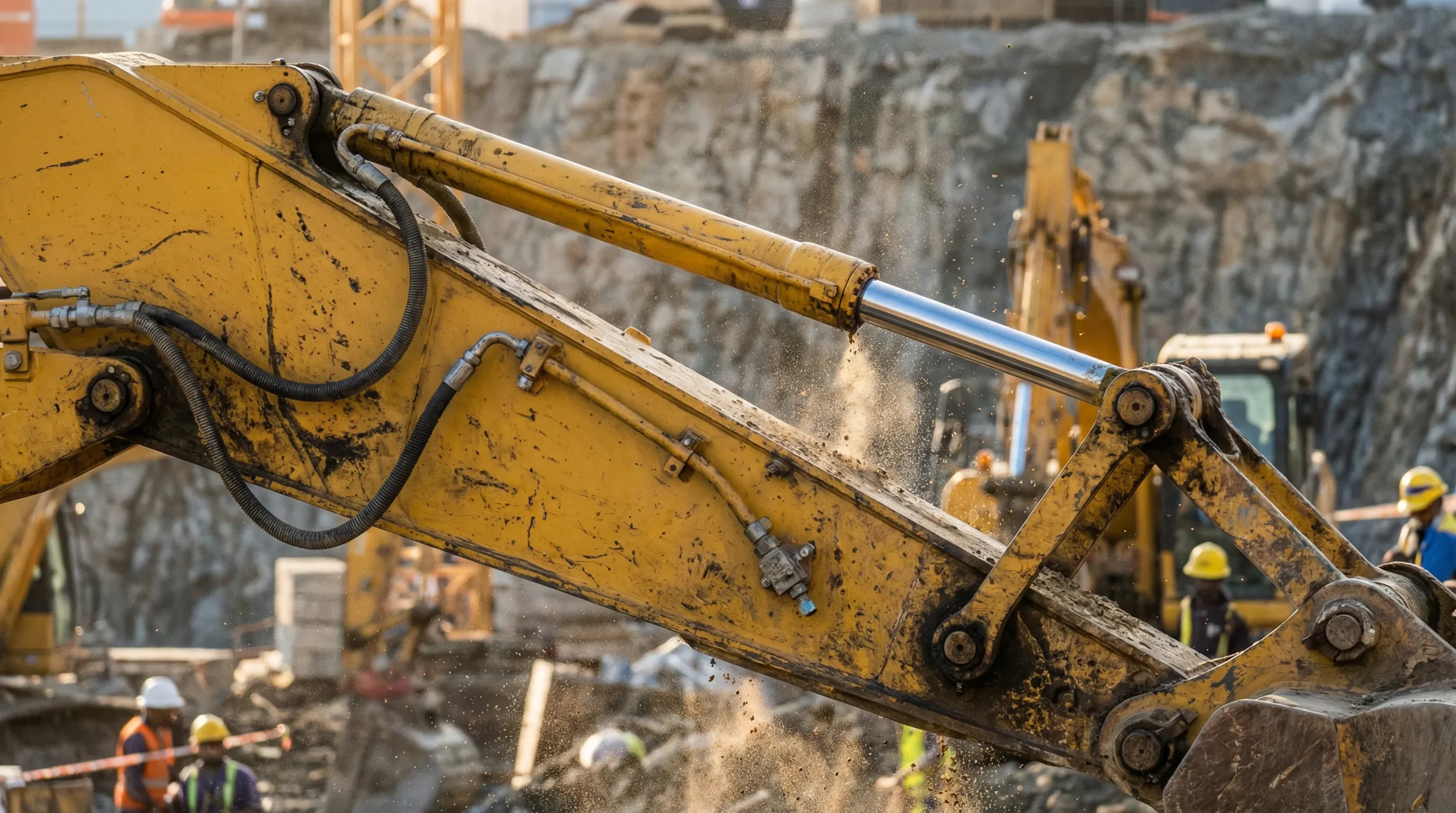
Excavators, wheel loaders, bulldozers, and other construction equipment depend on hydraulic cylinders for lifting, digging, steering, and attachment movement.
Typical cylinder applications include:
- Excavator boom cylinders
- Excavator arm cylinders
- Bucket cylinders
- Loader lift cylinders
- Loader tilt cylinders
- Steering cylinders
- Attachment cylinders
These applications may involve high mechanical loads, vibration, impact, and repeated operating cycles.
Cylinder selection should consider load direction, mounting geometry, rod stability, and the operating environment.
6.2 Agricultural Machinery
Agricultural machinery uses hydraulic cylinders for lifting, positioning, steering, and equipment adjustment.
Common applications include:
- Tractor hydraulic cylinders
- Tractor loader cylinders
- Harvester header lift cylinders
- Reel adjustment cylinders
- Agricultural trailer cylinders
- Baler cylinders
- Implement positioning cylinders
Agricultural equipment often operates in environments exposed to dust, moisture, mud, and changing temperatures.
Appropriate sealing and corrosion protection are therefore important considerations.
6.3 Dump Trucks and Trailers
Dump trucks and trailers commonly use telescopic hydraulic cylinders to raise tipping bodies and discharge materials.
Other hydraulic applications include:
- Trailer lifting cylinders
- Hydraulic trailer jacks
- Stabilization systems
- Tailgate cylinders
- Side-dump mechanisms
- Agricultural tipping systems
For these applications, the manufacturer should understand the required lifting capacity, extension sequence, installation dimensions, and operating conditions.
6.4 Industrial Machinery
Industrial hydraulic cylinders are used in presses, production machinery, automation systems, and material handling equipment.
These applications may require precise dimensions, repeatable movement, controlled operating speeds, and reliable sealing over repeated cycles.
Depending on the system, tie-rod and welded cylinder designs may both be suitable.
6.5 Mining and Heavy-Duty Equipment
Mining and heavy-duty machinery may expose hydraulic cylinders to high mechanical loads, abrasive contamination, vibration, and demanding operating environments.
Cylinder design should account for structural strength, rod stability, sealing protection, surface treatment, and maintenance accessibility.
Application-specific engineering is especially important in these conditions.
7. How to Evaluate a Hydraulic Cylinder Supplier in China
Before selecting a supplier, international buyers should establish a consistent evaluation process.
The following steps can help reduce purchasing risks.
Step 1: Verify the Company’s Manufacturing Background
Confirm the company’s legal identity, business address, manufacturing location, and actual production capabilities.
Ask whether the factory manufactures the products directly or purchases finished cylinders from other suppliers.
A live factory tour or third-party audit can help verify production conditions.
Step 2: Review Technical Capabilities
Request examples of similar products or applications.
Check whether the manufacturer has experience with the required cylinder type, dimensions, working pressure, and mounting configuration.
A supplier with relevant engineering experience may identify potential issues before manufacturing begins.
Step 3: Examine Quality Management
Request relevant quality management certificates and verify their validity and scope.
Also ask about incoming inspection, in-process inspection, final testing, and material traceability.
Certification is useful evidence of a management system, but it does not replace product-specific inspection.
Step 4: Request a Sample or First Article
For new OEM projects, a sample can help verify dimensions, assembly quality, mounting compatibility, and functional performance.
Before sample production, confirm the approved drawing and inspection requirements.
Step 5: Compare Quotations on an Equal Basis
When comparing quotations, ensure that all suppliers are using the same technical specifications.
A useful comparison should include:
- Product dimensions
- Material requirements
- Working pressure
- Seal configuration
- Surface treatment
- Inspection and testing
- Packaging
- Delivery terms
- Warranty conditions
This prevents a lower-priced quotation from appearing more competitive simply because important requirements have been excluded.
Step 6: Evaluate Long-Term Support
A hydraulic cylinder is part of a larger equipment system.
Reliable communication, replacement-part availability, technical documentation, and a clear process for handling quality issues are important for long-term OEM cooperation.
8. How Much Does a Hydraulic Cylinder Cost in China?
Hydraulic cylinder prices depend on the product design, dimensions, materials, manufacturing complexity, order quantity, and inspection requirements.
There is no reliable universal price for all hydraulic cylinders manufactured in China.
The following factors have the greatest influence on quotations.
Cylinder Dimensions
Larger bore diameters, longer strokes, and larger rod diameters generally require more material and machining operations.
Working Pressure and Design Requirements
Higher-pressure applications may require different component dimensions, materials, sealing systems, and manufacturing controls.
The cylinder must be designed according to its actual pressure and load requirements.
Materials and Surface Treatments
Material grades, piston rod treatments, corrosion protection, and seal specifications all influence production costs.
Special materials and surface treatments may increase the manufacturing cost.
Manufacturing Complexity
A standard tie-rod cylinder and a multi-stage telescopic cylinder involve different manufacturing processes.
Custom mounting structures, special ports, and non-standard components can also increase engineering and production costs.
Order Quantity
Prototype orders and small batches may have higher unit costs because engineering, setup, and tooling expenses are distributed across fewer products.
Larger repeat orders may offer better production efficiency, depending on product complexity and manufacturing arrangements.
Testing and Documentation
Additional pressure testing, dimensional reports, material certificates, and customer-specific inspection requirements should be included when requesting quotations.
How to obtain an accurate quotation
To help a manufacturer evaluate your project, provide:
- Cylinder type
- Bore diameter
- Rod diameter
- Stroke length
- Retracted length
- Working pressure
- Mounting dimensions
- Port configuration
- Application and operating conditions
- Required quantity
If available, provide a technical drawing or physical sample.
A complete specification helps manufacturers quote on an equivalent technical basis and reduces the risk of misunderstandings.
9. Why Choose Toleng Hydraulics as Your Hydraulic Cylinder Manufacturer in China?
Toleng Hydraulics is a hydraulic cylinder manufacturer based in Pinghu, Zhejiang, China.
Established in 1998, Toleng has more than 25 years of experience in hydraulic cylinder manufacturing and serves OEM customers in more than 40 countries.
The company focuses on standard and custom hydraulic cylinders for construction machinery, agricultural equipment, transportation, material handling, and industrial applications.
For equipment manufacturers, Toleng provides manufacturing support across different cylinder designs, including welded, tie-rod, telescopic, and custom OEM hydraulic cylinders.
9.1 Integrated Manufacturing Capabilities
Toleng’s manufacturing operations cover important stages of hydraulic cylinder production, including:
- CNC precision machining
- Cylinder tube processing and honing
- Piston rod processing
- Automated welding
- Chrome plating and specified surface treatments
- Hydraulic cylinder assembly
- Final inspection and pressure testing
These manufacturing capabilities support production control and coordination across different manufacturing stages.
For OEM projects, this is important because component dimensions, surface conditions, and assembly quality all influence final cylinder performance.
9.2 Standard and Custom Hydraulic Cylinder Solutions
Toleng provides several hydraulic cylinder product categories.
Welded Hydraulic Cylinders
Designed for mobile machinery and applications requiring compact construction and suitable structural strength.
Typical applications include construction machinery, agricultural equipment, trailers, and material handling systems.
Tie-Rod Hydraulic Cylinders
Designed for industrial hydraulic systems where standardized dimensions and convenient maintenance are important.
Telescopic Hydraulic Cylinders
Suitable for dump trucks, dump trailers, and equipment requiring long extension distances within limited installation space.
Custom OEM Hydraulic Cylinders
Developed according to customer drawings, samples, or technical requirements.
9.3 Quality Management and Inspection
Toleng operates under ISO 9001 and ISO 14001 management systems.
Quality control includes material inspection, machining inspection, welding inspection, assembly checks, and final product testing.
Hydraulic pressure testing is performed to verify finished cylinder performance against the applicable specifications and testing requirements.
For projects requiring additional documentation, inspection and testing requirements can be discussed during the technical review and quotation stages.
9.4 Supporting International OEM Projects
Toleng works with international customers on standard products, custom cylinder development, and replacement manufacturing.
OEM support may include:
- Technical drawing review
- Custom dimensions and mounting configurations
- Product specification confirmation
- Prototype and small-batch manufacturing
- Production coordination
- Quality inspection support
For replacement projects, customers can also discuss the feasibility of manufacturing based on existing cylinder samples or available measurements.
9.5 Working with Toleng
Every hydraulic cylinder project begins with understanding the application and confirming the technical requirements.
To help our engineering team evaluate your project, you can provide a drawing, product sample, or basic specification.
We can then review the cylinder type, dimensions, mounting arrangement, working pressure, and other relevant requirements before discussing a suitable manufacturing solution.
Looking for a hydraulic cylinder manufacturer in China for your next OEM project?
Contact Toleng Hydraulics to discuss your application, request technical support, or obtain a manufacturing quotation.
Send us your drawings or specifications to get started.
10. Frequently Asked Questions About Hydraulic Cylinder Manufacturers in China
How do I find a reliable hydraulic cylinder manufacturer in China?
Start by verifying the company’s manufacturing facility, engineering capabilities, and quality management system.
Ask for factory photos or arrange a factory audit. Review the manufacturer’s machining, honing, welding, assembly, and pressure testing processes.
For OEM projects, request a sample or first article and confirm that the product meets your approved drawing and inspection requirements.
What is the difference between a hydraulic cylinder manufacturer and a trading company?
A hydraulic cylinder manufacturer produces cylinders using its own manufacturing facilities or directly manages the relevant production processes.
A trading company typically purchases products from other factories and resells them to customers.
Both may provide sourcing services, but buyers should understand who controls production, performs inspections, and takes responsibility for product quality.
Are hydraulic cylinders made in China reliable?
Reliability depends on engineering design, material selection, manufacturing control, and inspection procedures.
A qualified Chinese manufacturer can produce hydraulic cylinders for demanding industrial and mobile equipment applications.
Buyers should evaluate the actual factory and its production processes rather than assuming that country of origin alone determines product quality.
Can Chinese manufacturers produce custom hydraulic cylinders?
Yes. Many manufacturers offer OEM hydraulic cylinder production based on customer drawings, samples, or technical specifications.
Common customization options include bore diameter, rod diameter, stroke length, working pressure, mounting dimensions, port configuration, materials, and sealing systems.
What information is needed for a hydraulic cylinder quotation?
The most useful information includes cylinder type, bore, rod diameter, stroke, retracted length, working pressure, mounting dimensions, and port configuration.
The intended application and operating environment are also important.
A technical drawing or physical sample can help the manufacturer confirm the design and prepare a more accurate quotation.
What certifications should I check when choosing a Chinese hydraulic cylinder factory?
ISO 9001 is a commonly requested quality management certification. ISO 14001 may also be relevant to environmental management.
Depending on the application, buyers may require additional material, welding, or product-specific qualifications.
Always verify the certificate holder, validity, certification scope, and issuing organization.
Can a hydraulic cylinder manufacturer reproduce an existing cylinder?
A manufacturer may be able to develop a replacement cylinder based on an existing sample or technical drawing.
The process should include checking external dimensions, mounting points, bore, rod diameter, stroke, port locations, internal construction, and operating requirements.
Simply copying the outside dimensions may not guarantee equivalent performance.
What is the difference between welded and tie-rod hydraulic cylinders?
Welded hydraulic cylinders use welded structural components and are commonly found in mobile equipment.
Tie-rod hydraulic cylinders use external threaded rods to hold the end caps together and are widely used in industrial applications.
The appropriate design depends on installation space, operating conditions, maintenance requirements, and equipment specifications.
How do I choose a heavy-duty hydraulic cylinder manufacturer in China?
Look for manufacturers with relevant experience in high-load applications, suitable material selection, controlled welding processes, precision machining, and documented pressure testing.
Also consider rod buckling, side loading, mounting strength, sealing protection, and operating cycles.
The manufacturer should be able to evaluate the actual application rather than selecting a cylinder based only on bore size and working pressure.
What is the best hydraulic cylinder manufacturer in China?
There is no single manufacturer that is best for every application.
The right supplier depends on product specialization, manufacturing capabilities, engineering support, quality control, customization options, delivery reliability, and after-sales service.
Buyers should compare manufacturers using the same technical specifications and project requirements.
Conclusion: Choose a Manufacturing Partner, Not Just a Supplier
Selecting a hydraulic cylinder manufacturer in China requires more than comparing product prices or reviewing online catalogs.
Manufacturing capabilities, engineering experience, material quality, machining accuracy, welding control, sealing systems, and pressure testing all influence the reliability of the finished product.
For OEM buyers, a manufacturer’s ability to understand application requirements and maintain consistent production quality is particularly important.
Toleng Hydraulics combines more than 25 years of hydraulic cylinder manufacturing experience with integrated production capabilities and OEM customization support.
Whether you need welded hydraulic cylinders for mobile machinery, tie-rod cylinders for industrial equipment, telescopic cylinders for trailers, or custom hydraulic cylinders based on your drawings, Toleng is ready to discuss your manufacturing requirements.
Contact Toleng Hydraulics to discuss your next hydraulic cylinder project and request a quotation.

