
Standard Hydraulic Cylinder Manufacturer: Decades of Reliability Maintenance-Free Solutions for Hydropower Gate and Turbine Control Cylinders
High-quality standard hydraulic cylinders from a reliable manufacturer ensuring ISO 9001 control, CNC precision, and durable performance for industrial use.
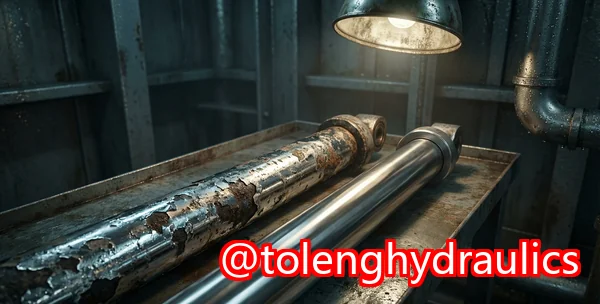
In modern industrial systems, the performance of a standard hydraulic cylinder directly determines the stability, efficiency, and safety of equipment. Whether in construction machinery, agricultural systems, or heavy-duty industrial automation, these components serve as the core force transmission element. As an experienced hydraulic cylinder manufacturer, I have seen how even minor differences in design, materials, or manufacturing quality can lead to major variations in field performance.
At Toleng, we specialize in delivering precision-engineered standard hydraulic cylinders that meet demanding global industrial requirements. Over the years, I have learned that choosing the right hydraulic cylinder manufacturer is not just a procurement decisionit is a long-term investment in operational reliability, maintenance reduction, and system safety. That is why our approach to standard cylinder manufacturing focuses on strict quality control, advanced CNC machining, and full material traceability.
Standard Hydraulic Cylinder Specifications for Industrial Applications
When I evaluate a standard hydraulic cylinder for industrial use, I always begin with its core specifications. These parameters define compatibility, load capacity, and operational lifespan across different applications.
Standard bore sizes
Our standard hydraulic cylinder range covers bore sizes from 25mm to 320mm (1 inch to 12.5 inches). This wide range allows us to serve everything from compact lifting systems to heavy-duty industrial presses. In many OEM hydraulic cylinders projects, selecting the correct bore size is critical for achieving the required force output without overloading the system.
Standard stroke lengths
We manufacture cylinders with stroke lengths from 50mm to 3000mm (2 inches to 118 inches). In real-world applications such as construction equipment and material handling systems, stroke accuracy ensures smooth motion control and reduces mechanical stress.
Working pressure ratings
Most standard hydraulic cylinder models operate between 16MPa and 25MPa (23203625 PSI). For high-demand systems, we also offer reinforced designs reaching up to 35MPa. I always advise engineers to match pressure ratings carefully with system requirements to avoid premature seal failure or structural fatigue.
Mounting styles
Flexibility in installation is essential. We provide a full range of mounting configurations, including MF, MP, MS, ME, MT, TA, TC, TB, TD, LB, FA, FB, CA, and CB. These options ensure compatibility across different machine designs without requiring major structural modifications.
Piston rod materials
Durability depends heavily on piston rod quality. We use hard chrome plated C45, 1045, and 4140 steel. These materials provide excellent corrosion resistance and high tensile strength, especially in heavy-duty industrial hydraulic cylinders operating under continuous load.
Tube materials
For cylinder barrels, we rely on honed seamless steel tubes such as ST52, E355, and CK45. These materials ensure uniform wall thickness and excellent structural integrity under high pressure.
Seal options
Seal performance is critical for leak-free operation. We integrate high-quality seal kits from Parker, Hallite, Merkel, or equivalent brands. In my experience as a quality hydraulic cylinder supplier, seal selection often determines long-term maintenance frequency and operational stability.
Manufacturing Quality Standards in Standard Cylinder Manufacturing
A reliable hydraulic cylinder factory is defined not just by product design but by its manufacturing discipline. At Toleng, our standard cylinder manufacturing process is built around precision, repeatability, and strict quality verification.
CNC machining capabilities
We maintain machining tolerances within 0.01mm. This level of precision ensures perfect alignment between piston rods, seals, and cylinder tubes. Even small deviations can lead to leakage or uneven wear, so CNC accuracy is essential.
Honing process
Each cylinder barrel undergoes precision honing to achieve a surface roughness of Ra 0.20.4m. This ultra-smooth internal finish reduces friction, improves seal life, and ensures consistent hydraulic performance under load.
Welding standards
We use robotic welding systems to ensure uniform weld strength and penetration. In industrial hydraulic cylinders, inconsistent welding is one of the primary causes of fatigue failure. Automation eliminates human error and ensures structural consistency.
Assembly conditions
Seal installation and final assembly are conducted in a Class 10,000 clean room environment. Dust and contamination are major threats to hydraulic systems, so controlled environments significantly improve product reliability.
Testing procedures
Every standard hydraulic cylinder undergoes rigorous testing before shipment:
-
100% pressure testing at 1.5x working pressure
-
Leakage test: 0.05ml/min at rated pressure
-
Endurance testing: minimum 500,000 cycles
-
Dimensional inspection using CMM equipment
From my experience, this testing stage is where a true hydraulic cylinder manufacturer proves its quality commitment. Many failures in the field can be traced back to insufficient factory testing.
Why Manufacturer Selection Matters in Hydraulic Systems
Choosing a hydraulic cylinder manufacturer is not just about priceit is about long-term system performance, downtime reduction, and safety assurance. I always emphasize this to procurement teams.
Material traceability
At Toleng, every standard hydraulic cylinder comes with full material certification from steel mills. This ensures transparency and allows customers to verify material composition and mechanical properties.
Quality certifications
We operate under ISO 9001:2015 quality management systems and hold CE and SGS certifications. These standards confirm that our manufacturing processes meet international industrial requirements.
In-house capabilities vs outsourcing
Unlike many suppliers who outsource critical processes, we control CNC machining, welding, honing, assembly, and testing in-house. This vertical integration gives us full control over quality consistency and production timelines.
Lead time advantages
For standard hydraulic cylinder orders, our production lead time is typically 715 days. In fast-paced industries like construction and agriculture, this speed is a major competitive advantage.
Technical support
We provide application engineering support to help customers select the right cylinder configuration. Whether it is load calculations, mounting selection, or seal compatibility, our engineering team assists throughout the process.
Customization options
Even as a standard cylinder manufacturing specialist, we also support customization, including:
-
Special port locations
-
Custom rod ends
-
Integrated sensors for position feedback
-
Anti-corrosion coatings for marine or offshore use
As a custom hydraulic cylinder manufacturer, this flexibility allows us to support OEM projects across multiple industries.
Applications of Standard Hydraulic Cylinders in Industry
The versatility of industrial hydraulic cylinders makes them essential across multiple sectors. I have personally seen their use in a wide variety of demanding environments.
Construction equipment
Excavators, bulldozers, and loaders rely heavily on hydraulic cylinders for lifting, digging, and positioning. High pressure resistance and durability are essential here.
Agricultural machinery
Tractors, harvesters, and balers use standard hydraulic cylinders for steering, lifting, and mechanical control systems. Reliability during long working hours is critical.
Industrial automation
Hydraulic presses, conveyor systems, and lifting platforms depend on precise cylinder movement for repeatable production processes.
Material handling
Forklifts, pallet jacks, and lifting tables require smooth and controlled motion, often under heavy load conditions.
Mobile hydraulics
Trucks, cranes, and aerial work platforms rely on hydraulic systems for mobility and operational safety. In these cases, failure is not an option.
Selection
Explore Toleng hydraulics Software at: 🔗 https://tolenghydraulics.com/standard-hydraulic-cylinder/

