
Reliable Standard Hydraulic Cylinder Manufacturer Solutions for Mining Equipment Built to Resist Shock Loads and Contamination
:
Explore standard hydraulic cylinders from a trusted manufacturer. Learn specs, manufacturing quality, and how Toleng delivers durable hydraulic solutions system.
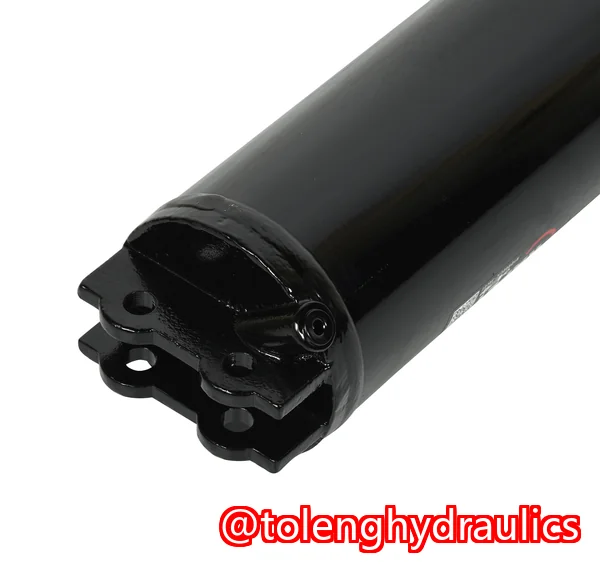
When I work with heavy-duty industrial clients, one thing becomes very clear: the performance of a machine often depends on the reliability of its standard hydraulic cylinder. Whether it’s mining equipment operating under shock loads or construction machinery exposed to dust and contamination, the hydraulic cylinder is the core component that determines stability, precision, and safety.
From my experience in the industry, I’ve seen how choosing the right hydraulic cylinder manufacturer can significantly extend equipment lifespan and reduce downtime. A poorly manufactured cylinder may look similar on the surface, but internal machining accuracy, sealing performance, and material quality make all the difference under real operating pressure. At Toleng, we focus on delivering consistent, engineered performance as a professional standard hydraulic cylinder manufacturer, ensuring every unit meets strict industrial demands.
In real applications, I often remind procurement teams that not all industrial hydraulic cylinders are created equal. Standardization does not mean compromise; it means reliability, repeatability, and compatibility across equipment platforms. As a hydraulic cylinder factory with advanced production systems, we design every standard cylinder manufacturing process to meet global expectations for durability and precision.
When discussing specifications, I always recommend buyers to understand the core parameters of a standard hydraulic cylinder before making decisions.
Standard bore sizes typically range from 25mm to 320mm, covering everything from light-duty automation systems to heavy mining applications. Stroke lengths are equally flexible, commonly available from 50mm up to 3000mm, allowing integration into compact or large-scale equipment designs.
Working pressure is another critical factor. In most standard applications, cylinders operate between 16MPa and 25MPa, while high-performance versions can reach up to 35MPa for demanding environments. This is especially important in construction and mining equipment where shock loading is frequent.
Mounting styles also play a key role in compatibility. In our hydraulic cylinder factory, we support a full range of mounting configurations including MF, MP, MS, ME, MT, TA, TC, TB, TD, LB, FA, FB, CA, and CB. This ensures seamless integration into existing mechanical designs without structural modification.
For piston rod materials, I typically recommend hard chrome plated steel such as C45, 1045, or 4140, depending on corrosion exposure and load requirements. These materials provide excellent wear resistance and maintain smooth operation under continuous load cycles.
Cylinder tubes are equally important. We use honed seamless steel tubes such as ST52, E355, and CK45, which ensure uniform internal surface quality and structural integrity. The honing process reduces friction and improves sealing performance over long-term operation.
Seal systems are another critical aspect. We commonly integrate premium seal brands like Parker, Hallite, and Merkel, or equivalent high-performance alternatives. The choice of seal directly impacts leakage control, temperature resistance, and operational lifespan.
From a manufacturing standpoint, I strongly believe quality control is what separates a basic supplier from a true quality hydraulic cylinder supplier.
At Toleng, precision begins with CNC machining capabilities that maintain tolerances within 0.01mm. This level of accuracy ensures perfect alignment between piston, rod, and barrel components, minimizing internal wear.
The honing process is another essential stage. We achieve surface finishes between Ra 0.20.4m, which significantly reduces friction and enhances seal longevity. I’ve seen cylinders fail prematurely simply because this step was ignored or poorly executed.
Welding quality is also critical. We rely on robotic welding systems to ensure consistency and eliminate human error. This is especially important for high-pressure cylinders where weld integrity directly affects safety.
Assembly is conducted in a Class 10,000 clean room environment, particularly during seal installation. Even microscopic contamination can lead to leakage or premature seal failure, so cleanliness is non-negotiable in our production process.
Before any shipment leaves our hydraulic cylinder factory, we perform rigorous testing:
-
Every cylinder undergoes 100% pressure testing at 1.5 working pressure
-
Leakage is strictly controlled at 0.05 ml/min under rated pressure
-
Endurance testing validates performance over 500,000 cycles minimum
-
Final dimensional inspection is completed using CMM (Coordinate Measuring Machine) equipment
These steps ensure that each unit meets the expectations of industrial users who rely on continuous uptime.
In my view, the difference between a standard supplier and a true custom hydraulic cylinder manufacturer lies in engineering depth and transparency.
We ensure full material traceability, meaning every steel component can be traced back to certified steel mills with documented batch records. This is essential for industries requiring compliance and audit readiness.
Our certifications include ISO 9001:2015, CE, and SGS, which demonstrate adherence to international quality management standards.
One major advantage of working with an integrated manufacturer like Toleng is the balance between in-house production and controlled outsourcing. Critical processes such as machining, welding, and assembly are fully in-house, ensuring consistent quality control.
Lead time is another key factor for industrial buyers. For standard hydraulic cylinders, we typically maintain a 715 day delivery schedule, which is significantly faster than many fragmented supply chains.
We also provide strong technical support. Our engineering team assists clients in selecting bore sizes, stroke lengths, and mounting styles based on real application requirements rather than generic catalogs.
Customization is another area where we add value. As a flexible OEM hydraulic cylinders provider, we offer:
-
Special port locations for hydraulic integration
-
Custom rod end designs for mechanical compatibility
-
Integrated sensor options for smart monitoring systems
-
Corrosion-resistant coatings for marine and outdoor environments
Standard hydraulic cylinders are widely used across multiple industries, and I often see them performing in extremely diverse environments.
In construction equipment, they are essential for excavators, loaders, and bulldozers, where they handle repetitive heavy lifting and shock absorption.
In agriculture, they power tractors, harvesters, and balers, often operating in dusty, uneven terrain with high cycle frequency.
In industrial automation, they are used in press machines, conveyor systems, and lifting platforms, where precision and repeatability are critical.
Material handling equipment such as forklifts and pallet jacks also rely heavily on compact hydraulic cylinders for smooth lifting operations.
In mobile hydraulics, applications include trucks, cranes, and aerial platforms, where safety and reliability under dynamic loads are essential.
From my experience working with global buyers, I always emphasize that selecting the right hydraulic cylinder manufacturer is not just a purchasing decisionit is an engineering decision.
A reliable supplier must provide consistency, transparency, and technical depth. I recommend evaluating manufacturers based on the following checklist:
-
Verify ISO certification and quality management systems
-
Request material certificates and full test reports
-
Inspect machining tolerances and surface finish quality
-
Evaluate lead times and after-sales technical support
-
Compare warranty terms, typically ranging from 12 to 24 months
When these five criteria are met, the risk of equipment failure decreases significantly, and long-term operational efficiency improves.
For engineers and procurement teams looking for a reliable solution, I recommend reviewing our product range here:
🔗 https://tolenghydraulics.com/standard-hydraulic-cylinder/
We also provide downloadable specification sheets for detailed technical planning and system integration support.
FAQ
-
What are the standard bore sizes for hydraulic cylinders?
Standard bore sizes typically range from 25mm to 320mm depending on application requirements.
-
How do I verify if a manufacturer is ISO certified?
You should request official ISO 9001:2015 certificates and verify them through issuing bodies or audit reports.
-
What pressure ratings are available for standard cylinders?
Most standard cylinders operate at 1625MPa, with high-pressure options reaching up to 35MPa.
-
Can standard cylinders be customized?
Yes, customization is available for rod ends, ports, coatings, sensors, and mounting styles.
-
What is the typical lead time from a manufacturer?
For standard hydraulic cylinders, lead time is usually between 715 days.
-
How do you test cylinder quality before shipping?
We conduct pressure testing, leakage testing, endurance cycling, and full dimensional inspection.
-
What mounting styles are considered standard?
Common styles include MF, MP, MS, ME, MT, TA, TC, TB, TD, LB, FA, FB, CA, and CB.
-
Do you provide CAD drawings for standard cylinders?
Yes, we provide detailed CAD drawings to support engineering design and integration.
Keywords Section
Primary: standard hydraulic cylinder, hydraulic cylinder manufacturer, standard cylinder
Secondary: manufacturing, factory, CNC machining, quality control, pressure testing, ISO 9001, bore sizes, mounting styles, piston rod, seal kit, OEM, lead time, technical support

