
How Our Robust Cylinders Handle the Pulsating Pressure Challenges in Water Conservancy Projects Standard Hydraulic Cylinder Manufacturer Insights
:
High-quality standard hydraulic cylinder from a trusted hydraulic cylinder manufacturer. Learn specs, manufacturing quality, and selection for reliability.
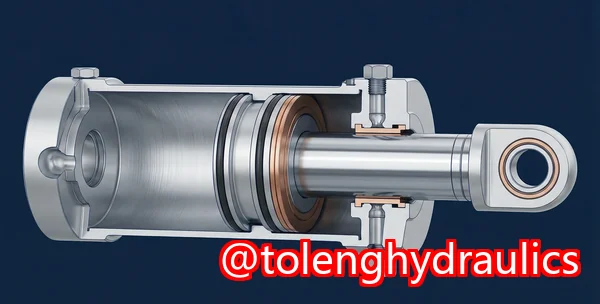
In my experience working with hydraulic systems across heavy-duty engineering environments, I have seen one truth repeatedly confirmed: the performance of a machine is only as reliable as its standard hydraulic cylinder. Whether it is in water conservancy infrastructure, construction machinery, or industrial automation, these components quietly determine stability, precision, and safety.
That is why choosing the right hydraulic cylinder manufacturer is not just a procurement decisionit is a long-term operational strategy. At Toleng, we position ourselves as a professional standard hydraulic cylinder manufacturer, and I have personally observed how proper engineering, material control, and manufacturing discipline directly impact field performance. When buyers overlook this, they often face leakage issues, premature wear, or inconsistent force output.
A reliable hydraulic cylinder factory does more than assemble parts; it ensures every cylinder performs under real-world pressure cycles, often in harsh and unpredictable environments like water conservancy projects where pulsating loads are constant and demanding.
When we talk about a standard hydraulic cylinder, I always emphasize that “standard” does not mean “simple.” It refers to a highly optimized engineering range designed for compatibility, interchangeability, and proven durability.
From a specification standpoint, the standard hydraulic cylinder range we manufacture covers:
We support standard bore sizes ranging from 25mm to 320mm, which allows flexibility from compact lifting systems to large-scale construction machinery. Stroke lengths typically range from 50mm up to 3000mm, ensuring adaptability for both short-throw precision systems and long-stroke heavy-duty applications.
Working pressure ratings are another key factor. In most standard cylinder manufacturing scenarios, cylinders operate at 16MPa to 25MPa. However, in demanding applications such as mining or hydraulic presses, we also offer high-pressure variants reaching 35MPa. I often remind clients that pressure rating is not just a numberit defines fatigue life and sealing system requirements.
Mounting styles also play a crucial role in system compatibility. We produce a full range including MF, MP, MS, ME, MT, TA, TC, TB, TD, LB, FA, FB, CA, and CB configurations. In real engineering projects, I have seen how selecting the wrong mounting style leads to misalignment stress and premature failure.
For piston rod materials, we typically use hard chrome plated steels such as C45, 1045, and 4140. These materials provide an excellent balance of hardness, corrosion resistance, and fatigue strength. Cylinder tubes are manufactured using honed seamless steel tubes such as ST52, E355, and CK45, which ensure consistent internal surface geometry.
Seal systems are another critical factor in performance. We use globally recognized brands such as Parker, Hallite, and Merkel or equivalent high-performance sealing systems. In my experience, seal selection alone can determine whether a cylinder lasts 1 year or 10 years in continuous operation.
In hydraulic engineering, manufacturing quality is where true differentiation happens. As a hydraulic cylinder manufacturer, we rely heavily on precision machining and controlled production environments.
All core components are processed using CNC machining equipment with tolerances maintained within 0.01mm. This level of precision ensures consistent fit between piston, rod, and tube assemblies, reducing internal leakage and improving efficiency.
The honing process is particularly important. We maintain internal tube surface roughness between Ra 0.20.4m. This smooth finish reduces friction, improves seal life, and enhances motion stability. I have personally inspected cylinders where poor honing led to seal damage within monthssomething we eliminate through strict control.
Welding quality is handled through robotic welding systems. This ensures repeatability and eliminates human inconsistency in critical stress zones such as mounting joints and base connections.
Assembly is carried out in a controlled Class 10,000 clean room environment, especially during seal installation. Even small dust particles can compromise sealing performance, so cleanliness is not optionalit is essential.
Before any standard hydraulic cylinder leaves our hydraulic cylinder factory, it undergoes strict testing procedures:
-
100% pressure testing at 1.5x working pressure
-
Leakage test controlled at 0.05 ml/min under rated pressure
-
Endurance testing for a minimum of 500,000 cycles
-
Full dimensional inspection using CMM (Coordinate Measuring Machine) equipment
I always tell clients: if a manufacturer cannot show you test data, you are not buying reliabilityyou are buying uncertainty.
What truly separates a hydraulic cylinder manufacturer from a general supplier is not just machinery, but systems, traceability, and engineering depth.
At Toleng, every batch of steel is fully traceable with mill certificates. This means we can track raw material origin, composition, and heat treatment history. In industrial hydraulic cylinders, this level of traceability is essential for safety-critical applications.
We operate under ISO 9001:2015 quality systems, and also comply with CE and SGS certification standards. These are not just documents on a wallthey represent structured control of every production stage.
One major advantage of in-house manufacturing is control. Many suppliers outsource machining or welding, which introduces variability. As a quality hydraulic cylinder supplier, we keep CNC machining, honing, welding, and assembly under one roof. This reduces lead time and improves consistency.
Standard delivery for most standard hydraulic cylinder products is 715 days, which is significantly faster than fragmented supply chains.
We also provide engineering support. I often work with clients who need assistance selecting bore size or determining load capacity. Our technical team helps analyze application forces and recommends optimized configurations.
Customization is another strength. While we focus on standard cylinder manufacturing, we also support:
-
Special port locations for hydraulic routing optimization
-
Custom rod ends for specific mechanical interfaces
-
Integrated sensors for position feedback systems
-
Corrosion-resistant coatings for marine or outdoor environments
This flexibility bridges the gap between standard and OEM hydraulic cylinders, allowing clients to scale from catalog products to fully engineered systems.
Standard hydraulic cylinders are used across a wide range of industries, and I have personally seen their performance in extremely diverse environments.
In construction equipment such as excavators, loaders, and bulldozers, they handle repetitive heavy loads and shock conditions. Here, durability and pressure resistance are critical.
In agriculture machinery including tractors, harvesters, and balers, cylinders must withstand dust, moisture, and continuous operation cycles during seasonal peaks.
Industrial automation systems use them in presses, conveyors, and lifting platforms where precision and repeatability matter more than raw force.
Material handling equipment like forklifts and pallet jacks rely on smooth, stable motion for safety and efficiency.
In mobile hydraulics such as cranes, trucks, and aerial platforms, compact design and high reliability are essential due to dynamic load conditions.
Across all these sectors, the same principle applies: the quality of the industrial hydraulic cylinders determines system reliability.
From my perspective, selecting a hydraulic cylinder manufacturer should always be a structured decision rather than a price-driven one.
Here is the checklist I recommend to every buyer or engineering team:
-
Verify ISO certification and overall quality system compliance
-
Request full material certificates and pressure test reports
-
Inspect machining tolerances and internal surface roughness standards
-
Evaluate lead time consistency and after-sales technical support
-
Compare warranty terms (industry standard is typically 1224 months)
If any of these areas are weak, the risk of failure increases significantly over time.
For engineers and procurement specialists looking for a reliable partner, I always recommend reviewing complete product specifications before making decisions.
You can browse our standard hydraulic cylinder catalog here:
🔗 https://tolenghydraulics.com/standard-hydraulic-cylinder/
We also provide downloadable specification sheets to support technical evaluation and system integration planning.
What are the standard bore sizes for hydraulic cylinders?
Standard bore sizes typically range from 25mm to 320mm, depending on application requirements and load capacity.
How do I verify if a manufacturer is ISO certified?
You should request a valid ISO 9001:2015 certificate and verify it through issuing certification bodies or audit records.
What pressure ratings are available for standard cylinders?
Most standard hydraulic cylinders operate between 16MPa and 25MPa, with high-pressure options reaching up to 35MPa.
Can standard cylinders be customized?
Yes, even standard cylinders can be modified with custom rod ends, ports, coatings, or integrated sensors.
What is the typical lead time from a manufacturer?
For standard products, lead time is usually 715 days depending on order volume and configuration.
How do you test cylinder quality before shipping?
We perform 100% pressure testing, leakage testing, endurance cycling, and dimensional inspection using CMM equipment.
What mounting styles are considered standard?
Common mounting styles include MF, MP, MS, ME, MT, TA, TC, TB, TD, LB, FA, FB, CA, and CB.
Do you provide CAD drawings for standard cylinders?
Yes, CAD drawings and technical documentation are available for engineering and integration purposes.
Primary focus remains on the standard hydraulic cylinder as a core industrial component, but in practice, performance depends heavily on the hydraulic cylinder manufacturer behind it. A well-structured hydraulic cylinder factory with strict quality systems ensures consistency across every unit.
In my experience, whether you are sourcing OEM hydraulic cylinders or selecting from catalog products, the difference always comes down to manufacturing discipline, not just design.
Secondary keywords such as standard cylinder manufacturing, CNC machining, quality control, pressure testing, ISO 9001, bore sizes, mounting styles, piston rod, seal kit, OEM, lead time, and technical support are all interconnected in delivering long-term reliability in industrial hydraulic systems.

