
Table of Contents
- 1. What Is a Single Acting Hydraulic Cylinder?
- 2. How Does a Single Acting Hydraulic Cylinder Work?
- 3. Types of Single Acting Hydraulic Cylinders
- 4. Key Components of a Single Acting Cylinder
- 5. Single Acting vs Double Acting Cylinder
- 6. Common Applications
- 7. How to Choose the Right Cylinder (With Force Formula)
- 8. Troubleshooting Guide
- 9. Maintenance Tips
- 10. Custom Single Acting Cylinders from Toleng Hydraulic
- 11. FAQs
- 12. Conclusion
1. What Is a Single Acting Hydraulic Cylinder?
A single acting hydraulic cylinder is a linear actuator that uses hydraulic pressure to extend the piston rod in one direction only. Retraction is achieved by an external force — typically a spring, gravity, or the load itself. This design is simpler, more compact, and more cost-effective than double acting cylinders for applications that require force in only one direction.
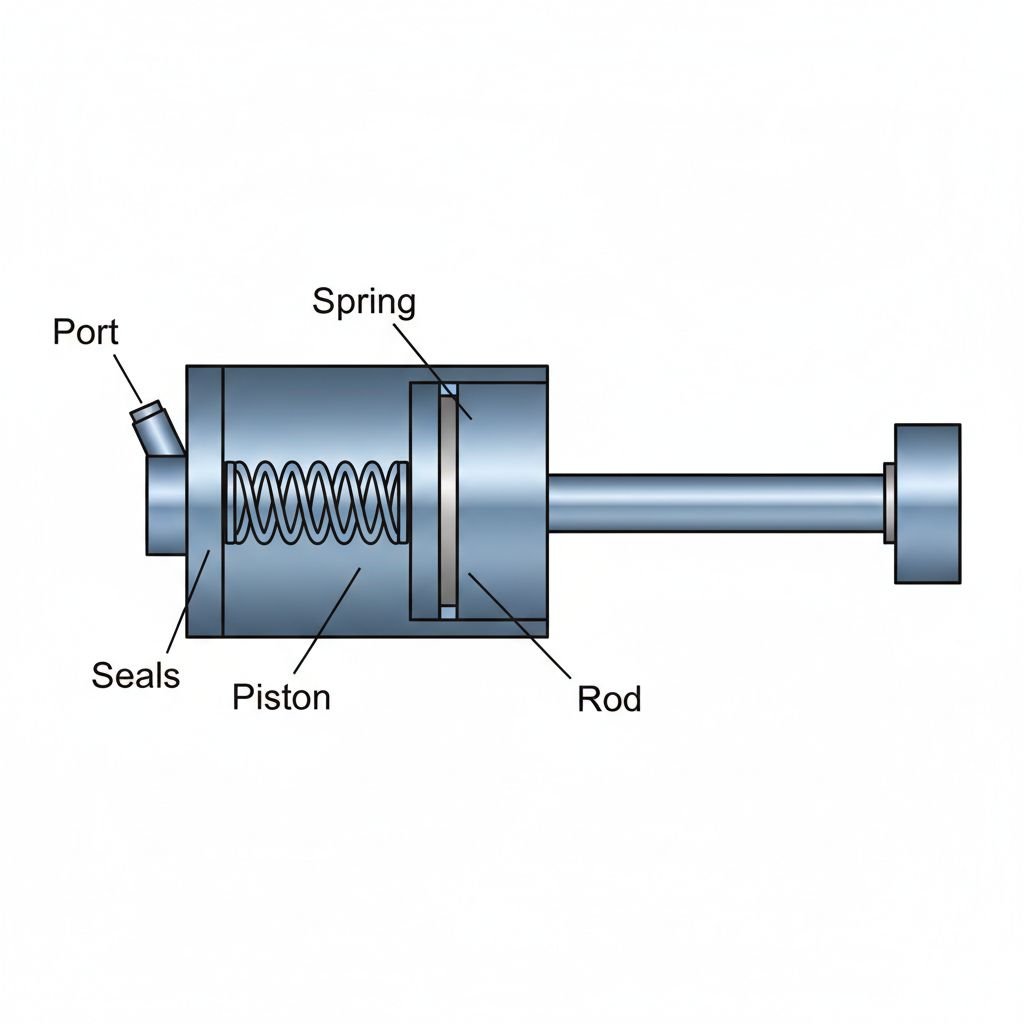
2. How Does a Single Acting Hydraulic Cylinder Work?
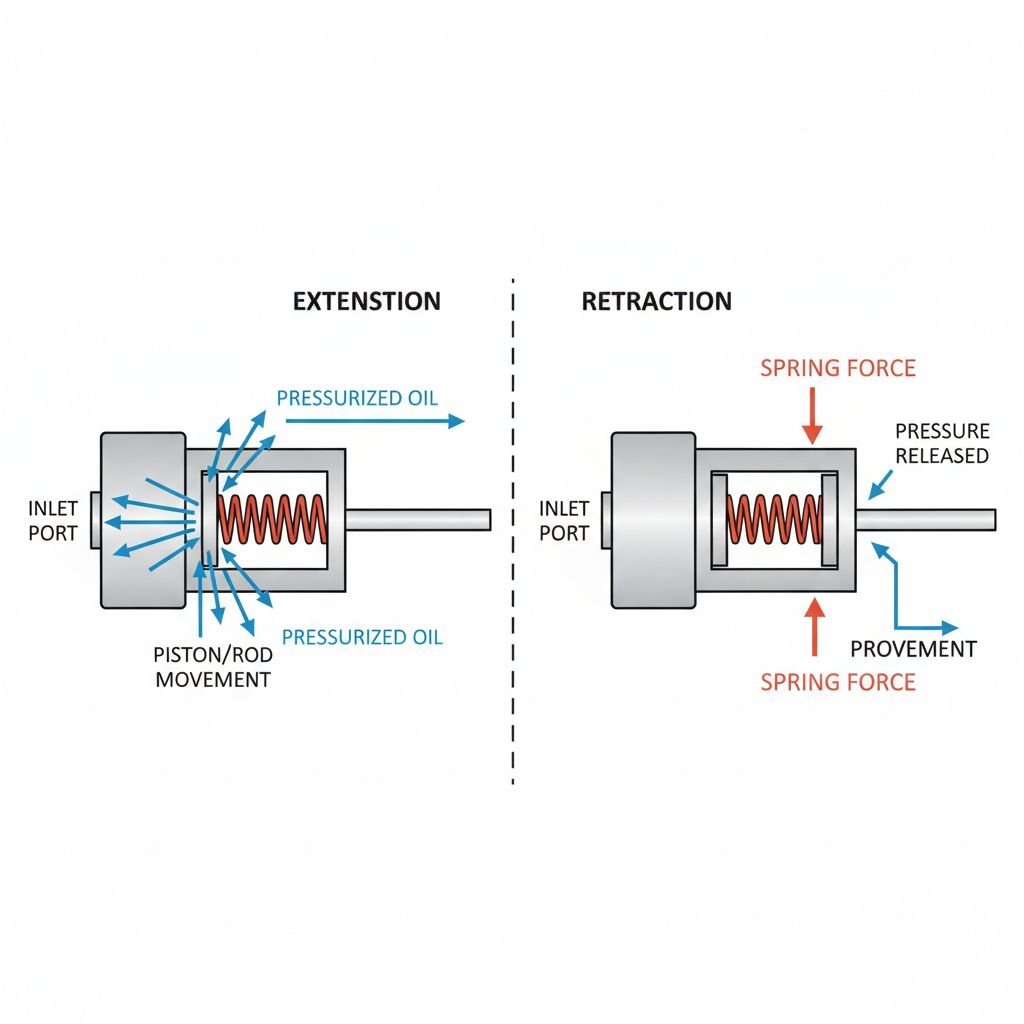
- Pressurized oil enters through a single port (cap end)
- Oil pushes the piston and rod outward
- To retract, pressure is released to the tank
- A spring, gravity, or load returns the rod
This cycle makes single acting cylinders ideal for intermittent operations where the return stroke does not require active hydraulic power.
3. Types of Single Acting Hydraulic Cylinders
- Spring Return – Most common; uses internal spring(s)
- Gravity Return – Vertical lifting; returns by weight
- Load Return – Horizontal/angled; returns by machine structure or counterweight
4. Key Components of a Single Acting Cylinder
Barrel, piston, piston rod, return spring (if applicable), single port, seals, gland.
5. Single Acting vs Double Acting Cylinder
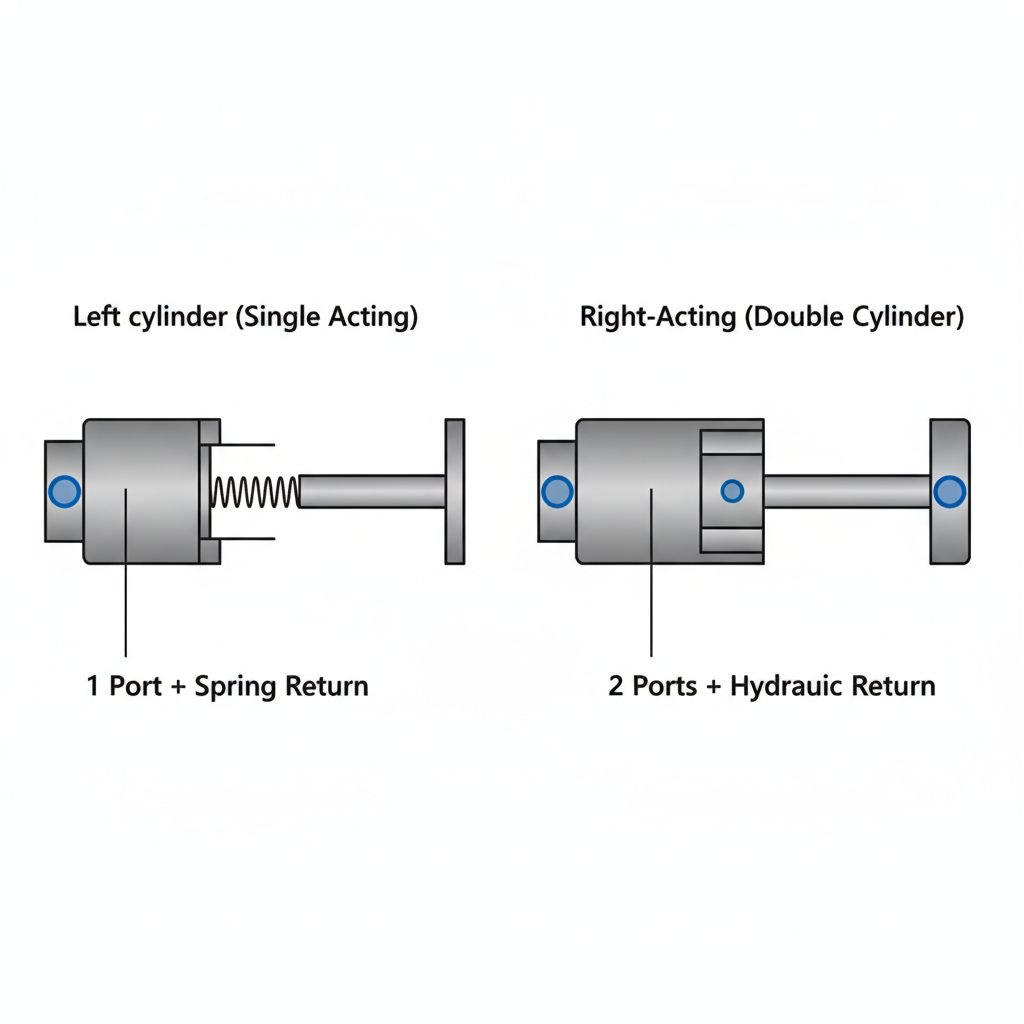
| Feature | Single Acting | Double Acting |
|---|---|---|
| Retraction method | Spring, gravity, or load | Hydraulic pressure |
| Number of ports | 1 | 2 |
| Control complexity | Simple (3-way valve) | More complex (4-way valve) |
| Cost | Lower | Higher |
| Common applications | Lifting, clamping, pressing | Steering, positioning, bidirectional work |
6. Common Applications
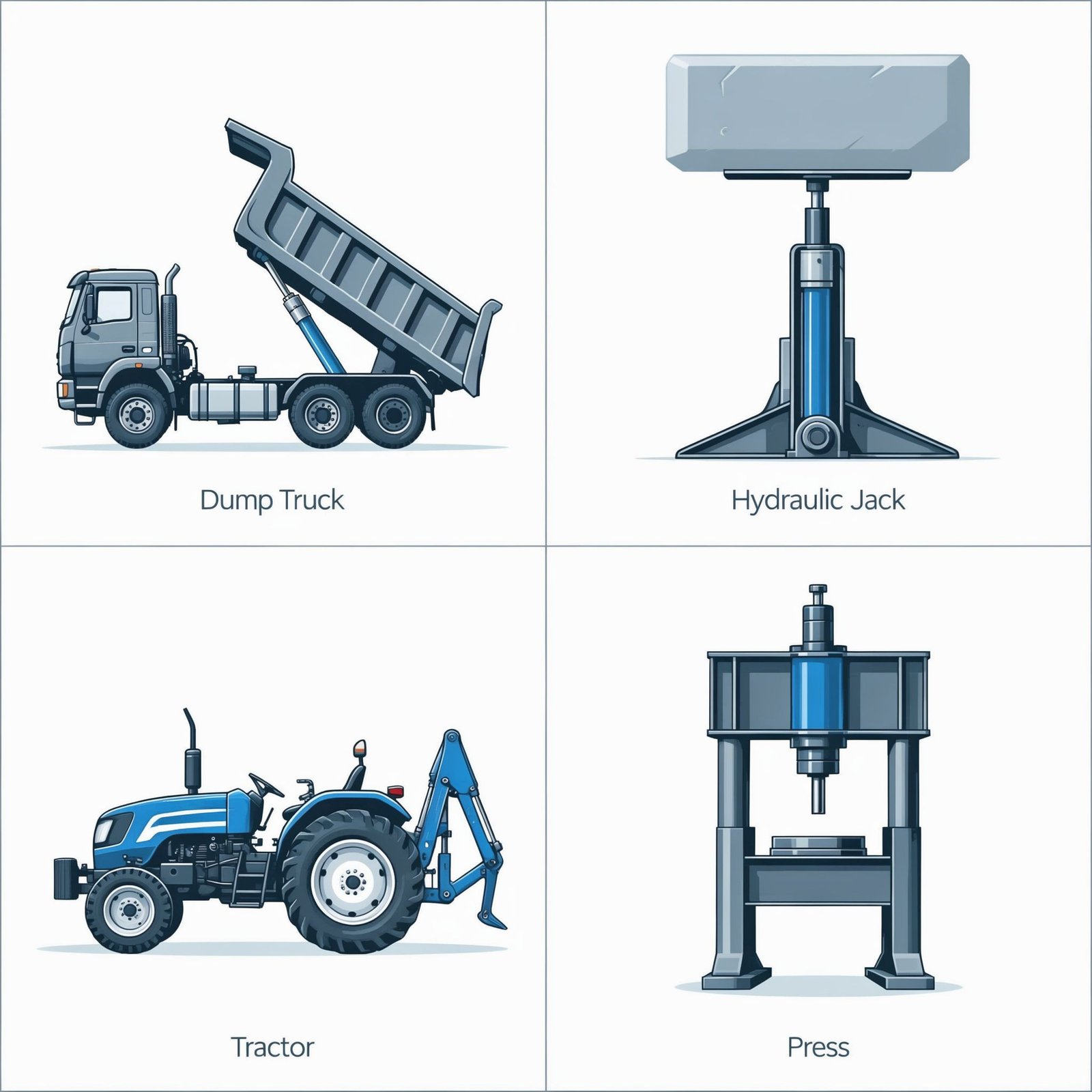
Agriculture, construction (jacks, dump trucks), industrial clamping, material handling, mobile hydraulics.
7. How to Choose the Right Cylinder (With Force Formula)
Cylinder Force Formula
F = P × A
- F = Force (lbs)
- P = Hydraulic Pressure (psi)
- A = Piston Area (in²)
Example Calculation
Pressure = 2500 psi, Bore = 3 in → Radius = 1.5 in, Area = π × (1.5)² = 7.07 in² → Force = 2500 × 7.07 = 17,675 lbs
Other selection parameters
- Stroke length
- Operating pressure rating
- Spring force (spring return type)
- Mounting style (clevis, trunnion, flange)
- Rod material & seals
8. Troubleshooting Guide
- Cylinder won’t extend: Low pressure, blocked port, worn seal, faulty valve.
- Cylinder won’t retract (spring type): Broken spring, excessive friction, blocked return path.
- Cylinder won’t retract (gravity type): Load too light, mechanical binding.
- External leakage: Worn rod seal, scored rod, loose gland nut.
9. Maintenance Tips
- Inspect rod surface regularly
- Check for external leaks
- Monitor spring performance
- Keep hydraulic oil clean
- Store with rod retracted
- Replace seals at recommended intervals
10. Custom Single Acting Hydraulic Cylinders from Toleng Hydraulic
Toleng Hydraulic specializes in manufacturing custom single acting hydraulic cylinders for:
- Agricultural equipment
- Dump trailers
- Hydraulic presses
- Material handling systems
- Construction machinery
Available options include:
- Bore sizes: 25 mm to 500 mm
- Stroke lengths: up to 6000 mm
- Working pressure: up to 35 MPa (5000 psi)
- OEM & ODM manufacturing
- Custom mounting configurations
👉 Contact Toleng Hydraulic for a quote or engineering support.
11. Frequently Asked Questions (FAQs)
- Can a single acting cylinder be used horizontally? Yes, but only spring return type will work horizontally.
- What happens if the return spring breaks? The cylinder will extend but not retract; spring must be replaced.
- Can I convert a single acting cylinder to double acting? Generally no – a new cylinder is safer.
- Are single acting cylinders weaker than double acting? For the same bore and pressure, extension force is identical.
- Lifespan? 5–10 years or 500k–1M cycles with proper maintenance.
12. Conclusion
The single acting hydraulic cylinder remains a reliable, low-cost solution for applications requiring powered extension only. By understanding its working principle, types, and selection criteria — including the force formula — you can choose the right cylinder for your system. For custom requirements, Toleng Hydraulic provides engineering and manufacturing support.
Related articles: Single Acting vs Double Acting Cylinder | Hydraulic Cylinder Manufacturing

