
A welded hydraulic cylinder is a heavy-duty linear actuator where the cylinder barrel is welded directly to the end caps, creating a single unified housing without tie rods. This construction delivers exceptional structural integrity, making welded cylinders the go-to choice for demanding mobile equipment, construction machinery, and harsh industrial environments.
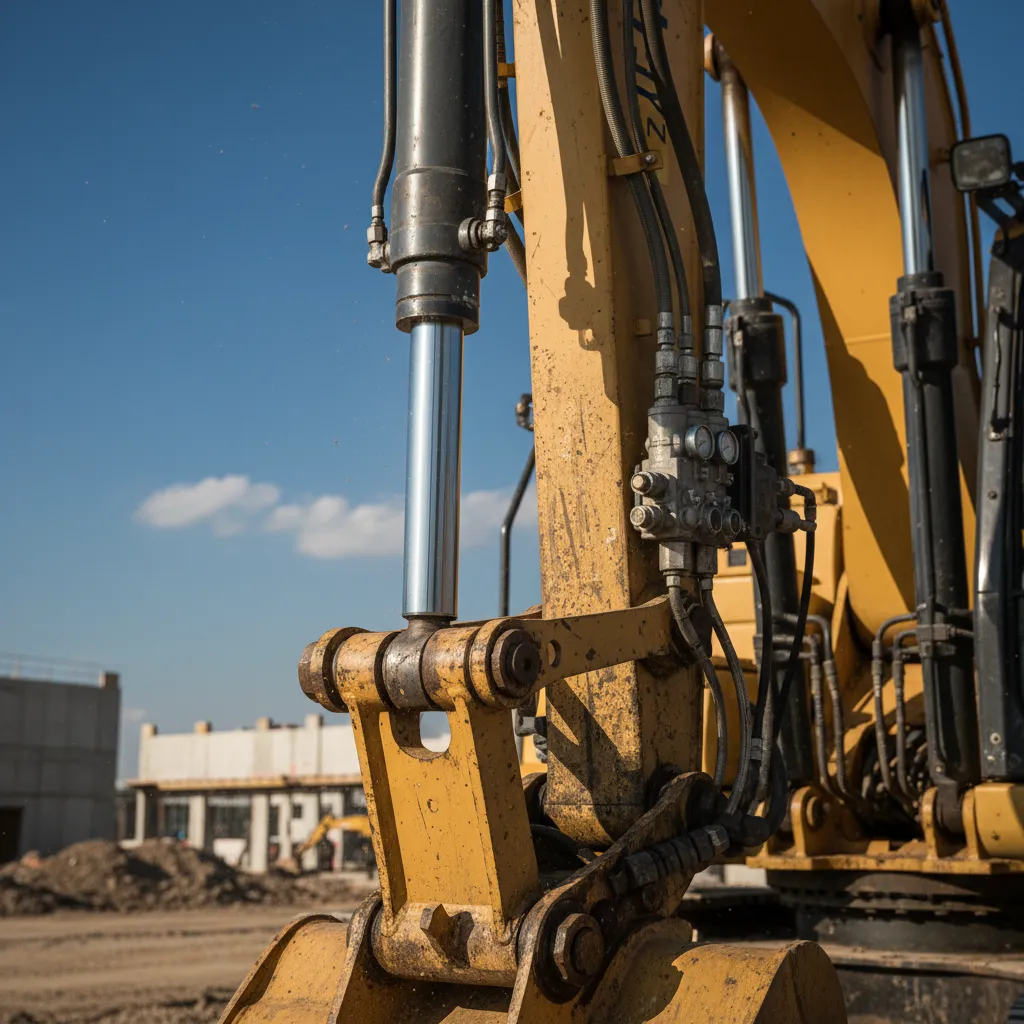
Welded hydraulic cylinders—also known as round-body cylinders, cross-tube cylinders, ag cylinders, or mill-type cylinders—are lighter and more compact than tie-rod cylinders. Their robust design withstands extreme pressure spikes, temperature swings, and shock loads that would compromise other cylinder types.
Whether you operate excavators, forklifts, agricultural implements, or industrial presses, this comprehensive guide covers everything you need to know about welded hydraulic cylinders.
What is a Welded Hydraulic Cylinder?
A welded hydraulic cylinder converts hydraulic fluid power into linear mechanical force. Unlike tie-rod cylinders that use external bolts to clamp components together, welded cylinders have their barrel permanently joined to the end caps through precision welding.
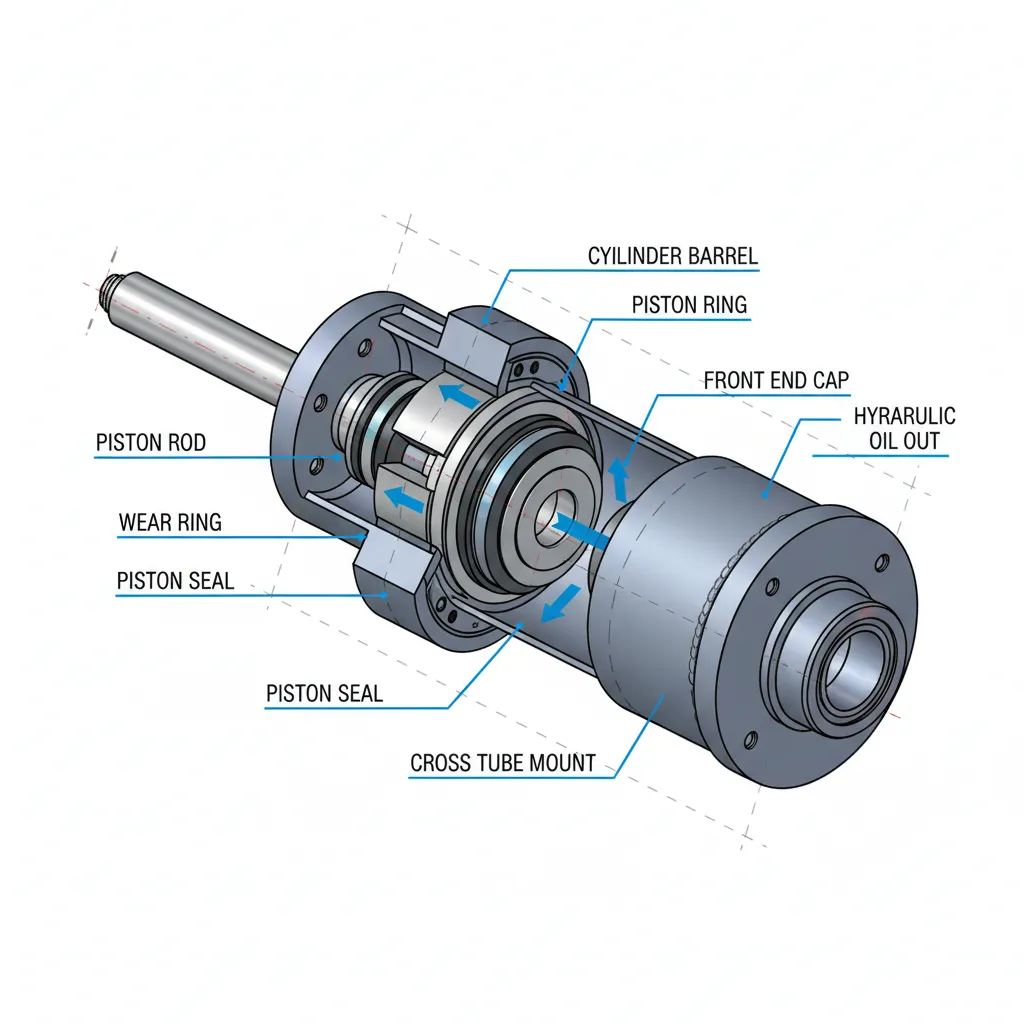
Main Components of a Welded Hydraulic Cylinder
- Cylinder Barrel: High-tensile cold-drawn steel tube, precision honed for extended seal life.
- Piston Rod: High-tensile ground steel, hard chrome plated for corrosion resistance.
- Piston Assembly: Ductile iron piston with seals and wear rings.
- End Caps: Directly welded to the barrel—no tie rods required.
- Seal System: Rod seal (PolyPak design), wiper (polyurethane), tube seal (Nitrile O-ring).
- Mounting Components: Cross tubes, clevis mounts, pins, and grease zerks.
How It Works
- Pressurized hydraulic oil enters the port on either the cap end or rod end.
- Hydraulic pressure acts on the piston surface area.
- The piston assembly moves linearly within the barrel.
- The piston rod extends or retracts, transmitting force to the load.
- The welded construction contains all internal pressure without leakage paths.
Industry Standards and Common Names
Welded cylinders are commonly referred to by several names:
- Round-body cylinders
- Cross-tube cylinders
- Ag cylinders (agricultural)
- Mill-type cylinders
Types of Welded Hydraulic Cylinders
By Construction Method
- One-piece welded cylinder: Single continuous weld seam, most common.
- Two-piece welded cylinder: Separate weld joints at each end, more design flexibility.
- Multi-piece welded cylinder: Multiple welded sections, for long-stroke applications.
By Pressure Rating
- Standard-duty welded cylinders: Up to 2,500 PSI for general industrial use.
- Heavy-duty welded cylinders: Up to 3,000 PSI for demanding applications.
By Action Type
- Single acting: Hydraulic pressure extends, gravity or external force retracts.
- Double acting: Hydraulic pressure for both extension and retraction—most common.
- Multi-stage / telescopic: Multiple nested stages for longer stroke in compact package.
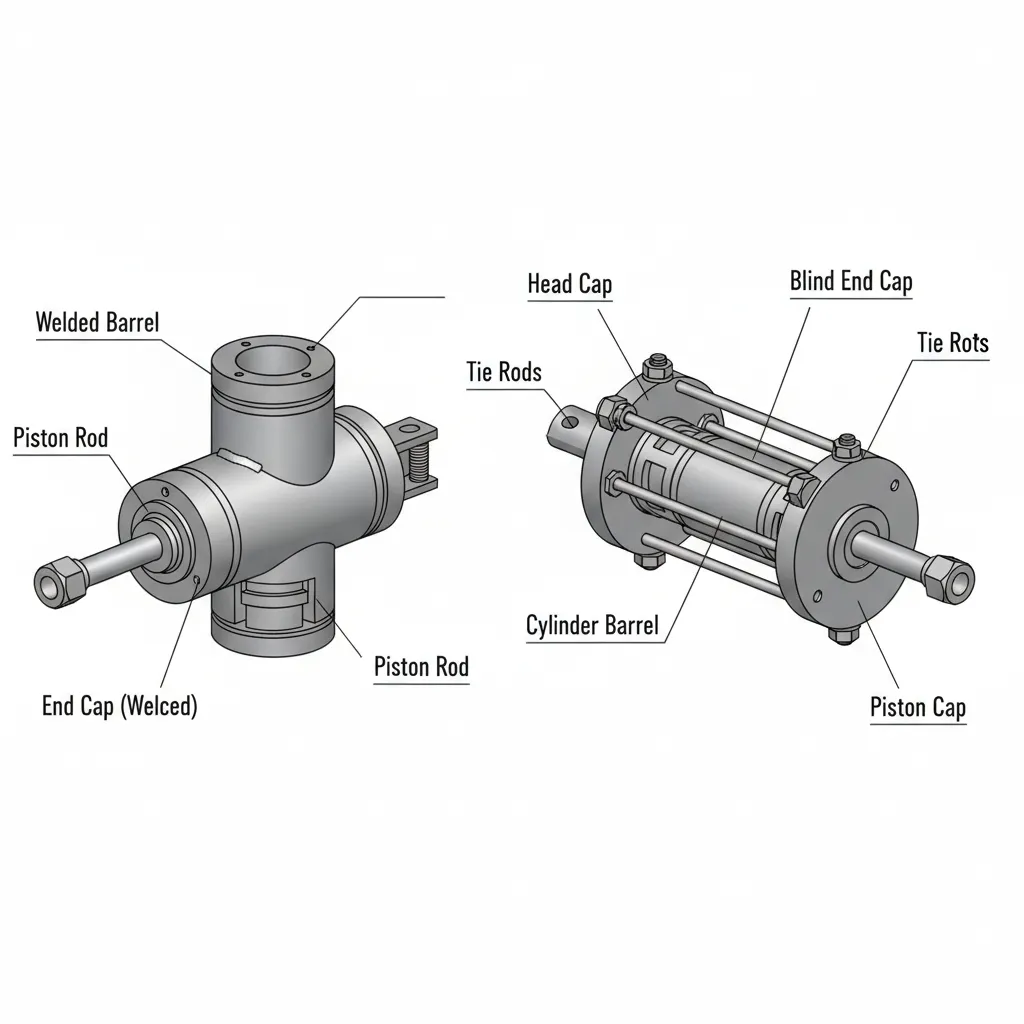
Welded Hydraulic Cylinder vs. Tie-Rod Cylinder: Key Differences
Summary: Welded cylinders are stronger, more compact, and better for shock loads. Tie-rod cylinders are easier to repair and follow standardized dimensions.
| Feature | Welded Cylinder | Tie-Rod Cylinder |
|---|---|---|
| Construction | End caps welded to barrel | Bolted with external rods |
| Repairability | Difficult, special tools required | Easy, field serviceable |
| Pressure Rating | Up to 3,000+ PSI | Up to 3,000 PSI |
| Shock Load Resistance | Excellent | Good |
| Compactness | More compact | Larger footprint |
| Temperature Range | -20°F to 220°F | Narrower range |
| Leak Resistance | Excellent (welded joints) | Good |
| Customization | Highly customizable | Standardized NFPA/ISO sizes |
| Initial Cost | Higher | Lower |
| Primary Applications | Mobile, construction, mining | Industrial, factory automation |
When to Choose a Welded Cylinder
- Equipment operates in harsh environments
- Space is limited (tighter packaging)
- Extreme shock loads are expected
- Wide temperature operation is required
- Mobile applications (construction, agriculture, forestry)
- High-pressure requirements (>2,500 PSI continuous)
When to Choose a Tie-Rod Cylinder
- Factory automation and manufacturing
- Applications requiring regular maintenance
- Standardized mounting dimensions needed
- Lower initial budget constraints
- Indoor, controlled environments
Top 6 Benefits of Using Welded Hydraulic Cylinders
1. Superior Structural Integrity
Welded construction eliminates potential leak paths at joints. The barrel seamlessly integrates with end caps, creating a unified housing that withstands pressure spikes and mechanical shock.
2. Compact Design for Mobile Applications
Without protruding tie rods, welded cylinders fit into tighter spaces. Their round-body design allows mounting in orientations where tie-rod cylinders cannot fit.
3. Extreme Temperature Tolerance
Welded cylinders perform reliably from -20°F to 220°F (-29°C to 104°C). The all-steel construction handles thermal expansion without seal joint compromise.
4. High Pressure Capability
Heavy-duty welded cylinders routinely handle 3,000 PSI operating pressure, with custom designs available for higher ratings.
5. Excellent Shock Load Resistance
Construction and mining equipment subject cylinders to sudden pressure spikes from impacts. Welded construction absorbs these loads without joint separation.
6. Long Service Life
Ductile iron pistons, hard chrome rods, and premium seal systems extend service intervals even in abrasive environments.
Common Applications of Welded Hydraulic Cylinders
Construction Equipment
Excavators, bulldozers, backhoes, skid steers, wheel loaders, crane outriggers.
Agricultural Machinery
Tractors, harvesters, balers, sprayers, planters, loader attachments.
Material Handling
Forklifts, scissor lifts, aerial work platforms, lift tables.
Mobile Equipment
Dump trucks, concrete mixers, refuse trucks, snowplows.
Industrial Equipment
Metal fabrication presses, waste and recycling facilities, steel mills.
Specialized Sectors
Mining machinery, oil and gas equipment, marine systems, aerospace and defense.
How to Select the Right Welded Hydraulic Cylinder
Need help choosing? Contact our engineering team for assistance.
Step 1 – Determine Operating Pressure
Standard-duty: Up to 2,500 PSI for general industrial use.
Heavy-duty: Up to 3,000 PSI for demanding applications.
Always include a safety margin above maximum system pressure.
Step 2 – Calculate Required Force
Force = Pressure × Piston Area
Example: 3,000 PSI × (π × (2.5²)/4) = 14,718 lbs of force.
Step 3 – Choose Bore Size, Rod Diameter, and Stroke
| Bore Diameter | Rod Diameter | Pressure | Typical Application |
|---|---|---|---|
| 1.5″ – 2.5″ | 0.75″ – 1.5″ | 3,000 PSI | Light equipment, steering |
| 3.0″ – 4.0″ | 1.5″ – 2.5″ | 2,500-3,000 PSI | General construction |
| 4.5″ – 5.0″ | 2.0″ – 3.0″ | 3,000 PSI | Heavy equipment, loaders |
| 6.0″ – 7.0″ | 3.0″ – 4.0″ | Custom | Mining, large machinery |
Step 4 – Select Mounting Style
- Cross tube mount: Most common for mobile equipment.
- Clevis mount: Female clevis with pin and clips included.
- Trunnion mount: Pivot mounting for oscillating motion.
- Flange mount: Fixed mounting, cap or rod end.
- Side lug mount: Industrial applications.
Step 5 – Verify Column Load Rating
Column load indicates the maximum force the extended rod can withstand before buckling.
- 2.5″ bore, 1.375″ rod: 14,720 lbs column load
- 5″ bore, 2.5″ rod: 58,900 lbs column load
Step 6 – Choose Port Configuration
- SAE O-ring ports: Superior leak resistance (SAE 8 common).
- NPT ports: Tapered thread (1/2″, 3/4″, 1″).
- 4-bolt flange ports: High-flow applications.
Welded Hydraulic Cylinder Size Chart & Specifications
Welded Hydraulic Cylinder Size & Specification Chart
| Bore (in) | Rod (in) | Max PSI | Column Load (lbs) | Weight (lbs) | Common Mounting |
|---|---|---|---|---|---|
| 2.5″ | 1.375″ | 3,000 | 14,720 | 26 | Clevis |
| 2.5″ | 1.5″ | 3,000 | N/A | 30 | Clevis |
| 3.5″ | 1.75″ | 3,000 | 28,860 | 50 | Cross tube |
| 4.0″ | 2.0″ | 2,500 | 16,930 | 100 | Cross tube |
| 5.0″ | 2.5″ | 3,000 | 58,900 | 92 | Cross tube |
Custom capabilities: Bore diameters 1″ to 7″, strokes up to 15 feet, working pressures to 3,000 PSI.
Top Welded Hydraulic Cylinder Manufacturers
Several globally recognized manufacturers offer welded hydraulic cylinders:
- Parker Hannifin – Broad industrial and mobile range
- Bosch Rexroth – High precision industrial hydraulics
- Eaton Corporation – Mobile hydraulics for construction and agriculture
- Caterpillar – Heavy equipment and mining applications
- Prince Manufacturing – Agricultural cylinders
- Bailey International – Replacement cylinders for aftermarket
- HYDAC – Accumulator and cylinder systems
Interchange Replacement Solutions
We manufacture replacement welded cylinders compatible with many industry-standard models. Custom options include OEM replacements, special seal packages, and private label manufacturing.
Request a quote for replacement welded cylinders →
Maintenance and Troubleshooting
Common Problems and Solutions
| Problem | Possible Cause | Solution |
|---|---|---|
| External seal leakage | Worn seal, rod damage | Replace seal, inspect rod chrome |
| Slow or erratic operation | Low fluid, internal leakage, air in system | Check fluid level, test piston seals, bleed system |
| Rod scoring or chrome damage | Contamination, misalignment, corrosion | Replace rod, align mounts, improve filtration |
| Reduced holding force | Piston seal failure, worn bore | Rebuild with new piston seals and wear bands |
Preventive Maintenance Checklist
- Inspect rod surface for scratches or pitting monthly
- Check mounting pins and bolts for wear
- Grease cross tube fittings regularly
- Monitor fluid contamination levels
- Test operating temperature
- Listen for unusual noises during operation
- ☐ Check for external leaks at seals and welds
When to Rebuild vs. Replace
Rebuild when: Only seals are worn, rod chrome is intact, bore is within specification, mounts are undamaged.
Replace when: Rod is scored or bent, bore is worn beyond tolerance, welds are cracked, operating conditions have changed.
Frequently Asked Questions
What is the maximum pressure for welded hydraulic cylinders?
Are welded cylinders rebuildable?
What is the difference between welded and tie-rod cylinders?
How long do welded hydraulic cylinders last?
Can I replace a tie-rod cylinder with a welded cylinder?
How do I measure a welded cylinder for replacement?
Market Overview and Trends
The global hydraulic cylinder market was valued at $5.83 billion in 2023 and is projected to reach $8.23 billion by 2030, growing at 5.1% CAGR. Welded cylinders hold the largest market share due to their dominance in construction and mobile equipment.
Key market drivers: Construction equipment demand, agricultural mechanization, mining activity, infrastructure spending, and automation in manufacturing.
Conclusion
Welded hydraulic cylinders deliver unmatched durability, compactness, and reliability for demanding mobile and industrial applications. Their rugged welded construction withstands pressure spikes, temperature extremes, and shock loads that would defeat other cylinder designs.
When selecting a welded cylinder, prioritize:
- Operating pressure requirements (standard vs. heavy-duty)
- Space constraints (compact welded design is a key advantage)
- Mounting configuration (cross tube is most common for mobile)
- Seal material compatibility with your hydraulic fluid
- Manufacturer reputation and warranty
Request a Quote
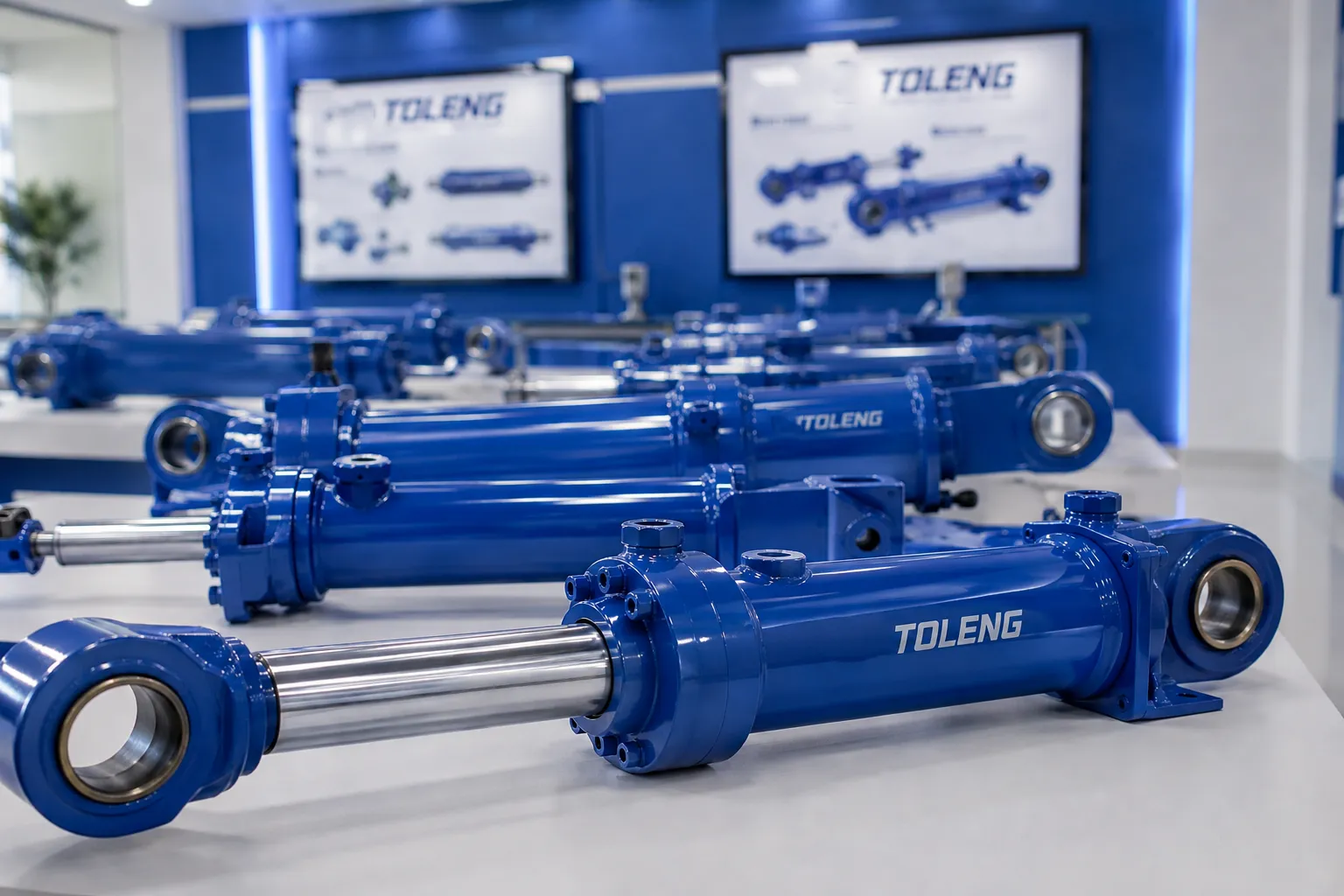
Looking for a reliable welded hydraulic cylinder supplier? Toleng Hydraulic provides OEM and custom hydraulic cylinders with competitive pricing, fast lead times, and global shipping support.
Contact us today for a quotation, cross-reference assistance, or a free welded cylinder dimension catalog.
Email: info@tolenghydraulics.com
This guide is updated as of 2026. Specifications and products mentioned are representative of industry standards.

