
Key Takeaways
-
✔ Improve equipment stability on any terrain
-
✔ Prevent machine rollover during lifting, digging, or loading
-
✔ Suitable for cranes, boom trucks, utility vehicles, and more
-
✔ Available in welded and custom hydraulic cylinder designs
-
✔ Typical working pressure: 210–300 bar
-
✔ Full OEM customization available
Quick Answer
Standard hydraulic stabilization legs are hydraulic support systems used on cranes, utility trucks, backhoe loaders, aerial work platforms, and other mobile equipment. Powered by heavy-duty hydraulic cylinders, they increase stability, improve lifting safety, and prevent machine overturning by transferring weight directly to the ground.
Table of Contents
-
What Are Hydraulic Stabilization Legs?
-
Anatomy of a Stabilizer Leg Assembly
-
How Hydraulic Stabilization Legs Work
-
Main Types of Stabilizer Legs
-
Stabilization Leg Type Comparison Table
-
Selection Flowchart — Which Stabilizer Leg Design?
-
Hydraulic Stabilizer Legs vs Hydraulic Outriggers
-
Standard Specifications
-
Hydraulic Cylinders Used in Stabilization Legs
-
Application Gallery
-
Materials Used
-
How Toleng Manufactures Hydraulic Stabilization Cylinders
-
Why Welded Cylinders Are Preferred
-
Key Design Factors
-
Typical Failure Modes & Troubleshooting
-
Maintenance Tips
-
OEM Customization Options
-
Why Choose Toleng Hydraulics?
-
Frequently Asked Questions
-
Conclusion
1. What Are Standard Hydraulic Stabilization Legs?
A hydraulic stabilization leg is a structural support system powered by hydraulic cylinders that extends from a machine to transfer loads safely to the ground.
Their primary purpose is to:
-
Increase equipment stability
-
Reduce chassis movement
-
Prevent overturning
-
Improve lifting capacity
-
Ensure operator safety
2. Anatomy of a Hydraulic Stabilization Leg Assembly
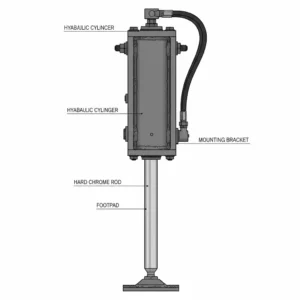
Understanding the individual components helps when specifying or maintaining a stabilizer system. The diagram below illustrates the typical arrangement from chassis to ground.
       Machine Chassis
            │
     Mounting Bracket
            │
   Hydraulic Cylinder (Double-acting)
            │
    Stabilizer Leg Structure
            │
       Pivot Pin
            │
        Foot Pad
            │
         Ground
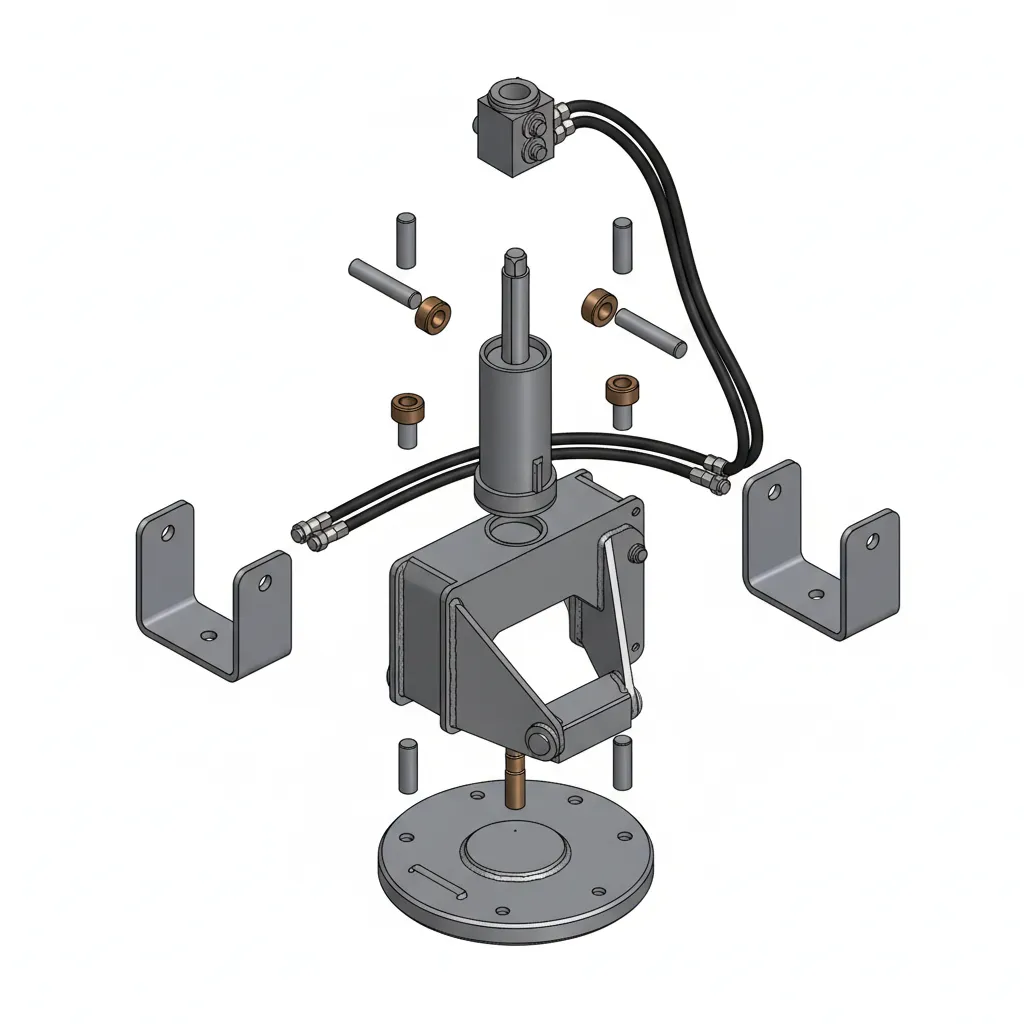
A complete assembly generally includes:
-
Hydraulic Cylinder — The power source; most OEM applications use welded hydraulic cylinders.
-
Welded Leg Structure — Fabricated from high-strength steel plate.
-
Foot Pad — Ground-contact element, often swivel-mounted for uneven terrain.
-
Pivot Pins & Hardened Bushings — Allow smooth rotation and reduce wear.
-
Hydraulic Hoses — Supply pressurized fluid.
-
Locking Mechanism — Prevents unintended retraction.
-
Mounting Brackets — Secure the assembly to the chassis.
3. How Hydraulic Stabilization Legs Work
The operating principle is straightforward.
When hydraulic pressure enters the cylinder:
-
The piston extends.
-
The stabilization leg moves downward or outward.
-
The foot pad contacts the ground.
-
Additional hydraulic pressure transfers machine weight to the stabilizers.
-
The machine reaches a stable working position.
After the job is complete:
-
Hydraulic pressure is reversed.
-
The cylinder retracts.
-
Stabilizers fold back into transport position.
4. Main Types of Hydraulic Stabilization Legs
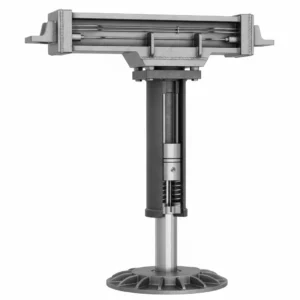
Vertical Stabilizer Legs
Extend directly downward. Simple, low cost, suitable for compact equipment like small cranes and utility trucks.
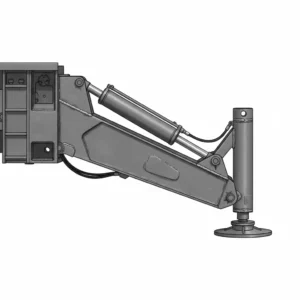
Swing-Out Stabilizer Legs
Swing outward horizontally before extending down. Provide wider support and better side stability. Common on truck-mounted cranes and concrete pumps.
Telescopic Outriggers
Horizontal hydraulic extension plus vertical support. Adjustable width, excellent stability. Used on mobile cranes, fire trucks, and large aerial lifts. Many manufacturers select telescopic hydraulic cylinders for the extension stage.
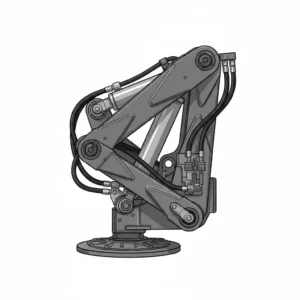
Folding Stabilizer Legs
Compact for transport while offering strong support. Popular on agricultural, forestry, and road maintenance equipment.
5. Stabilization Leg Type Comparison Table
| Feature | Vertical | Swing-Out | Telescopic | Folding |
|---|---|---|---|---|
| Support Footprint | Narrow, vertical only | Medium, swings then extends | Widest, horizontal + vertical | Medium to wide |
| Side Stability | Limited | Good | Excellent | Good |
| Transport Size | Compact | Requires clearance | Compact when retracted | Very compact |
| Manufacturing Cost | Low | Medium | Higher | Medium |
| Complexity | Simple | Moderate | Higher | Moderate |
| Best For | Confined urban jobsites | Cranes and concrete pumps | Large mobile cranes | Agricultural and forestry |
| Typical Load Range | Light to medium | Medium to heavy | Heavy | Medium |
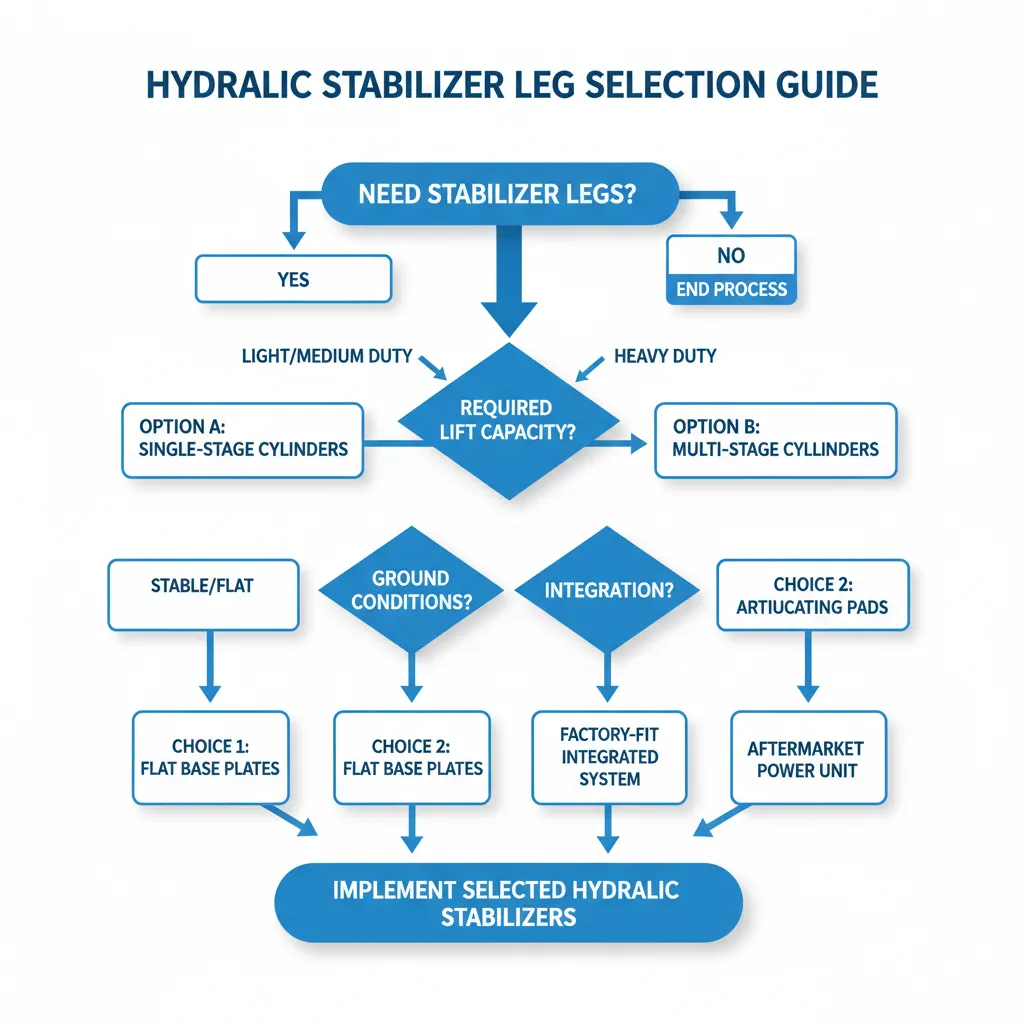
6. Selection Flowchart — Which Stabilizer Leg Design?
Use this quick decision path to narrow down the right configuration for your equipment.
Choose Stabilization Legs
            │
     Machine Weight?
            │
   ┌────────┼────────┐
   │        │        │
 <10 Tons 10-30T   30T+
   │        │        │
Vertical  Swing-Out  Telescopic
            │
  Need Compact Storage?
   ┌────────┴────────┐
   │                 │
  Yes               No
   │                 │
Folding         Stay with
                above choice
7. Hydraulic Stabilizer Legs vs Hydraulic Outriggers
Many people search for “stabilizer legs vs outriggers.” Here is how they compare.
| Feature | Stabilizer Legs | Outriggers |
|---|---|---|
| Extension Direction | Primarily vertical, some have horizontal | Horizontal + vertical (combined) |
| Stability | High | Very High |
| Typical Machine Size | Small to medium | Medium to large |
| Complexity | Lower | Higher |
| Cost | Lower | Higher |
| Common On | Utility trucks, compact loaders, backhoes | Truck cranes, large concrete pumps, fire trucks |
In practice, the terms are often used interchangeably, but “outriggers” usually refers to the full horizontal-vertical combination, whereas “stabilizer legs” may be purely vertical or swing-out.
8. Standard Hydraulic Stabilization Legs — Typical Specifications
| Specification | Typical Value / Range |
|---|---|
| Bore Diameter | 40–150 mm |
| Stroke Length | 200–1200 mm |
| Operating Pressure | 210–300 bar |
| Rod Diameter | 20–90 mm |
| Body Material | High-strength steel (S355, Q345, etc.) |
| Rod Finish | Hard chrome plated |
| Seal Options | Hallite, NOK, Parker, or equivalent |
| Temperature Range | -20°C to +80°C (wider on request) |
| Mounting Style | Pin, flange, or welded bracket |
| Cylinder Type | Double-acting welded hydraulic cylinder |
9. Hydraulic Cylinders Used in Stabilization Legs
The hydraulic cylinder is the heart of the system. Most stabilizer legs use:
-
Heavy-duty piston rods
-
High-strength steel tubes
Key design considerations:
-
Bore Size: Larger bore produces greater force. Typical: 40–150 mm.
-
Stroke Length: Matched to required stabilizer travel, 200–1200 mm.
-
Operating Pressure: 210–300 bar is standard; heavy-duty machines may go higher.
-
For unique requirements, custom hydraulic cylinders can be engineered to exact specifications.
10. Application Gallery — Hydraulic Stabilization Legs in the Field
Truck Crane
Hydraulic outriggers extend to create a rigid lifting platform, allowing maximum rated loads without chassis movement.
Boom Truck
Swing-out stabilizers provide side stability when the boom is fully extended.
Backhoe Loader
Vertical stabilizer legs lock the chassis during digging, improving force and preventing bounce.
Snow Plow Truck
Stabilizer legs counteract side forces when plowing heavy snow.
Fire Truck
Telescopic outriggers create a wide, safe base for aerial ladder operations.
Utility Truck
[Image: utility-truck-stabilizer-legs.webp]
Bucket trucks deploy stabilizer legs to maintain stability on uneven roadsides.
Concrete Pump
Large outriggers stabilize the vehicle while the placing boom delivers concrete.
Forestry Machine
Folding stabilizers maintain balance on steep forest terrain during harvesting.
11. Materials Used in Hydraulic Stabilization Legs
High-quality stabilizer legs use premium materials:
-
High-Strength Steel — Resists deformation under heavy loads (S355, Q345).
-
Hard Chrome-Plated Rods — Provide corrosion and wear resistance.
-
Precision Welded Tubes — Maintain exact internal dimensions for long seal life.
-
Hardened Pins and Bushings — Minimize wear at pivot points.
12. How Toleng Manufactures Hydraulic Stabilization Cylinders
Every Toleng stabilization cylinder follows a 10-step quality-controlled process.
-
Raw Material Inspection — Certification and dimensional checks.
-
CNC Turning — Precision machining of barrels, caps, and pistons.
-
Cylinder Tube Honing — Achieve optimal inner surface finish.
-
Robot Welding — Consistent, high-strength welds.
-
Chrome Rod Inspection — Check surface, diameter, and straightness.
-
Assembly — Performed in a clean environment with quality seals.
-
Pressure Test — 1.5× working pressure verification.
-
Painting — Protective powder coat or wet paint.
-
Packaging — Protective end caps and corrosion wrap.
-
Shipment — Full documentation, domestic or international.
For specialized requirements, our team engineers custom hydraulic cylinders tailored precisely to your equipment.
13. Why Welded Hydraulic Cylinders Are Preferred for Stabilizer Applications
Most OEMs choose welded hydraulic cylinders for these reasons:
-
Compact dimensions — No tie rods, narrower profile.
-
Higher strength — Welded body handles extreme pressures.
-
Reduced leakage risk — Fewer potential leak paths.
-
Superior fatigue resistance — Withstands repeated cycles.
-
Proven service life — Trusted in construction and mining environments.
For non-welded alternatives, see tie rod hydraulic cylinders.
14. Key Design Factors When Selecting Hydraulic Stabilization Legs
Evaluate these before specifying a system:
-
Maximum Load Capacity — Include machine weight, payload, and dynamic forces.
-
Ground Conditions — Soft soil requires larger foot pads.
-
Mounting Configuration — Welded, pin, or flange; see mounting types.
-
Corrosion Protection — Powder coat, zinc plating, hard chrome, or stainless steel.
-
Hydraulic System Compatibility — Pressure, flow rate, port type, and dimensional constraints.
15. Typical Failure Modes & Troubleshooting
Knowing common problems helps reduce downtime.
| Problem | Possible Cause | Recommended Action |
|---|---|---|
| Seal leakage | Worn seals, contamination | Replace seals, flush system |
| Rod scoring | Abrasive particles on rod | Clean regularly, replace if deep |
| Cylinder drift | Internal leakage or valve issue | Test piston seals, check lock valve |
| Bent rod | Side loading beyond limits | Replace rod, review stabilizer alignment |
| Corrosion | Damaged chrome or paint | Refinish rod, improve coating |
| Worn bushings | Lack of lubrication | Grease pivot points, replace bushings |
| Foot pad damage | Overload or sharp ground | Inspect and replace damaged pads |
| Hose failure | Age, abrasion | Regular inspection, replace in sets |
For repairs, Toleng supplies replacement seal kits and reconditioning services.
16. Maintenance Tips
Routine care extends service life:
-
Inspect hoses regularly for cracks or abrasion.
-
Clean piston rods after every operation.
-
Lubricate pivot pins and bushings per schedule.
-
Check mounting bolt torque.
-
Replace worn seals promptly.
-
Monitor hydraulic fluid condition and contamination levels.
-
Avoid side loading beyond design limits.
See our hydraulic cylinder maintenance guide for detailed schedules.
17. OEM Customization Options
As an OEM hydraulic cylinder manufacturer, Toleng can customize the following to match your equipment:
-
✓ Bore diameter
-
✓ Stroke length
-
✓ Rod diameter
-
✓ Mounting style (pin, flange, trunnion, etc.)
-
✓ Working pressure rating
-
✓ Paint color and coating specification
-
✓ Seal brand (Hallite, NOK, Parker, etc.)
-
✓ Port type and location
-
✓ Integrated sensors
-
✓ Lock valve (pilot-operated check)
-
✓ Cushioning at stroke ends
-
✓ Stainless steel or special alloy version
-
✓ Custom foot pad design
Everything is built to your specifications — from single prototype to full production runs.
18. Why Choose Toleng Hydraulics?
Looking for OEM Hydraulic Stabilization Cylinders?
Whether you’re designing a new machine or replacing an existing stabilizer cylinder, Toleng Hydraulics provides:
-
OEM Manufacturing — High-volume production with consistent quality
-
Custom Engineering — Cylinders designed to your exact requirements
-
Rapid Prototyping — Fast turnaround for sample validation
-
Global Shipping — Reliable logistics worldwide
-
Technical Support — Application engineering assistance throughout your project
Contact our engineering team today to discuss your project requirements.
Toleng Hydraulics has manufactured hydraulic cylinders for OEM equipment manufacturers across construction, agriculture, utility, and material handling industries for more than 20 years. Every stabilization cylinder undergoes dimensional inspection, pressure testing, and leak testing before shipment.
19. Frequently Asked Questions
What is the purpose of hydraulic stabilization legs?
Hydraulic stabilization legs improve machine stability, increase lifting safety, and prevent equipment from tipping during operation on uneven ground.
What hydraulic cylinder is used in stabilizer legs?
Most stabilization systems use heavy-duty welded double-acting hydraulic cylinders for their compact design and high load capacity.
How do stabilizer legs prevent equipment rollover?
By extending the effective support footprint and transferring the load directly to the ground, they lower the center of gravity and resist the overturning moment created during lifting or digging.
What hydraulic pressure is required for stabilizer legs?
Typical operating pressures range from 210 bar to 300 bar, depending on equipment size and lifting capacity. Heavy-duty applications may exceed 300 bar.
What is the difference between outriggers and stabilizer legs?
“Outriggers” generally refers to horizontal-plus-vertical extension systems, while “stabilizer legs” may be purely vertical or swing-out. Both provide stability; outriggers often offer a wider footprint on larger machines.
What industries use hydraulic stabilization legs?
Construction, utilities, agriculture, mining, material handling, forestry, and municipal service vehicles all commonly use them.
Can stabilizer cylinders be repaired?
Yes. Most welded stabilizer cylinders can be repaired by replacing seals, piston rods, or worn bushings. Toleng supplies seal kits and repair services.
How often should stabilizer cylinders be serviced?
Inspect seals and rods every 500 operating hours or annually. High-cycle or harsh-environment applications may need more frequent checks.
Which seal material is best for stabilizer cylinders?
Polyurethane and NBR/HNBR are common for durability. For extreme temperatures or aggressive environments, Viton or other compounds can be specified.
How long do hydraulic stabilization legs last?
With proper maintenance and quality manufacturing, they provide many years of reliable service. Seal replacement and regular inspection extend life.
Can hydraulic stabilization legs be customized?
Yes. OEM manufacturers can customize dimensions, mounting styles, stroke length, pressure ratings, coatings, seals, and more. Contact Toleng to discuss your requirements.
What safety standards apply to stabilizer systems?
They must comply with ISO 12100, ISO 4413, and regional regulations like CE or ASME. Toleng cylinders meet international safety and quality standards.
Can stabilizer cylinders hold pressure without drifting?
Yes, when equipped with a properly functioning lock valve (pilot-operated check valve) and intact piston seals. Cylinder drift usually indicates an internal leak or valve malfunction.
What causes stabilizer cylinder leakage?
Leakage is typically caused by worn seals, a scored piston rod damaging the seal, or contamination in the hydraulic fluid. Regular rod cleaning and fluid maintenance help prevent it.
Should stabilizer legs be lubricated?
Yes, pivot pins and bushings should be lubricated at the intervals specified in your machine’s maintenance schedule. Inadequate lubrication accelerates bushing wear and can cause squeaking or binding.
How do I calculate stabilizer cylinder force?
Use the formula: Force (N) = Pressure (Pa) × Piston Area (m²). For bore diameter D (mm) and pressure P (bar): Force (kN) ≈ P × (π × D²) / 40,000. Always include a safety factor of at least 1.5.
Which hydraulic oil is recommended for stabilizer cylinders?
ISO VG 32 or 46 hydraulic oil is standard for most climates. Check your equipment manual for viscosity requirements. Use clean, filtered oil to prolong seal and component life.
20. Conclusion
Standard hydraulic stabilization legs are critical components that improve equipment safety, operational stability, and lifting performance across a wide range of industries. Choosing the right leg design, hydraulic cylinder, and manufacturing partner ensures long-term reliability and reduced maintenance costs.
At Toleng Hydraulics, we provide OEM-standard hydraulic stabilization cylinders and custom-engineered solutions designed to meet the requirements of construction, utility, agricultural, and industrial equipment manufacturers worldwide.
Explore our range of welded hydraulic cylinders or contact our engineering team to discuss your stabilization leg cylinder requirements.

