
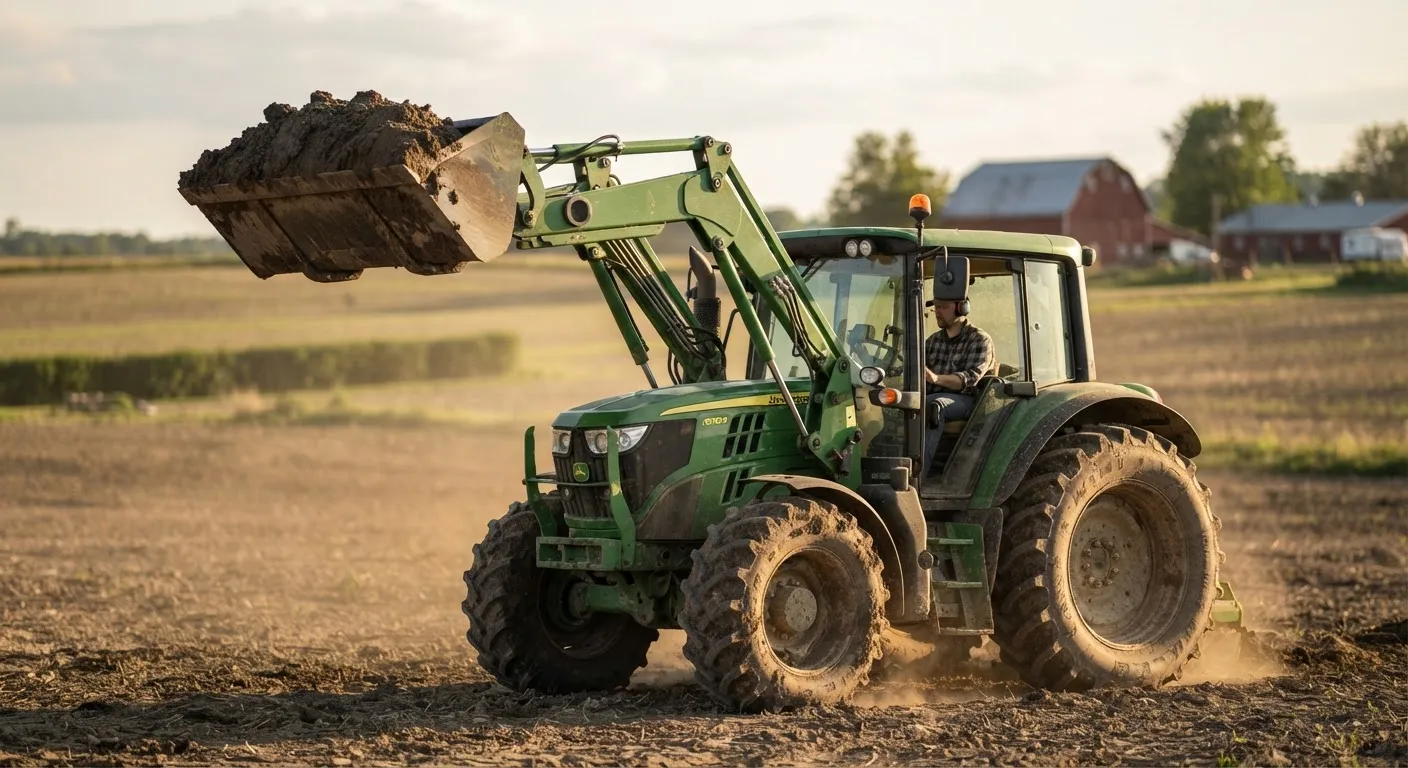
Tractor hydraulic cylinders play an essential role in agricultural machinery. They convert hydraulic pressure into linear force, allowing tractors to lift, lower, tilt, steer, and control a wide range of attachments and implements.
From front-end loaders and three-point hitch systems to steering mechanisms and agricultural equipment, hydraulic cylinders must deliver reliable performance under changing loads, frequent operating cycles, vibration, and demanding outdoor conditions.
Toleng Hydraulics manufactures hydraulic cylinders for industrial and mobile equipment applications, including custom OEM solutions. Whether you need cylinders for new tractor equipment or replacement units for existing machinery, selecting the right cylinder requires careful consideration of bore size, rod diameter, stroke, mounting configuration, operating pressure, and application requirements.
This guide explains the main types of tractor hydraulic cylinders, their applications, how to select a suitable replacement, and what to consider when sourcing custom cylinders from a manufacturer.
What Are Tractor Hydraulic Cylinders?
A tractor hydraulic cylinder is a mechanical actuator that uses pressurized hydraulic fluid to produce linear movement and force.
When hydraulic oil enters the cylinder through a port, it acts on the piston. The piston moves inside the cylinder barrel and transfers force through the piston rod to the connected equipment.
Depending on the hydraulic system and cylinder design, this movement can be used to:
- Raise and lower front-end loader arms.
- Tilt loader buckets and attachments.
- Operate three-point hitch systems.
- Adjust agricultural implements.
- Control steering mechanisms.
- Extend and retract other tractor-mounted equipment.
The cylinder’s performance depends on several factors, including hydraulic pressure, piston area, rod diameter, stroke length, seal design, and mounting arrangement.
For tractor manufacturers and equipment builders, choosing a cylinder that matches the machine’s hydraulic system and mechanical structure is essential for reliable operation.
Types of Hydraulic Cylinders Used on Tractors
Different tractor functions require different cylinder configurations. The most suitable design depends on the required movement, available installation space, load direction, and operating conditions.

1. Tractor Loader Cylinders
Tractor loader cylinders are used in front-end loader systems to raise, lower, and control the movement of loader arms and attachments.
Most loader systems use separate cylinders for different functions.
Lift cylinders raise and lower the loader arms. They must provide sufficient force to handle the intended lifting load while fitting within the loader’s mounting structure.
Tilt cylinders control the angle of the bucket or attachment. They allow operators to curl the bucket backward for material retention or tilt it forward for dumping.
Some loader configurations use hydraulic cylinders to operate quick-attach mechanisms or other hydraulic attachments. The required cylinder design depends on the attachment’s operating mechanism.
When selecting tractor loader cylinders, consider:
- Required lifting or tilting force.
- Cylinder bore and rod diameter.
- Stroke length.
- Pin-to-pin dimensions.
- Mounting style.
- Hydraulic pressure and flow conditions.
- Available installation space.
A cylinder that has the correct bore and stroke but an incompatible mounting arrangement may not fit or operate correctly.
2. Tractor Hydraulic Lift Cylinders
Tractor hydraulic lift cylinders are used in lifting systems, including certain three-point hitch and implement-control configurations.
Their function is to convert hydraulic pressure into mechanical lifting movement. The cylinder must work with the tractor’s hydraulic system and the geometry of the lifting mechanism.

Important selection factors include:
- Required lifting force.
- Stroke and movement range.
- Mounting position.
- Pin diameter and connection type.
- Operating pressure.
- Available installation space.
The cylinder’s load capacity should be evaluated as part of the complete lifting system. Linkage geometry, mounting points, and mechanical leverage all influence the force required from the cylinder.
3. Tractor Steering Cylinders
Hydraulic steering cylinders assist or control steering movement in tractors equipped with hydraulic steering systems.
Depending on the system design, a steering cylinder may use a single-rod or other configuration to produce the required movement.
Steering cylinders must be selected according to the steering system’s design, mounting arrangement, stroke requirements, and hydraulic specifications.

Important considerations include:
- Required steering travel.
- Rod and bore dimensions.
- Mounting configuration.
- Operating pressure.
- Connection dimensions.
- Compatibility with the steering system.
Because steering is a safety-critical function, replacement cylinders should match the original system specifications and be installed and tested according to the equipment manufacturer’s requirements.
4. Agricultural Implement Cylinders
Tractors operate many types of agricultural implements, and these attachments may use hydraulic cylinders for lifting, folding, positioning, and adjustment.

Examples include:
- Plows and cultivators.
- Agricultural trailers.
- Seeders and planters.
- Mowers and cutting equipment.
- Harrows and other field implements.
These applications can involve repeated cycling, exposure to dirt and moisture, and changing mechanical loads.
Cylinder selection should account for the implement’s movement, load conditions, installation dimensions, and operating environment.
Replacement Tractor Hydraulic Cylinders
A damaged or worn hydraulic cylinder can reduce equipment performance and cause unexpected downtime during agricultural operations.
Common signs that a tractor hydraulic cylinder may need inspection or replacement include:
- External hydraulic oil leakage around the rod or end connections.
- Slow or inconsistent cylinder movement.
- Reduced lifting or pushing performance.
- Visible scoring, corrosion, or damage on the piston rod.
- Excessive movement or difficulty holding a load.
- Damaged mounting points or cylinder components.
These symptoms do not always mean the complete cylinder must be replaced. Internal seal leakage, hydraulic system problems, mechanical binding, and worn components can produce similar symptoms.
A proper inspection should identify the actual cause before deciding whether to repair, rebuild, or replace the cylinder.
How to Choose a Replacement Tractor Hydraulic Cylinder
When the original cylinder is no longer available, or when sourcing a replacement from another manufacturer, matching the key dimensions and operating requirements is essential.
The following information helps identify a suitable replacement.
| Measurement or specification | What to check |
|---|---|
| Bore diameter | Internal diameter of the cylinder barrel |
| Rod diameter | Outside diameter of the piston rod |
| Stroke length | Total distance the piston rod travels |
| Retracted length | Pin-to-pin or mounting reference length when fully retracted |
| Extended length | Corresponding mounting reference length when fully extended |
| Mounting style | Clevis, cross tube, eye, flange, or other mounting arrangement |
| Pin diameter | Diameter of the mounting pin or connection |
| Port size | Hydraulic port thread and connection type |
| Operating pressure | Required system pressure and cylinder rating |
| Application | Loader lift, bucket tilt, steering, implement lift, or another function |
Important: Do not identify a replacement cylinder using bore diameter and stroke alone. Mounting dimensions, port connections, retracted length, and extended length can determine whether the cylinder fits the equipment.
For a more detailed measurement process, see our Hydraulic Cylinder Measurement Guide.
Can a Universal Tractor Hydraulic Cylinder Replace the Original?
Not always.
Some cylinders may share similar dimensions and pressure ratings but differ in mounting geometry, port position, stroke, or rod configuration.
A replacement cylinder should be checked against the original unit and the equipment’s operating requirements.
Before ordering, confirm:
- The bore and rod diameters.
- The required stroke.
- The retracted and extended mounting dimensions.
- The mounting style and pin dimensions.
- The hydraulic port specifications.
- The working pressure and application requirements.
If the original cylinder identification plate is missing, providing clear photographs and accurate measurements can help a manufacturer evaluate a replacement option.
How to Choose the Right Tractor Hydraulic Cylinder
Selecting a tractor hydraulic cylinder involves more than choosing a product based on its appearance or nominal size.
The following factors should be considered during the selection process.
1. Bore Diameter and Required Force
The cylinder bore determines the piston area that hydraulic pressure acts upon.
For an extension stroke, the theoretical force can be estimated using:
Extension Force = Hydraulic Pressure × Piston Area
A larger bore generally produces more extension force at the same hydraulic pressure, but it also requires more hydraulic fluid to complete the same stroke.
The required bore should therefore be determined according to the equipment’s load, pressure, speed, and available hydraulic flow.
2. Rod Diameter and Retraction Force
The piston rod transfers force from the piston to the external load.
Rod diameter affects the available retraction force, structural strength, and resistance to buckling.
The rod should be designed for the cylinder’s load conditions, unsupported length, mounting arrangement, and operating cycle.
3. Stroke Length
Stroke length determines how far the cylinder can extend and retract.
An incorrect stroke can limit equipment movement or cause interference with the surrounding structure.
Always verify the required movement range and the available installation space.
4. Mounting Configuration
The mounting arrangement connects the cylinder to the tractor or attachment.
Common configurations include:
- Clevis mounting.
- Cross-tube mounting.
- Eye mounting.
- Flange mounting.
- Custom mounting arrangements.
The mounting points must allow the cylinder to move through its intended operating range without excessive side loading.
5. Operating Environment
Agricultural machinery often operates in environments containing dust, mud, moisture, fertilizer, and other contaminants.
Cylinder design should account for these conditions.
Relevant considerations include rod surface protection, seal compatibility, wiper design, corrosion resistance, and maintenance requirements.
6. Hydraulic System Compatibility
The cylinder must be compatible with the tractor’s hydraulic system.
Check the rated operating pressure, port type, connection size, hydraulic fluid compatibility, and required operating speed.
The cylinder’s pressure rating should not be treated as a substitute for checking the complete hydraulic circuit and equipment specifications.
Custom Tractor Hydraulic Cylinders for OEM Applications
Standard cylinders can meet many common requirements. However, tractor manufacturers and agricultural equipment builders may need custom dimensions or mounting configurations to fit a specific machine design.
Custom OEM hydraulic cylinders can be developed around the equipment’s mechanical structure and hydraulic requirements.
Typical customization considerations include:
| Customization item | OEM requirement |
|---|---|
| Bore diameter | Matched to required force and installation space |
| Rod diameter | Selected according to load and structural requirements |
| Stroke length | Designed for the required movement range |
| Retracted length | Matched to the machine’s installation dimensions |
| Mounting style | Designed to fit the equipment’s connection points |
| Port location | Positioned for hydraulic hose routing |
| Rod surface | Selected according to operating environment |
| Sealing system | Matched to pressure, temperature, fluid, and operating conditions |
| Surface protection | Selected according to corrosion and environmental requirements |
For OEM projects, it is useful to provide engineering drawings, samples, or a complete set of cylinder measurements.
If drawings are unavailable, photographs, application details, and physical measurements can provide a starting point for technical evaluation.
Toleng Hydraulics supports custom hydraulic cylinder manufacturing for OEM applications. Manufacturing and inspection processes may include CNC machining, precision honing, welding, chrome plating, and pressure testing, depending on the cylinder design and project requirements.
Hydraulic Cylinder Manufacturing and Quality Control
The reliability of a tractor hydraulic cylinder depends on the quality of its components, machining accuracy, assembly, and inspection.
Several manufacturing and quality-control processes are important when evaluating a hydraulic cylinder supplier.
Material Inspection
Cylinder components should be manufactured from materials appropriate for their intended loads and operating conditions.
Incoming material inspection and material documentation help verify that the selected materials meet the applicable production requirements.
CNC Machining
CNC machining is used to produce accurately dimensioned components, including cylinder parts, end connections, and piston-related components.
Dimensional control is important for assembly accuracy and component compatibility.
Cylinder Tube Honing
The internal surface of a cylinder barrel must provide a suitable finish for piston seal operation.
Precision honing helps control internal diameter, surface finish, and dimensional consistency.
Piston Rod Surface Treatment
The piston rod surface must resist wear and provide a suitable running surface for the rod sealing system.
Hard chrome plating is one commonly used surface treatment for hydraulic cylinder rods. The appropriate surface specification depends on the application and design requirements.
Assembly and Pressure Testing
During assembly, seals and internal components must be installed correctly to avoid damage and ensure proper operation.
Pressure testing helps verify cylinder performance and identify leakage or other defects under the specified test conditions.
For OEM procurement, ask the manufacturer about its inspection procedures, test criteria, traceability practices, and documentation available for the specific project.
Why Work with a Hydraulic Cylinder Manufacturer?
Sourcing directly from a hydraulic cylinder manufacturer can be useful when standard replacement cylinders do not match the equipment’s requirements or when developing a new agricultural machine.
A manufacturer with OEM experience can help evaluate:
- Cylinder dimensions and mounting configurations.
- Bore, rod, and stroke requirements.
- Material and surface-treatment options.
- Seal and port specifications.
- Prototype and production requirements.
- Inspection and testing documentation.
Toleng Hydraulics has supplied OEM customers in more than 40 countries and has been manufacturing hydraulic cylinders since 1998.
With capabilities including CNC machining, precision honing, welding, chrome plating, and pressure testing, Toleng supports hydraulic cylinder projects for different industrial and mobile equipment applications.
For tractor and agricultural equipment projects, the cylinder design and manufacturing specifications should be confirmed according to the actual machine requirements.
Explore our Hydraulic Cylinder Manufacturing Capabilities to learn more.
Frequently Asked Questions About Tractor Hydraulic Cylinders
What type of hydraulic cylinders are used on tractors?
Tractors use different hydraulic cylinders depending on their functions. Common examples include loader lift cylinders, bucket tilt cylinders, hydraulic lift cylinders, steering cylinders, and cylinders used on agricultural implements.
How do I identify a replacement tractor hydraulic cylinder?
Start by recording the bore diameter, rod diameter, stroke, retracted length, extended length, mounting style, pin diameter, and port specifications. Also confirm the original cylinder’s operating pressure and application.
These details help determine whether a replacement cylinder is mechanically and hydraulically compatible.
Can I use a different brand of hydraulic cylinder on my tractor?
A cylinder from another manufacturer may be suitable if its dimensions, mounting configuration, pressure rating, port connections, and operating characteristics meet the equipment requirements.
Do not assume that cylinders with similar bore and stroke dimensions are interchangeable.
What causes a tractor loader cylinder to leak?
Common causes include worn or damaged rod seals, damaged piston rod surfaces, contamination, incorrect seal installation, and component wear.
External leakage should be inspected before deciding whether the cylinder needs seal replacement, rebuilding, or complete replacement.
Can a tractor hydraulic cylinder be repaired instead of replaced?
In many cases, a hydraulic cylinder can be repaired or rebuilt if its main components remain suitable for reuse.
The final decision depends on the condition of the barrel, piston rod, piston, gland, mounting components, and sealing surfaces.
See our guide to How to Repair a Hydraulic Cylinder for more information.
Can Toleng manufacture custom tractor hydraulic cylinders?
Toleng supports custom OEM hydraulic cylinder manufacturing. Project requirements can be evaluated using technical drawings, samples, measurements, and application information.
The final design, materials, dimensions, and testing requirements should be confirmed for each project.
Request a Quote for Tractor Hydraulic Cylinders
Looking for tractor loader cylinders, replacement hydraulic cylinders, or custom cylinders for agricultural equipment?
Toleng Hydraulics can evaluate OEM and replacement cylinder requirements based on your application and technical specifications.
To help us review your project, provide:
- Application or tractor model.
- Cylinder bore and rod diameter.
- Required stroke length.
- Retracted and extended dimensions.
- Mounting type and pin dimensions.
- Operating pressure.
- Required quantity.
- Drawings or photographs, if available.
Contact Toleng Hydraulics to discuss your tractor hydraulic cylinder requirements and request a custom OEM quotation.

