
Tie-Rod vs Welded Hydraulic Cylinders Full Comparison
Learn how to compare tie-rod and welded hydraulic cylinders, inspect cylinder quality, and avoid costly failures through practical inspection and maintenance tips.
When purchasing hydraulic cylinders for heavy equipment, I’ve learned one important lesson over the years: not all cylinders are built to last.
I’ve seen construction crews lose an entire afternoon because a loader’s hydraulic cylinder started leaking oil halfway through a job. I’ve watched agricultural equipment sit idle during harvest because a piston rod was scratched and destroyed the seals. In industrial facilities, a single failed cylinder can halt production lines, delay shipments, and drive up maintenance costs.
The frustrating part? Many of these failures could have been avoided.
The truth is that choosing between tie-rod cylinders and welded hydraulic cylinders isn’t just a design preference. The wrong choiceor poor manufacturing qualitycan lead to premature seal leakage, rod damage, internal scoring, and unexpected downtime.
In this guide, I’ll walk through the real differences between tie-rod and welded hydraulic cylinders, the most common problems engineers and buyers face when evaluating cylinder quality, and the practical inspection steps I recommend before making any purchase.
If you work with construction machinery, agricultural equipment, mobile hydraulics, or industrial automation systems, these insights can save you time, money, and a lot of frustration.
Understanding Tie-Rod vs Welded Hydraulic Cylinders
Before diving into inspection techniques, it’s important to understand what makes these two cylinder designs different.
Tie-Rod Hydraulic Cylinders
Tie-rod cylinders are built using long steel rods that run the full length of the cylinder barrel, holding the end caps in place with threaded nuts.
This design is extremely common in industrial environments.
Typical characteristics include:
-
Easy disassembly for maintenance
-
Standardized dimensions
-
Ideal for factory automation
-
Common in material handling systems
-
Frequently used in hydraulic presses and industrial machines
Because tie-rod cylinders can be disassembled easily, maintenance teams often prefer them in controlled environments where repairs are expected.
However, they aren’t always ideal for rugged field conditions.
Welded Hydraulic Cylinders
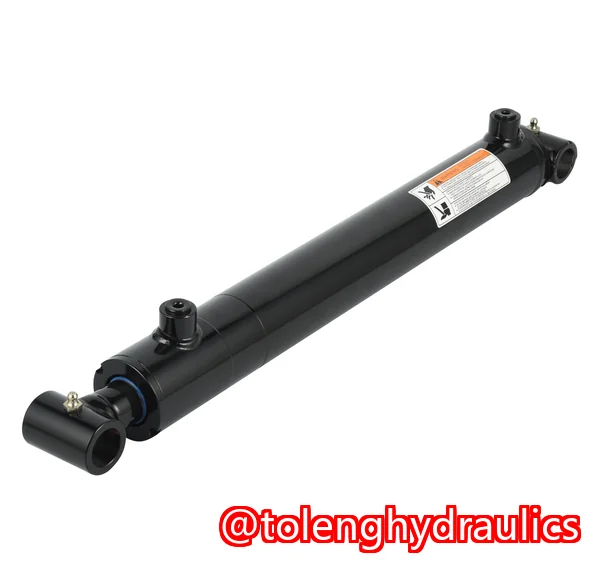
Welded cylinders, on the other hand, are built with welded end caps and mounts directly attached to the cylinder body.
This creates a more compact and rugged design.
You’ll often find welded cylinders on:
-
Excavators
-
Backhoes
-
Skid steers
-
Agricultural machinery
-
Dump trucks
-
Mobile hydraulic systems
These cylinders handle heavy loads, shock forces, and rough environments much better than many tie-rod designs.
The tradeoff is that welded cylinders are usually harder to disassemble and repair.
The Biggest Pain Point: Cylinder Quality Isn’t Always Obvious
One of the most common challenges I hear from equipment buyers is this:
“Two cylinders look identical from the outsidebut one lasts five years and the other fails in six months.”
This happens more often than people think.
Hydraulic cylinder quality depends on internal machining, materials, and sealing systems, not just external appearance.
Let’s look at the most common issues.
Pain Point #1: Cylinders That Look Good but Fail Early
Some low-cost cylinders appear well-built at first glance.
The paint is clean. The welds look decent. The ports are threaded correctly.
But internally, the story can be very different.
Poor manufacturing can lead to:
-
Rough cylinder bore finishes
-
Thin chrome plating on rods
-
Misaligned pistons
-
Low-quality hydraulic seal types
-
Weak welds at mounting points
These issues may not appear immediately. But after a few months of operation, problems begin.
Seals wear prematurely. Rods begin scoring. Oil leaks develop.
Eventually, the cylinder fails.
This is why hydraulic cylinder inspection is critical before installation.
Pain Point #2: Uncertainty About Seal Materials
Cylinder seals play a huge role in reliability.
Yet many buyers don’t know which seal materials are being used.
Low-quality seals can lead to:
-
Internal leakage
-
External oil leaks
-
Reduced lifting power
-
Premature seal failure
Different applications require different seal materials.
For example:
Construction equipment
-
Requires abrasion-resistant seals
-
Must handle dirt and debris
Agricultural machinery
-
Needs seals resistant to temperature swings
Industrial automation
-
Requires low-friction seals for precise motion
A high-quality cylinder should clearly specify its hydraulic seal types and materials.
Pain Point #3: Poor Rod Finish and Chrome Plating
Another major issue is piston rod quality.
The rod surface directly affects seal life.
If the rod finish is rough or chrome plating is too thin, seals will wear quickly.
I’ve seen this happen many times with low-quality cylinders.
Operators may notice:
-
Oil leaking from the gland
-
Scratches appearing on the rod
-
Contaminants entering the cylinder
-
Reduced lifting capacity
A high-quality rod should have:
-
Proper hardness
-
Smooth surface finish
-
Thick chrome plating
-
Straight alignment
These details matter more than most people realize.
A Practical Solution: Following a Structured Cylinder Inspection Process
Over the years, I’ve relied on structured inspection methods to avoid costly mistakes.
One resource that has proven extremely helpful is the Toleng hydraulics inspection guide, which provides step-by-step evaluation methods for engineers and buyers.
The goal isn’t to overcomplicate things.
It’s simply to verify that the cylinder is built to withstand real operating conditions.
Let’s walk through the key inspection steps.
Step 1: Inspect the Cylinder Tube and Bore Finish
The internal surface of the cylinder tube plays a major role in seal life.
A properly manufactured cylinder should have a precision-honed bore finish.
If the bore is rough or inconsistent, seals will wear quickly.
When evaluating a cylinder, I recommend checking:
-
Smooth internal surface finish
-
Consistent bore diameter
-
No visible scoring or tool marks
-
Proper cylinder bore finish
Even minor machining defects can shorten seal life dramatically.
Step 2: Check Piston Rod Hardness and Chrome Plating
The piston rod must withstand heavy loads, contaminants, and constant sliding contact with seals.
A high-quality rod should have:
Chrome plating thickness
Typically around 2030 microns or more depending on application.
Surface finish
Smooth and polished to protect seals.
Rod hardness
Often hardened steel to resist bending or wear.
When inspecting a rod:
-
Look for scratches or pits
-
Check plating consistency
-
Verify rod straightness
-
Inspect for corrosion
A damaged rod can destroy seals quickly.
Step 3: Evaluate Seal Quality and Installation
Seals are often the first components to fail in low-quality cylinders.
During inspection, I look for:
-
High-grade polyurethane or PTFE seals
-
Properly seated seal grooves
-
Clean installation with no twisting
-
Dust seals to prevent contamination
If seals appear loose, thin, or poorly installed, that’s a warning sign.
Quality cylinder seals should be designed specifically for the cylinder’s pressure rating and application.
Step 4: Inspect Weld Quality on Welded Cylinders
For welded hydraulic cylinders, weld integrity is critical.
Poor welds can lead to catastrophic failures.
Check for:
-
Uniform weld beads
-
No cracks or undercutting
-
Proper penetration
-
Smooth transition to mounting points
Mount failures can cause dangerous situations in heavy machinery.
Step 5: Measure Bore Size and Rod Diameter
Accurate measurements ensure the cylinder matches your equipment requirements.
Key measurements include:
Bore size
Measure the internal diameter using precision tools.
Rod diameter
Verify strength and load capacity.
Stroke length
Confirm full travel distance.
Incorrect measurements can cause:
-
Reduced lifting force
-
Hydraulic inefficiency
-
Mounting compatibility issues
Proper hydraulic cylinder quality control always includes dimensional verification.
Step 6: Check Port Threads and Hydraulic Connections
Another commonly overlooked detail is the hydraulic port.
Low-quality threads can cause leaks or fitting failures.
Inspect:
-
Thread cleanliness
-
Correct thread type
-
Proper machining
-
No metal burrs
This small detail can prevent major hydraulic leaks.
Why Proper Inspection Matters
Taking time to evaluate cylinder quality offers several major benefits.
Reduced Equipment Downtime
Reliable cylinders mean fewer unexpected failures.
Lower Maintenance Costs
High-quality components last longer.
Improved Safety
Strong mounts and reliable seals reduce risk of sudden failures.
Better Purchasing Decisions
Understanding cylinder quality control allows buyers to compare products more effectively.
In demanding environments like construction and agriculture, these advantages add up quickly.
When to Choose Tie-Rod vs Welded Cylinders
Both cylinder designs have their place.
Tie-Rod Cylinders
Best for:
-
Industrial automation
-
Factory equipment
-
Environments where easy maintenance is important
Welded Hydraulic Cylinders
Best for:
-
Construction equipment
-
Agricultural machinery
-
Mobile hydraulic systems
-
Heavy-duty applications
Choosing the right type depends on operating conditions, maintenance expectations, and space constraints.
Final Thoughts
After working with hydraulic systems for many years, I’ve seen how much difference cylinder quality makes.
A well-built cylinder can run for years with minimal maintenance. A poorly manufactured one can fail before the first service interval.
That’s why I always recommend following structured hydraulic cylinder inspection practices before purchasing or installing new components.
By carefully checking:
-
Cylinder bore finish
-
Rod chrome plating
-
Seal quality
-
Mount welds
-
Bore size and stroke measurements
you can avoid many common failure scenarios.
I highly recommend following these inspection guidelines to ensure any hydraulic cylinder purchase delivers long-term reliability and performance.
If you’re looking for reliable hydraulic cylinder solutions, browse our selection of high-quality hydraulic cylinders:
🔗 https://tolenghydraulics.com/contact/
You can also download our complete hydraulic cylinder inspection checklist today and ensure every cylinder you purchase meets professional quality standards.
FAQ
How can I tell if a hydraulic cylinder has quality seals?
Quality seals are typically made from durable materials such as polyurethane, PTFE, or nitrile rubber. Inspect the seal grooves and installation. Proper seals should fit tightly without twisting or distortion. Look for dust seals as well, which protect the cylinder from contamination.
What rod surface finish is best for long seal life?
A polished rod with smooth chrome plating provides the best results. The surface should be free from scratches, pits, or corrosion. A consistent chrome layer helps reduce friction and significantly extends seal life.
How do I measure bore size and stroke length correctly?
Use precision measuring tools such as bore gauges or internal micrometers to measure the cylinder bore. Stroke length can be determined by measuring the rod extension from fully retracted to fully extended positions.
What are the signs of a poorly manufactured cylinder?
Common warning signs include rough bore finishes, thin chrome plating, inconsistent welds, poorly installed seals, and inaccurate dimensions. Early oil leakage and unusual noises during operation are also indicators of quality problems.
Which cylinder mounting styles are strongest?
Heavy-duty applications often use clevis mounts, trunnion mounts, or cross-tube mounts. Welded cylinders typically offer stronger mounting options for construction and mobile equipment.
How do I choose between welded and tie-rod cylinders?
Tie-rod cylinders are ideal for industrial environments where maintenance access is important. Welded cylinders are better suited for rugged outdoor applications like construction machinery and agricultural equipment.
What chrome plating thickness should I look for on rods?
Most high-quality hydraulic cylinders use chrome plating between 2030 microns or more. Thicker plating improves wear resistance and protects against corrosion, which helps extend seal life.
Tags / Keywords
hydraulic cylinder quality, cylinder seals, rod finish, bore size, hydraulic cylinder maintenance, cylinder inspection, welded hydraulic cylinder, tie-rod cylinder, hydraulic cylinder buying guide, cylinder failure prevention, hydraulic cylinder materials

